
Will sensory processing issues affect how my child learns to communicate?
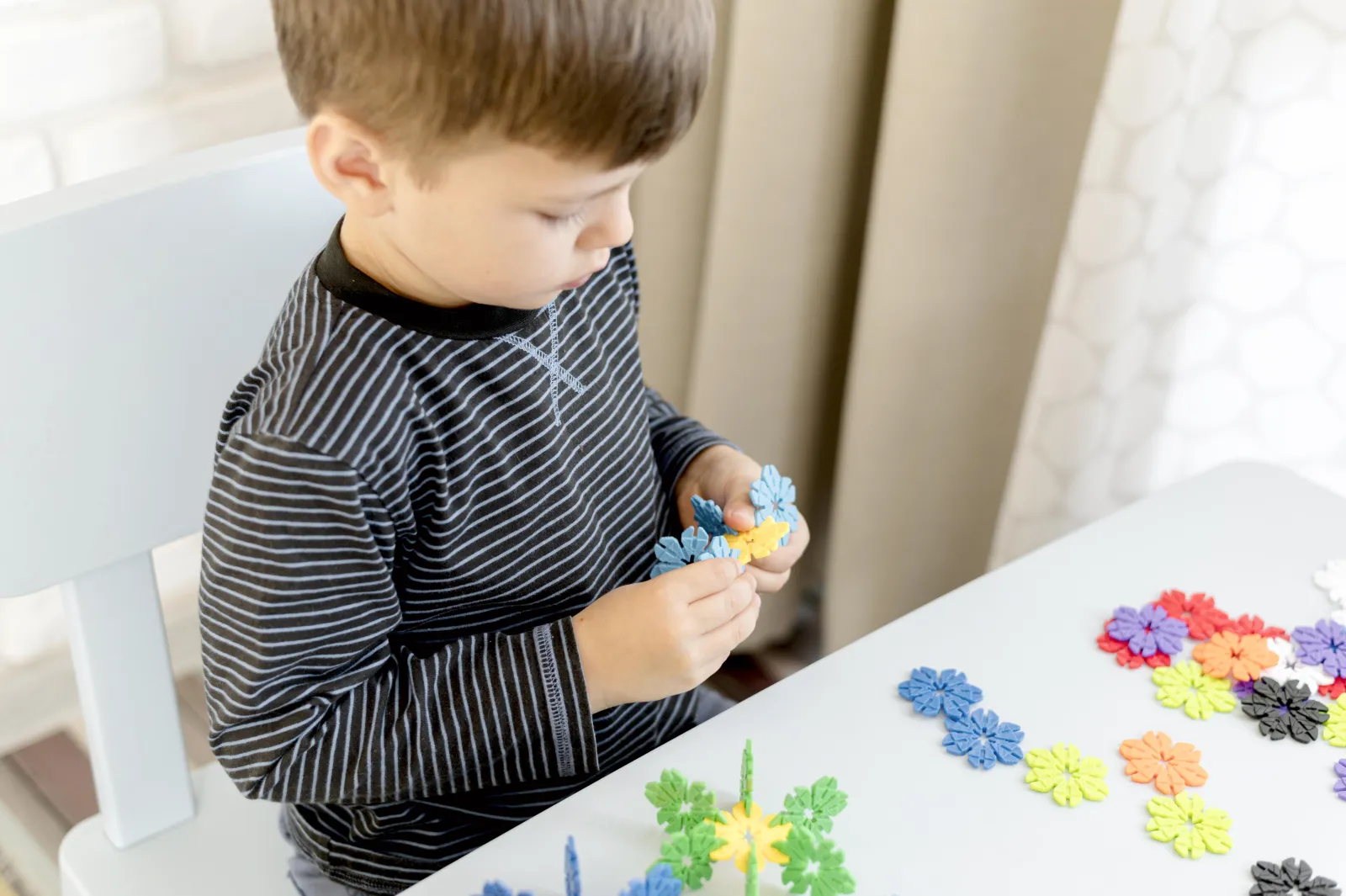
Sensory processing difficulties can affect how toddlers engage, interact and communicate. Learn how sensory integration therapy and speech therapy can support children with sensory sensitivities and communication delays.
Parent Question:
My toddler seems super jumpy with loud sounds, hates sticky textures, and is pretty much always on the move. Could these sensory quirks be the reason they aren't talking or connecting with us yet?
Answer
Yes, absolutely. A toddler's body has to feel calm and settled first, words just can't come easily when everything around them feels too loud, itchy, or dizzying. If a little one is overwhelmed by their surroundings (or craving movement like crazy), their brain is working overtime just to feel comfortable. There simply isn't much energy left over for practicing words or looking you in the eye.
Why Body Regulation Comes Before Talking?
Think about what actually happens when we talk. It isn't just about the mouth! To learn a single new word, your toddler has to hold their head steady, tune out the hum of the air conditioner, look at your face, and figure out how to move their tongue and jaw all at once.
That is a lot of work.
Sensory processing is just the brain's way of sorting through everyday sights, sounds, smells, and body feelings. When a toddler is stuck in fight-or-flight because the lights are blinding (sensory overload), or when they are spinning in circles just to feel grounded... their little brain prioritises safety over conversation. Regulation always comes first. Once a child feels secure in their skin, communication starts to bubble up naturally.
A Quick Story to Picture This: Illustrative Example: Take 20-month-old Leo. In his quiet bedroom sitting on a soft rug, Leo happily points at pictures of puppies and copies his mum's "woof-woof" sounds. But take him into the bright kitchen while someone runs the blender on hard tile floors? Leo clamps his hands over his ears, runs back and forth, and won't answer to his name at all.
Leo isn't being difficult, and he hasn't forgotten how to copy sounds. His brain is just swamped by all the sensory noise. He literally cannot focus on talking until his little system calms down.
What We Look For in Therapy
When we do a developmental evaluation, we aren't just counting words. We watch how the whole body responds:
| Energy levels | Are they revived up like a race car, sleepy, or bouncing between extremes? |
| Tuning in | Can your child pull your voice out from the background noise in a busy room? |
| Balance and body sense | Do they stumble often or need heavy pressure to sit comfortably? |
| Mouth sensations | Do they chew on shirt collars, gag on certain food textures, or have trouble coordinating their lips and tongue? |
| Shared attention | Can they stay focused with you on a toy when other things are happening nearby? |
Simple Things You Can Try at Home Today
| Pick a calm corner | When you want to read a story or chat, dim the bright ceiling lights and turn off the TV background buzz. |
| Try gentle, heavy movement before talking | A firm bear hug, gentle rocking in an armchair, or squishing under a heavy blanket can help steady their nervous system before you sit down together. |
| Use your hands and face | Don't rely only on spoken words. Point, use simple gestures, and make playful faces to help them understand. |
| Do not force messy play | If finger paint or sticky dough makes them upset, that is okay. Start with dry textures like dry rice or pasta and let them lead. |
| Let them wiggle | If your child needs to stand, rock, or hold a squishy ball while looking at a picture book, let them! Moving often helps their brain focus |
How Different Senses Change How Kids Communicate
| Sensory System | What You Might Notice | How It Touches Communication | A Practical Idea |
| Hearing (Auditory) | Gets distressed by vacuum cleaners, hand dryers, or sudden clatter | Misses words because background noise is overwhelming; avoids group play | Get down close to their eye level in a quiet room and use hand signs with your words |
| Balance & Movement (Vestibular & Proprioception) | Constantly crashes into sofas, spins, or never sits still | Hard to pause long enough for back-and-forth chatter or book time | Try ten big jumps on a floor mat or a tight cuddle right before story time |
| Touch (Tactile) | Hates tags, sticky hands, or being guided by the hand | May pull away from group games, messy play, or hand-over-hand help | Let them explore new textures using a spoon or paintbrush first without any pressure |
| Mouth & Chewing (Oral Sensory) | Stuffs food, chews wooden toys/sleeves, or gags on lumps | Can make it tricky to coordinate tongue and lips for clear speech sounds | Chat with an occupational therapist or speech therapist for oral-motor and feeding ideas |
When Getting an Evaluation Makes Sense
Every child has quirks, of course. But if sensory reactions make everyday activities, mealtimes, or nursery drop-offs stressful, sensory integration therapy with an occupational therapist may help your child better process and respond to sensory experiences. If your child is between 18 and 24 months and hasn't started using gestures or single words, consulting an occupational therapist and a speech-language pathologist can help identify their needs and guide the next steps.
Rupali Ranjith
MASLP, BCaBA, QASP-S
Director- of Bridges Speech Center, Bridges Care, and Bridges Synergy Pro
I am Rupali Ranjith, Consultant Speech and Language Therapist, Assistant Behaviour Analyst, Qualified Autism Specialist, as well as Medical Director of Bridges Speech Center, Bridges Care, and Bridges Synergy Pro. I hold a master’s degree in Speech and Hearing and more than 20 years of experience across India and the UAE. I have supported clients of all ages. Along with speech and Language Pathology, I hold BCaBA and QASP-S credentials. I am trained in evidence-based approaches, including PROMPT, DTTC, ReST, AVT, PECS, AVAZ, Gestalt Language Processing, Orofacial Myofunctional Therapy, Oral Placement Therapy, Reflex Integration, Sensory Integration, and the Hanen Program.
If you are really concerned about your child’s communication development, an assessment can help identify their strengths, underlying challenges, and appropriate next steps.
To schedule a speech and language consultation, contact Bridges Speech Center LLC:
04 358 1115 | 050 522 6054
References
- American Speech-Language-Hearing Association (ASHA), Communication Milestones: How Does Your Child Hear and Talk?
- American Academy of Pediatrics – HealthyChildren.org, Developmental Milestones for Two-Year-Olds.
- Royal College of Speech and Language Therapists (RCSLT), Early Years Speech and Language Development.