Getting dressed, washing hands or organizing a school bag involves many smaller skills. Developing life skills for children means identifying where a task becomes difficult and providing the right support. Bridges Speech Center offers individualized therapy and parent guidance to help children participate more confidently in everyday routines.
What Is a Life Skills Program for Children?
Life skills training for children develops the practical abilities used at home, at school and in the community. It can address self-care, organization, communication, safety awareness and participation in shared activities.
The focus is meaningful participation rather than completing a standard checklist. For one child, progress might mean choosing between two shirts. For another, it could mean independently packing the materials needed for school. Goals should reflect the child’s needs and opportunities to practice.
Who Can Benefit From This Support?
Support with life skills for children may be useful when developmental delays, autism, ADHD, physical disabilities or coordination difficulties affect everyday routines. Children without a diagnosis may also benefit when tasks consistently cause frustration or require more assistance than expected.
Assessment considers developmental readiness, previous learning opportunities and environmental barriers. A child who cannot manage a stiff fastening may need an easier fastening or better hand support rather than more instructions.
Benefits of a Life Skills Program for Children
Building life skills for children can increase participation in familiar routines and create more opportunities for choice. Depending on individual goals, therapy may support dressing, toileting routines, handwashing, managing belongings or asking for assistance.
Progress can also reduce repeated prompting and make transitions more predictable. Outcomes vary with the child’s abilities, access needs and practice opportunities. Support should recognize effort and functional improvement rather than promise complete independence.
How Sessions Develop Life Skills for Children
Assessment explores what the child already does, where difficulties occur and which tasks matter most to the family. Observation may help identify challenges with movement, attention, sensory processing, understanding instructions or sequencing.
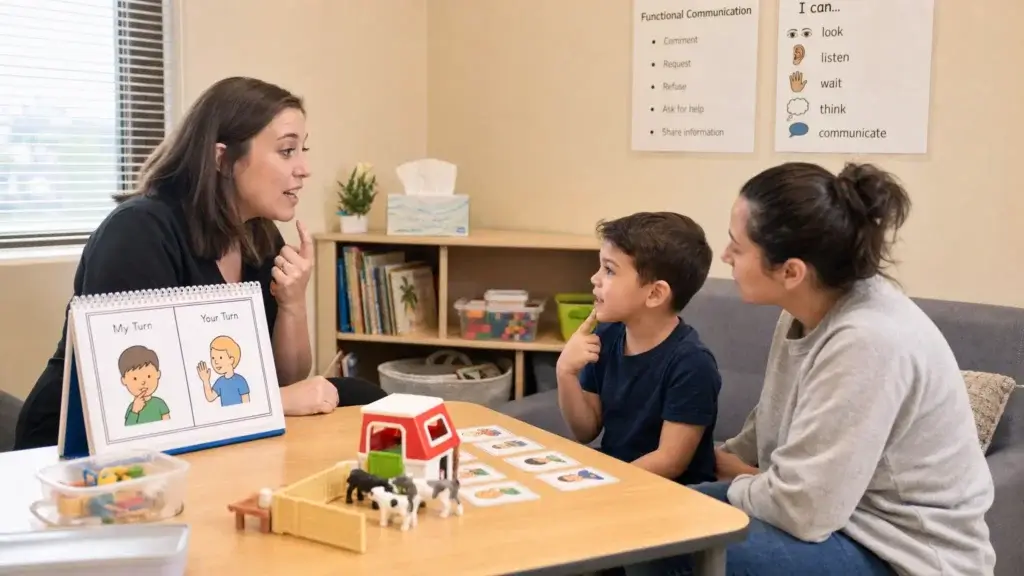
Sessions may use task breakdown, demonstration, play-based practice and visual cues. Assistance is adjusted as skills develop without removing support prematurely. Progress can be tracked through the steps completed, the type of help required and whether learning transfers to familiar settings.
Practical Activities That Support Everyday Independence
Useful life skills for children develop through tasks connected to real routines. Activities should be achievable with support and adapted when materials or environments create unnecessary difficulty
| Everyday activity | Skill being practiced | Possible adaptation |
| Packing a school bag | Organization and sequencing | A picture checklist showing essential items |
| Putting on a jacket | Dressing and coordination | A larger zipper pull or seated practice |
| Washing hands | Hygiene and task sequencing | A short visual sequence beside the sink |
| Preparing a simple snack | Planning and requesting help | Pre-portioned ingredients and adult supervision |
Life skills activities for special children should be individualized rather than selected solely by diagnosis. When searching for activities under this term, prioritize respectful teaching that follows the child’s interests and access needs.
Why Choose Bridges Speech Center?
Bridges Speech Center provides occupational therapy alongside speech therapy, psychological support and parent involvement. These areas can address different barriers to participation when assessment identifies a need.
Our Therapists and Personalized Approach
Life skills therapy for children should distinguish between difficulty understanding a task, difficulty performing its movements and discomfort with the environment. An individualized approach helps families identify which support is relevant. Recommendations should remain practical for the child’s everyday settings rather than depend entirely on clinic materials.
Parent Support and Guidance at Home
To reinforce life skills for children, select one manageable routine and allow enough time for participation. Use consistent cues and offer only the help needed. Avoid taking over immediately when a child needs extra processing time.
Families can build on an understanding of motor skills development and everyday activities when discussing suitable practice. Tell the therapist what works at home and what remains difficult so recommendations can be adjusted.
Book a Consultation With Bridges Speech Center Today
Call +971 50 5226054 or 04 3581115 to discuss daily living skills for children and whether an individualized assessment would help identify useful next steps.