
Support for social skills for children in Dubai
Joining a game, asking for help or handling a disagreement can be challenging for some children. Support with social skills for children focuses on making everyday interactions more understandable and comfortable. At Bridges Speech Center in Dubai, families can discuss these concerns through individualized speech therapy, behavioral support and psychology services.
What are social skills for children?
Social skills help children communicate their needs, understand other people and participate in shared activities. They include taking turns, starting conversations, recognizing emotions and respecting personal boundaries. Therapy addresses the particular situations a child finds difficult rather than teaching one fixed way to socialize.
Who can benefit from support?
Children may benefit when misunderstandings, difficulty joining activities or communication breakdowns regularly affect daily life. This can include children with language disorders, autism or ADHD. A diagnosis is not always necessary to discuss concerns. Being quiet, preferring solitary play or speaking several languages does not by itself indicate a disorder.
Benefits and why choose Bridges Speech Center
Developing social skills for children can support clearer self-expression, more comfortable participation and stronger self-advocacy. Useful goals might include asking to join a game, explaining a preference or requesting a break before becoming overwhelmed.
Building social skills in children should not mean forcing eye contact, suppressing harmless movements or rewarding unquestioning compliance. Progress should improve the child’s comfort and participation while respecting their choices and boundaries.
Our expert therapists and personalized approach
Bridges Speech Center offers speech therapy, occupational therapy, behavioral therapy and clinical psychology services. Families can discuss which professional best matches their concerns and whether additional input would help. The personalized approach starts with understanding communication strengths, interests and everyday challenges rather than applying the same activities to every child.
How our social skills sessions work
The starting point is a conversation about development, communication and situations that feel difficult. A therapist may observe play or conversation and ask about experiences at home and school. Together, the family and clinician identify practical priorities.
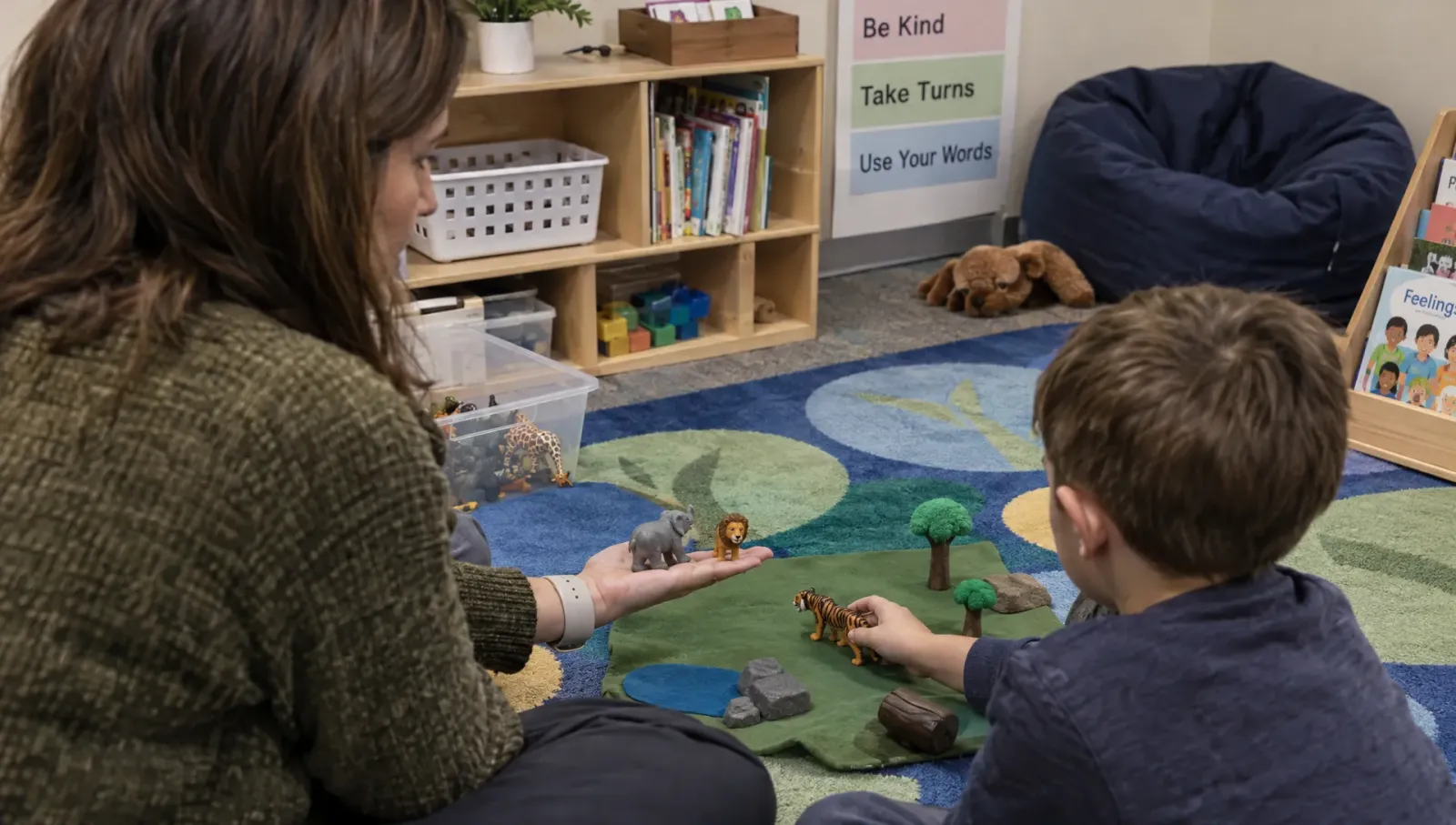
Sessions supporting social skills for children may use play, conversation practice, stories or role-play, depending on the child’s needs. Social skills activities for kids might involve sharing materials during a craft, practicing how to enter a game or finding words to resolve a disagreement.
Progress can be reviewed through specific examples, such as asking for help with fewer prompts. Goals should change when activities become too easy, uncomfortable or less relevant.
Parent support: how to help a child with social skills
For parents wondering how to improve social skills in a child, brief practice within familiar routines is a useful starting point. Follow the child’s interests, model a helpful phrase and allow time to respond. Avoid turning every interaction into a correction.
Practicing social skills for children works best when adults notice what makes participation easier. A quieter setting, visual support or shorter playtime may help. Families preparing for nursery can connect these goals with broader school readiness skills, including communication, independence and emotional regulation.
Parents can also share successful strategies with teachers, with appropriate consent. Consistency means offering familiar support across settings, not expecting identical behavior everywhere. A child who manages a short conversation at home may still need help navigating a busy classroom or playground.
Book a consultation with Bridges Speech Center today
To discuss social skills for children, contact us on +971 50 522 6054. Share the situations your child finds difficult and what your family hopes to change. The team can help you explore an appropriate starting point.