
Behavioral Issues in Children: When to Seek Behavior Therapy

Behavioral issues in children can be linked to communication difficulties, sensory overload, anxiety, developmental needs or other challenges. Learn the signs to watch for, practical strategies for parents, and when professional behavior therapy may be helpful.
Many parents first notice behavioral issues during ordinary routines: getting dressed, doing homework, going to the supermarket or leaving for school. A child may scream, run away, hit, refuse instructions or suddenly shut down. These moments can look like defiance, but they may also reflect stress, communication difficulty, sensory overload or a developmental need.
Behavior problems in children are not a sign of poor parenting. They are signals. The goal is to understand what the child is trying to communicate and what support will help them feel safe, understood and more in control. At Bridges Speech Center, therapy teams work with children and families to look beyond the behavior and build practical skills for daily life.
What Counts as a Behavioral Issue?
A behavioral issue becomes a concern when it is intense, frequent, unsafe or disruptive to learning, friendships and family routines. Tantrums can be typical in toddlers, especially when they are tired or hungry. Concerns increase when reactions continue beyond the expected age range, last a long time or happen in many settings.
Common behavior problems in children may include aggression, extreme refusal, frequent meltdowns, running away, self-injury, severe impulsivity or withdrawal. Some children also avoid school, struggle with transitions or become distressed in noisy places. The context matters because the same behavior can have different roots in different children.
Signs of Behavioral Problems in Children
Parents often ask which behaviors are part of development and which ones need support. The signs of behavioral problems in children are easier to understand when you track when they happen, how long they last and what helps the child recover.
The CDC developmental milestones can help families compare skills with expected age ranges, but a therapist can interpret behavior in relation to communication, sensory processing, emotional regulation and daily functioning.
| Sign | What parents may notice | Possible need to explore |
| Intense meltdowns | Crying, screaming or dropping to the floor for long periods | Emotional regulation, sensory triggers or communication needs |
| Aggression | Hitting, biting, kicking or throwing objects | Frustration tolerance, impulse control or unmet needs |
| Avoidance | Refusing school, therapy, meals or social activities | Anxiety, learning difficulty or sensory sensitivity |
| Shutdowns | Freezing, hiding, not speaking or seeming disconnected | Overstimulation, fear or fatigue |
| Repetitive conflict | Daily battles around dressing, homework or bedtime | Routine difficulty, attention needs or sleep issues |
The most concerning signs of behavioral problems in children include behavior that puts the child or others at risk, loss of previously learned skills, ongoing school disruption and distress that does not improve with consistent routines.
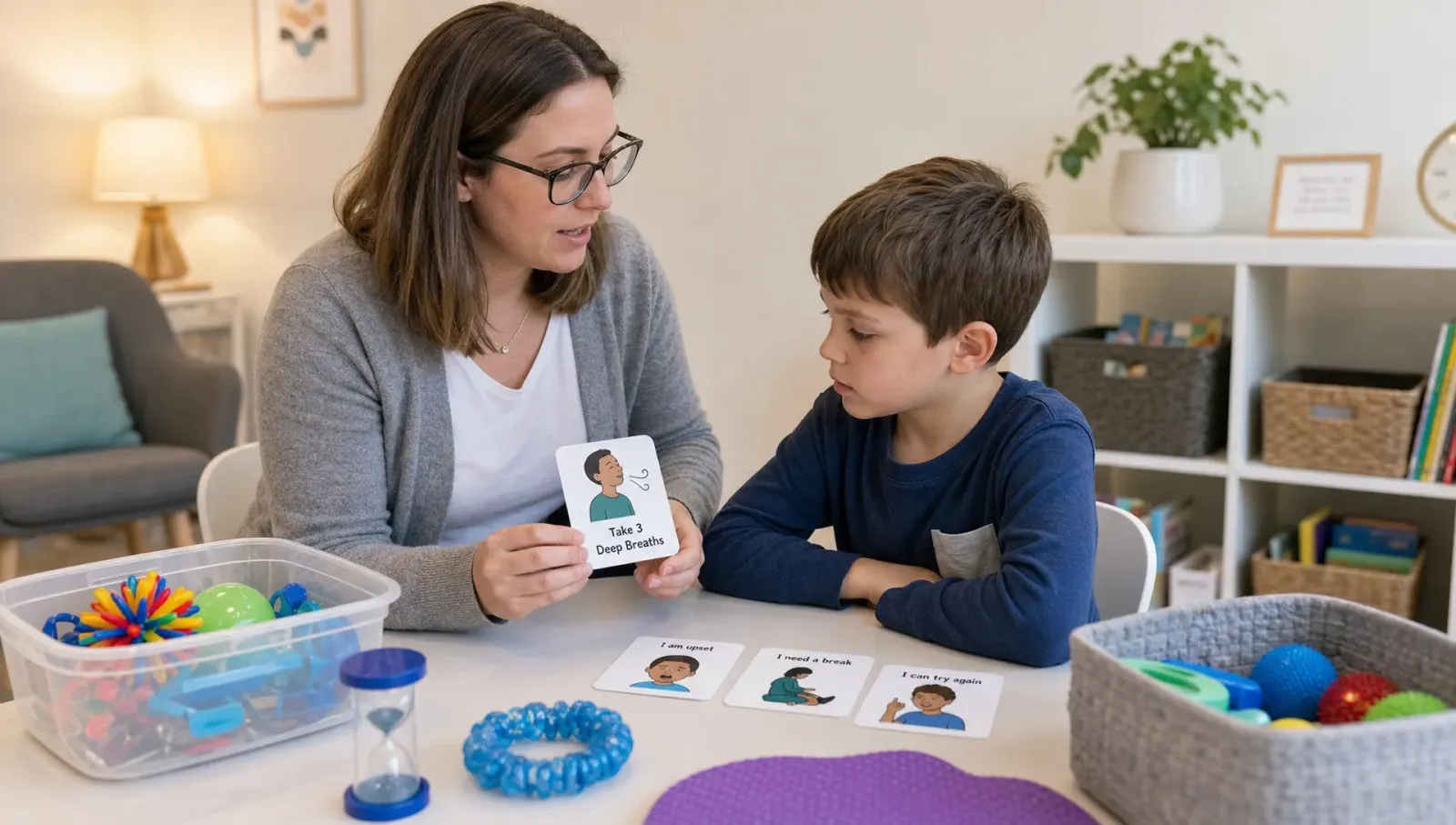
How Sensory Overload Can Drive Big Reactions
Sensory overload happens when a child receives more sensory input than their nervous system can process. Sounds, lights, smells, touch, movement and crowded spaces may feel overwhelming. A child may cover their ears, cry in a mall, refuse certain clothes or become distressed during haircuts, mealtimes and school assemblies.
During sensory overload, the child is not simply choosing to misbehave. Their body may be in a fight, flight or freeze state. This can lead to yelling, escaping, hitting or shutting down. For some children, bright lights or background noise feel as disruptive as pain or danger.
When sensory overload happens often, families may notice patterns. Supermarket trips trigger meltdowns. Birthday parties end in tears. Morning dressing becomes a battle because tags, socks or fabric feel unbearable. These patterns are valuable because they guide therapy planning.
Occupational therapy and sensory integration support can help children understand body signals and develop safer coping strategies. If sensory overload is frequent, it is worth considering whether your child may benefit from occupational therapy support, especially if daily routines are affected.
Causes of Behavioral Problems in Children
The causes of behavioral problems in children are often layered. One child may act out because they cannot explain pain. Another may refuse tasks because language demands are too high. A third may melt down because noise, touch and transitions build up through the day.
Possible causes include communication delays, autism, ADHD traits, anxiety, trauma, sleep problems, feeding challenges, learning difficulties, family stress and medical needs. Children may also show difficult behavior when expectations are not matched to their developmental level.
Speech and language delays are a common hidden factor. When a child cannot ask for help, explain what hurts or understand instructions, behavior becomes a form of communication. Families searching for speech therapy Dubai often discover that communication support can reduce frustration and improve cooperation.
Anxiety can also look like behavior. A child who refuses school, cries before separation or becomes angry before social activities may be trying to avoid a feared situation. Parents can learn more about emotional warning signs in this guide to signs of anxiety in children.
Practical Tips Parents Can Try at Home
Home strategies work best when they are calm, predictable and realistic. The aim is not to control every reaction. The aim is to reduce triggers, teach replacement skills and help the child recover faster after difficult moments.
- Track patterns for one week: Write down what happened before the behavior, what the child did and what helped them calm down.
- Reduce sensory load: Offer quiet breaks, soft lighting, noise reduction or comfortable clothing when the environment is too much.
- Use visual routines: Pictures, simple charts and first-then language can make transitions easier.
- Give choices: Offer two acceptable options such as blue shirt or green shirt to reduce power struggles.
- Teach calm-down skills early: Practice breathing, squeezing a pillow or asking for a break before the child is upset.
- Praise replacement behavior: Notice when your child uses words, waits briefly or moves to a quiet space after sensory overload.
Consistency matters, but flexibility matters too. If a strategy makes distress worse, pause and ask what the behavior may be communicating.
When to Seek Behavior Therapy for Children
Consider professional support when behavior is unsafe, persistent or affecting family life, school participation or social development. Behavior therapy for children can help identify triggers and teach skills that are easier for the child to use in real situations.
Parents should seek help sooner if there is self-injury, aggression, frequent running away, severe sleep disruption, loss of speech or skills, extreme feeding refusal or daily meltdowns that take a long time to recover from. Support is also recommended when caregivers feel exhausted or unsure how to respond.
A therapist may observe the child, speak with parents and review school concerns. The plan may include positive behavior support, ABA-based strategies, parent training, sensory regulation tools, communication support and emotional coping skills. Families can explore behavior therapy when a child needs structured help with behavior, social skills, routines and self-regulation.
How Therapy Supports the Whole Child
Behavior rarely improves through discipline alone when the root cause is developmental, sensory or emotional. A holistic plan may involve speech-language therapy, occupational therapy, psychology, psychotherapy, feeding therapy or physiotherapy depending on the child’s needs.
When behavior is tied to limited words or poor understanding, Speech therapy can help a child communicate wants, feelings and discomfort more clearly. This may reduce frustration and help parents respond before a meltdown grows.
In 2026, many child development teams are focusing more on parent coaching, telehealth support, school collaboration and neurodiversity-affirming goals. These trends are practical because children make faster progress when strategies are used across home, school and therapy sessions. If you are comparing child development center Dubai options, look for individualized care, family involvement and therapists who communicate across disciplines.
Bridges Speech Center offers support for children and adults across speech and language therapy, occupational therapy, physiotherapy, psychology, ABA and behavior therapy, feeding therapy and home care services. The right plan depends on assessment, family priorities and the child’s daily challenges.
Conclusion
Behavioral issues in children are best understood as messages, not just problems to stop. The key is to notice patterns, consider communication and emotional needs and watch for sensory overload as a possible trigger. Early support can help children build safer behavior, stronger communication and better confidence in daily routines.
If your child’s behavior is affecting home, school or social life, professional guidance can make the next step clearer. To discuss assessment and therapy options, please contact us today.