Can Speech Therapy Actually Help a Child with ADHD?
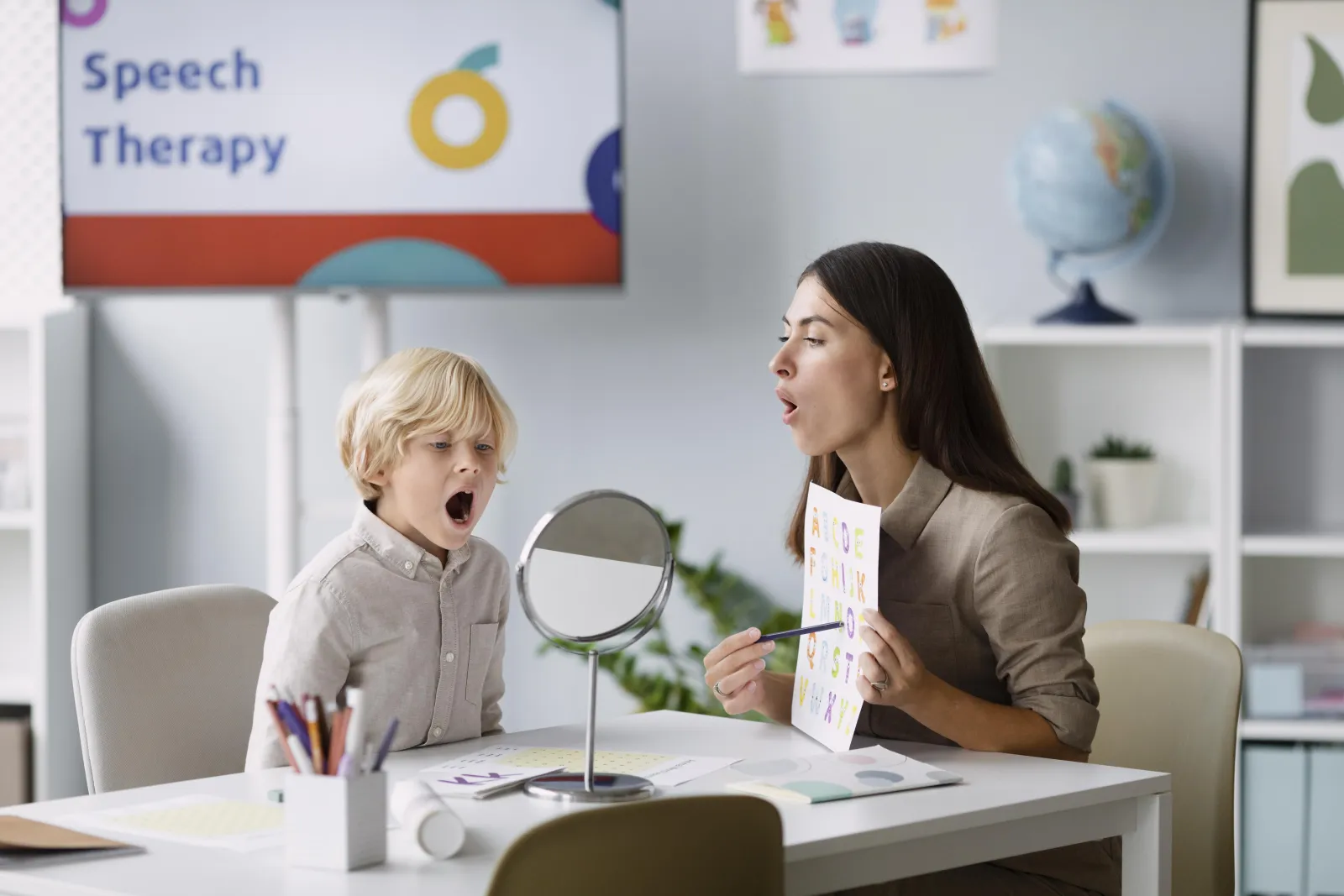
Speech therapy can help children with ADHD develop better communication, listening, social interaction, and storytelling skills. Learn how speech-language therapy supports everyday communication and classroom participation.
If you ask most parents, they think speech therapy is only for kids who have trouble saying their 'r's or lisping on their 's' sounds. But what if your child talks nonstop, interrupts everyone at the dinner table, forgets a three-step direction five seconds after hearing it, and scrambles their stories so badly you can't tell what happened first?
Yes, speech therapy helps with that. A lot, actually.
Here is why: ADHD isn't just about bouncing off the walls or struggling to sit still during circle time. It messes with working memory and focus, which are the exact brain tools we use to listen, plan what we want to say, wait our turn, and make sense to other people. Your child might have an incredible vocabulary (honestly, many kids with ADHD know huge words!), but getting those thoughts out in the right order without losing the listener? That is hard work.
Think about what happens in a busy classroom. The teacher says, "Put your yellow folders away, get out your math books, and turn to page twelve." A child with ADHD hears the first part, their attention slips for a second, and suddenly they're standing by their desk wondering why everyone else is doing math. They aren't trying to be difficult, their working memory simply ran out of room, like an overfilled shopping cart where things start tumbling out the sides.
Here is an illustrative example of what this looks like in real life. Take an eight-year-old who kept blurting out answers in class and getting into trouble with classmates. On paper, his vocabulary was great. But when our speech therapist evaluated him, it turned out he had a really hard time reading social body language and holding onto spoken directions. In therapy, he practiced using little visual cards to remind himself when to pause, and he learned to say the first step of a direction out loud so it stuck in his head. After a few months, he was much more confident chatting with friends and finishing his morning school routine without getting overwhelmed.
When a speech-language pathologist (SLP) sits down with your child, we look at several things:
| Pragmatics (which is just a fancy clinical word for social communication): | Do they know how to join a game nicely? Can they tell when a friend is getting bored? Do they interrupt constantly? |
| Understanding directions and working memory: | Can they hold a couple of spoken steps in their head without forgetting the middle one? |
| Telling stories in order: | Can they explain what happened at break time with a clear beginning, middle, and end, or do they jump straight to the explosion without telling you who was there? |
| Word retrieval: | Do they get stuck saying "um, that thingy, you know, the stuff" whenever they get excited? |
If you want to try a few simple things at home right now, here are ideas that genuinely help:
1. One step at a time. Instead of "wash your hands, put your shoes in the closet and come eat", just say "shoes in the closet, please." Once that's done, give the next one. It saves so many tears.
2. Visual checklists. Draw little pictures or stick a simple checklist by the front door. Seeing it takes the load off their memory.
3. Give them ten quiet seconds. Ask a question and then just... wait. Don't jump in. Let them gather their words.
4. Gentle conversation signals. Instead of snapping "stop interrupting", try resting your hand softly on their arm as a quiet physical reminder that someone else is finishing their thought.
5. Help them map out a story. Ask, "Who was with you? Okay, and what happened before lunch?"
Living in Dubai adds another layer to this. Most of our kids are in international schools, British, IB, American, Indian, or Ministry curricula and they are sometimes learning two or three languages at once. Juggling multiple languages while your brain is already working overtime to filter out classroom noise is exhausting. The good thing is that under Dubai Health Authority (DHA) standards and the KHDA Inclusive Education Policy Framework, our speech therapists can work directly with school inclusion teams. That means the exact strategies we use in the clinic get written right into your child's classroom plan so teachers can support them the same way.
Does speech therapy cure ADHD?
No, because ADHD is a lifelong brain wiring, not an illness you wash away. But it gives your child practical tools so they can share their bright ideas, make close friends, and feel good about going to school.
If you are unsure whether your child's communication is developing as expected, an assessment can help identify strengths and areas that may need support.
Rupali Ranjith
MASLP, BCaBA, QASP-S
Director- of Bridges Speech Center, Bridges Care, and Bridges Synergy Pro
I am Rupali Ranjith, Consultant Speech and Language Therapist, Assistant Behaviour Analyst, Qualified Autism Specialist, as well as Medical Director of Bridges Speech Center, Bridges Care, and Bridges Synergy Pro. I hold a master’s degree in Speech and Hearing and more than 20 years of experience across India and the UAE. I have supported clients of all ages. Along with speech and Language Pathology, I hold BCaBA and QASP-S credentials. I am trained in evidence-based approaches, including PROMPT, DTTC, ReST, AVT, PECS, AVAZ, Gestalt Language Processing, Orofacial Myofunctional Therapy, Oral Placement Therapy, Reflex Integration, Sensory Integration, and the Hanen Program.
If you are really concerned about your child’s communication development, an assessment can help identify their strengths, underlying challenges, and appropriate next steps.
To schedule a speech and language consultation, contact Bridges Speech Center LLC:
04 358 1115 | 050 522 6054
References
- American Speech-Language-Hearing Association (ASHA), Communication Milestones: How Does Your Child Hear and Talk?
- American Academy of Pediatrics – HealthyChildren.org, Developmental Milestones for Two-Year-Olds.
- Royal College of Speech and Language Therapists (RCSLT), Early Years Speech and Language Development