
What is the difference between ADHD and Autism?
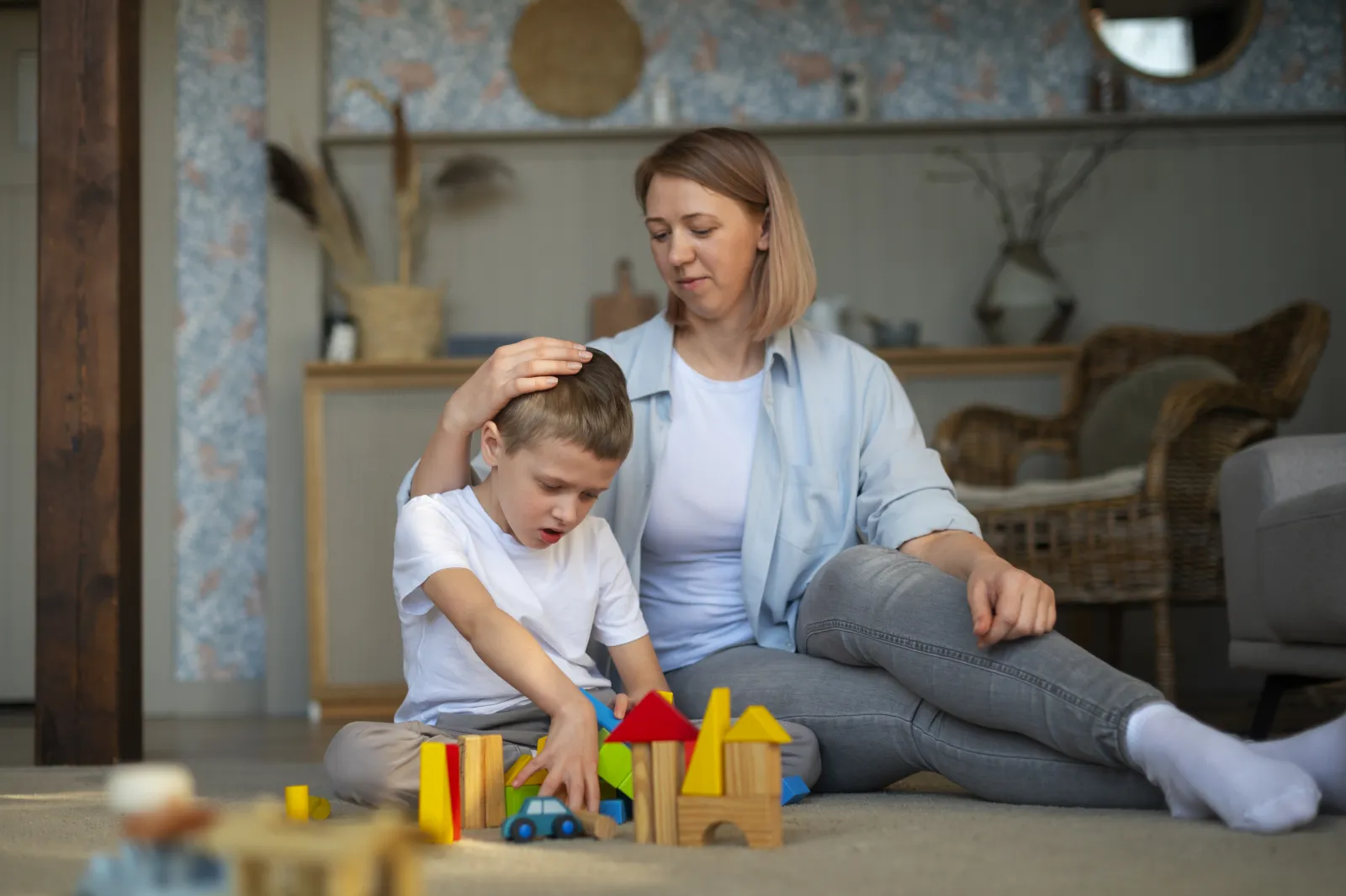
Understand the differences between ADHD and autism in toddlers by recognising early signs in social communication, attention, play and sensory behaviours. Learn what specialists look for during developmental assessments and how early support can help your child build communication and everyday skills.
Is It ADHD, Autism, or Autism Spectrum Disorder with ADHD?
If your toddler never seems to sit still, tunes you out when you call them, and ignores simple directions, you are probably exhausted. And worried. You might be wondering late at night: is this normal toddler chaos, or something like ADHD or Autism?
Here is the short answer. The biggest difference usually comes down to how your child connects with you socially versus how they handle their energy and attention. Autism mostly shapes how a child shares feelings, uses eye contact, and communicates back and forth. Early ADHD traits are more about having a massive motor running inside, jumping impulsively from one thing to next, even when they really want to connect with you.
Why Two-Year-Olds Are Hard to Read?
Toddlers are little tornadoes, they are supposed to be easily distracted. Their self-control is tiny right now! So telling things apart comes down to why your little one does what they do.
Take something called "joint attention" (which just means sharing a moment). When a toddler sees a dog in the park, do they point at the dog, look back at your face, and smile like, "Did you see that?!"
With Autism, sharing that kind of back-and-forth joy can be really tough. A child might not look up when you point, or they might play with toys in very exact ways (like spinning wheels or lining up every single car by color). They might also get very upset by loud noises or scratchy shirts.
With early ADHD tendencies, the story looks different. That toddler usually loves pointing things out and sharing a laugh, but they physically cannot stay in one spot. They drop the toy after two seconds because their brain is already racing toward the sofa cushions. It is not that they do not care about you, they just crave non-stop movement.
Two Toddlers on the Rug: An Everyday Picture
Imagine two toddlers playing with wooden blocks in the living room.
| Toddler A | builds a neat, straight line of green blocks. If someone bumps the line, tears happen immediately. When Mum points across the room and says, "Look at the kitty!", Toddler A stays glued to the blocks and does not turn their head. This kind of focused, solitary play and quiet communication style is sometimes seen with early Autism. |
| Toddler B | stacks two blocks, kicks the tower down with a big giggle, runs to grab a ball, drops it to climb the armchair, and leaps off. When Mum calls their name, Toddler B looks right at her and grins, but takes off running again five seconds later. That is classic impulse-driven energy that might point toward attention differences down the road. |
What Clinicians Keep an Eye On
When specialists evaluate young children, here are the everyday things we pay close attention to:
| How they connect: | Do they look you in the eye with a warm smile, or does it feel hard to catch their gaze? |
| Why they point: | Do they point just to say "look at that pretty bird!" or only when they need a snack off the high counter? |
| Turning when called: | Do they react to their name across the room, or do you have to gently tap their shoulder every single time? |
| How they play: | Is play open-ended and messy, or is it strictly repeating the same steps over and over? |
| Talking and gestures: | Are words coming along? Do they pull your wrist to show you what they want? |
| Energy dial: | Can they ever settle down for a cuddle, or is their engine always stuck on high speed? |
Quick Side-by-Side Comparison
| Social Connection: | In ADHD, toddlers usually seek out friends and family easily, though they might crash into games too roughly. | In Autism, back-and-forth social games (like peek-a-boo) feel harder or less interesting to them. |
| Communication: | In ADHD, speech is often on schedule, even if they talk a mile a minute. | In Autism, speech might be delayed, repeated like an echo (echolalia), or gestures like waving goodbye might be missing. |
| Attention Style: | ADHD toddlers jump quickly between toys and get bored fast unless it is a favorite game | Autistic toddlers often focus deeply on specific parts of toys (like spinning gears) and really dislike switching activities. |
| Everyday Play: | ADHD play can be wild and disorganized. | Autism play often follows strict patterns and sorting. |
| Sensory Habits: | ADHD kiddos often love big physical sensations like jumping, crashing, and touching everything. | Autistic kiddos may feel overwhelmed or intensely bothered by certain sounds, bright lights, or textures. |
| Common Age for Answers: | ADHD is usually diagnosed around 4 to 7 years old once preschool starts. | Autism can be accurately spotted much earlier, between 18 and 24 months. |
Helpful Things You Can Do
1. Keep a simple note on your phone: Write down quick moments when communication breaks down or meltdowns happen over two weeks.
2. Watch them in different spots: Is the behavior the same at home, at the nursery, and in the grocery store?
3. Drop down to their eye level: Sit on the rug right in front of them during play. Does face-to-face contact help them tune in?
4. Talk to your pediatrician: Bring your notes to your regular checkup and share what you are seeing.
5. Consider a multidisciplinary developmental screening: A team assessment takes the guesswork away.
A Reassuring Thought for Parents in Dubai
Honestly, putting a permanent label on a two-year-old is not the main goal right now. What really matters is understanding what your child needs today so they can thrive.
Whether your child has early signs of ADHD or early signs of Autism, or is just taking their own sweet time to develop, early therapy (like speech therapy or occupational therapy) does not require a final diagnosis to make a huge difference. We work on real-life skills: building joint attention, helping with sensory comfort, and teaching easy communication tools during everyday play at home.
Here in Dubai, families have access to great multidisciplinary support regulated by the Dubai Health Authority (DHA) and the Community Development Authority (CDA). Because so many of our families speak two or three languages at home (like Arabic and English), our clinical teams are very careful to separate natural multilingual language learning from true developmental delays.
If you are unsure whether your child's communication is developing as expected, an assessment can help identify strengths and areas that may need support.
Rupali Ranjith
MASLP, BCaBA, QASP-S
Director- of Bridges Speech Center, Bridges Care, and Bridges Synergy Pro
I am Rupali Ranjith, Consultant Speech and Language Therapist, Assistant Behaviour Analyst, Qualified Autism Specialist, as well as Medical Director of Bridges Speech Center, Bridges Care, and Bridges Synergy Pro. I hold a master’s degree in Speech and Hearing and more than 20 years of experience across India and the UAE. I have supported clients of all ages. Along with speech and Language Pathology, I hold BCaBA and QASP-S credentials. I am trained in evidence-based approaches, including PROMPT, DTTC, ReST, AVT, PECS, AVAZ, Gestalt Language Processing, Orofacial Myofunctional Therapy, Oral Placement Therapy, Reflex Integration, Sensory Integration, and the Hanen Program.
If you are really concerned about your child’s communication development, an assessment can help identify their strengths, underlying challenges, and appropriate next steps.
To schedule a speech and language consultation, contact Bridges Speech Center LLC:
04 358 1115 | 050 522 6054
References
- American Speech-Language-Hearing Association (ASHA), Communication Milestones: How Does Your Child Hear and Talk?
- American Academy of Pediatrics – HealthyChildren.org, Developmental Milestones for Two-Year-Olds.
- Royal College of Speech and Language Therapists (RCSLT), Early Years Speech and Language Development.