
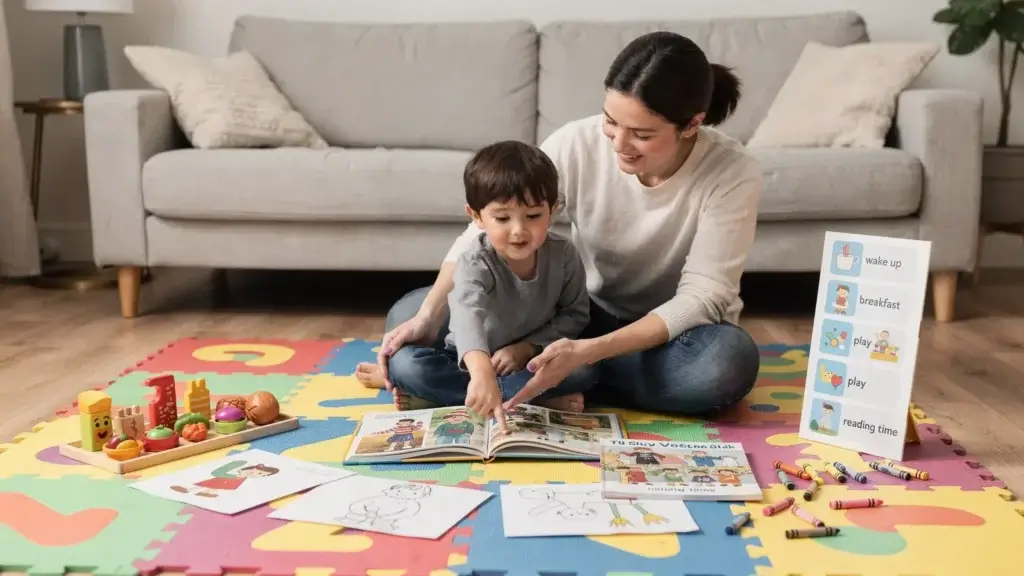
Starting school is an exciting milestone but it can also feel overwhelming for children and parents. A child may know letters or numbers yet still need support with listening, following routines, sharing with peers, sitting for group time, using classroom tools or managing emotions. A school readiness program that parents choose should look at the whole child rather than only academic skills.
At Bridges Speech Center, school readiness support is designed for preschoolers who are preparing for nursery, kindergarten or early primary school. The aim is to help children build the communication, motor, social, emotional and independence skills needed for a smoother transition into the classroom.
What Is School Readiness?
In simple terms, school readiness is a child's ability to participate in school routines with confidence. It includes understanding instructions, expressing needs, playing with peers, tolerating transitions, using hands for pre-writing tasks and managing basic self-care.
The school readiness program helps identify the skills a child already has and the areas that may need more practice before school begins. This may include speech and language development, attention span, emotional regulation, fine motor coordination, early literacy, social interaction and sensory processing.
School readiness for preschoolers is not about pushing children into formal academics too early. It is about building strong foundations through play, movement, routines and guided interaction.
Why Choose Bridges Speech Center for School Readiness Support?
At Bridges Speech Center, our school readiness program brings together the strengths of a multidisciplinary therapy team. Children may be supported by speech therapists, occupational therapists, physiotherapists, psychologists or behavior specialists depending on their needs.
This team approach is helpful because school success depends on many connected skills. A child who struggles to follow directions may need language support. A child who avoids drawing may need fine motor and hand strength support. A child who becomes upset during transitions may need sensory regulation or emotional guidance.
Our therapists focus on practical goals that support everyday participation at home and in school. Sessions are child-centered, supportive and designed around each child's current developmental level.
Benefits of School Readiness Program Dubai for Children
The goal of our school readiness program in Dubai is to help children feel capable, connected and prepared. When children receive the right support before school starts, they often find it easier to engage in group learning and daily classroom routines.
Key benefits may include:
- Improved listening and ability to follow classroom instructions
- Stronger expressive language for asking questions and sharing ideas
- Better attention, turn-taking and group participation
- Improved pencil control, cutting skills and hand coordination
- Greater independence with routines such as packing, feeding and transitions
- More confidence during peer play and social communication
- Better emotional regulation when routines change
These gains support school readiness for preschoolers in a meaningful way. Children do not need to be perfect before starting school. They need supportive practice that helps them participate with less stress.
How Our School Readiness Sessions Work
Every school readiness program begins with a detailed school readiness assessment. This helps therapists understand a child's strengths, challenges, learning style and family priorities.
| Stage | What Happens | Purpose |
| Initial discussion | Parents share developmental history, school concerns and daily routines | Understand the child's background |
| Observation | Therapists observe play, communication, attention, movement and behavior | Identify functional strengths and needs |
| Skill screening | Activities may check language, fine motor skills, sensory responses and pre-academic readiness | Build a clear therapy profile |
| Goal planning | Therapists create targeted goals with family input | Support school participation |
| Ongoing review | Progress is monitored and goals are adjusted | Keep therapy practical and relevant |
School readiness activities are usually play-based and purposeful. A child may practice listening through action games, build vocabulary during pretend play, strengthen hands with craft tasks, follow routines through visual supports or learn social phrases during peer-style activities.
Who Can Benefit from a School Readiness Program?
A school readiness program can benefit children who are entering school for the first time as well as children who are already in preschool but finding classroom routines difficult.
Your child may benefit if they:
- Have difficulty following simple instructions
- Use limited words or struggle to explain needs
- Avoid drawing, coloring, cutting or table activities
- Find transitions stressful or become upset easily
- Struggle to sit for short group activities
- Prefer solitary play or find peer interaction difficult
- Show sensory sensitivities to sounds, textures or busy rooms
- Need help with feeding, dressing or classroom independence
Some children need only a short period of focused support. Others may need ongoing therapy for speech, occupational skills, behavior, emotional regulation or motor development.
Our Expert Therapists and Personalized Approach
Our school readiness program Dubai is guided by therapists who understand child development and classroom expectations. Each plan is individualized because no two children prepare for school in the same way.
Therapists may use language-building activities, sensory integration strategies, fine motor tasks, movement-based games, social communication practice and parent coaching. If a child has autism, ADHD, developmental delay, speech delay, dyslexia risk factors or sensory processing challenges, the plan can be adapted to support those needs.
The focus is always functional progress. We look at how the child communicates, plays, learns, moves and participates in real routines.
Parent Support and Guidance in School Readiness
Parent involvement is an important part of school readiness for preschoolers. Children make stronger progress when therapy strategies are practiced during daily routines.
Parents may receive guidance on building attention during play, encouraging communication at mealtimes, supporting emotional regulation, practicing pre-writing skills or preparing a child for school routines. Small daily habits can make a major difference when they are consistent and matched to the child's level.