
What Happens During a Pediatric Sensory Integration Assessment in Dubai?
Discover what happens during a pediatric sensory integration assessment, including play-based activities, sensory observations, movement tasks and parent feedback. Learn how occupational therapists identify your child's sensory needs and recommend practical strategies for home and school.
If someone told you your child needs a sensory assessment, you might be wondering what on earth actually happens once you walk through the clinic door.
Here is the quick answer: a licensed pediatric occupational therapist spends about 60 to 90 minutes playing games, watching how your child moves, and asking you lots of questions about daily life. It is not a medical test with scary machines or needles. It just helps us figure out how your little one's brain and body take in sights, sounds, touches, and movement, so we can make life a bit easier for them at home and in school.
Most of us grew up learning about the five senses (taste, touch, smell, sight, hearing). But our bodies actually have two extra hidden senses that do a lot of heavy lifting. One is the vestibular sense that is your balance and knowing where your head is when you move. The other is proprioception, which is really just body awareness. It tells your muscles how hard to push a door, or how tight to hold a cup without spilling it.
When a child's brain struggles to organize all that incoming sensory information, ordinary days can feel super overwhelming.
Think about a five-year-old who screams and covers their ears whenever the school bell rings, hates wearing socks because of the seams, or constantly bumps into the couch while running around. They are not acting out on purpose. Truly. Their little nervous system is just feeling overloaded, or maybe it is searching for extra movement to feel settled.
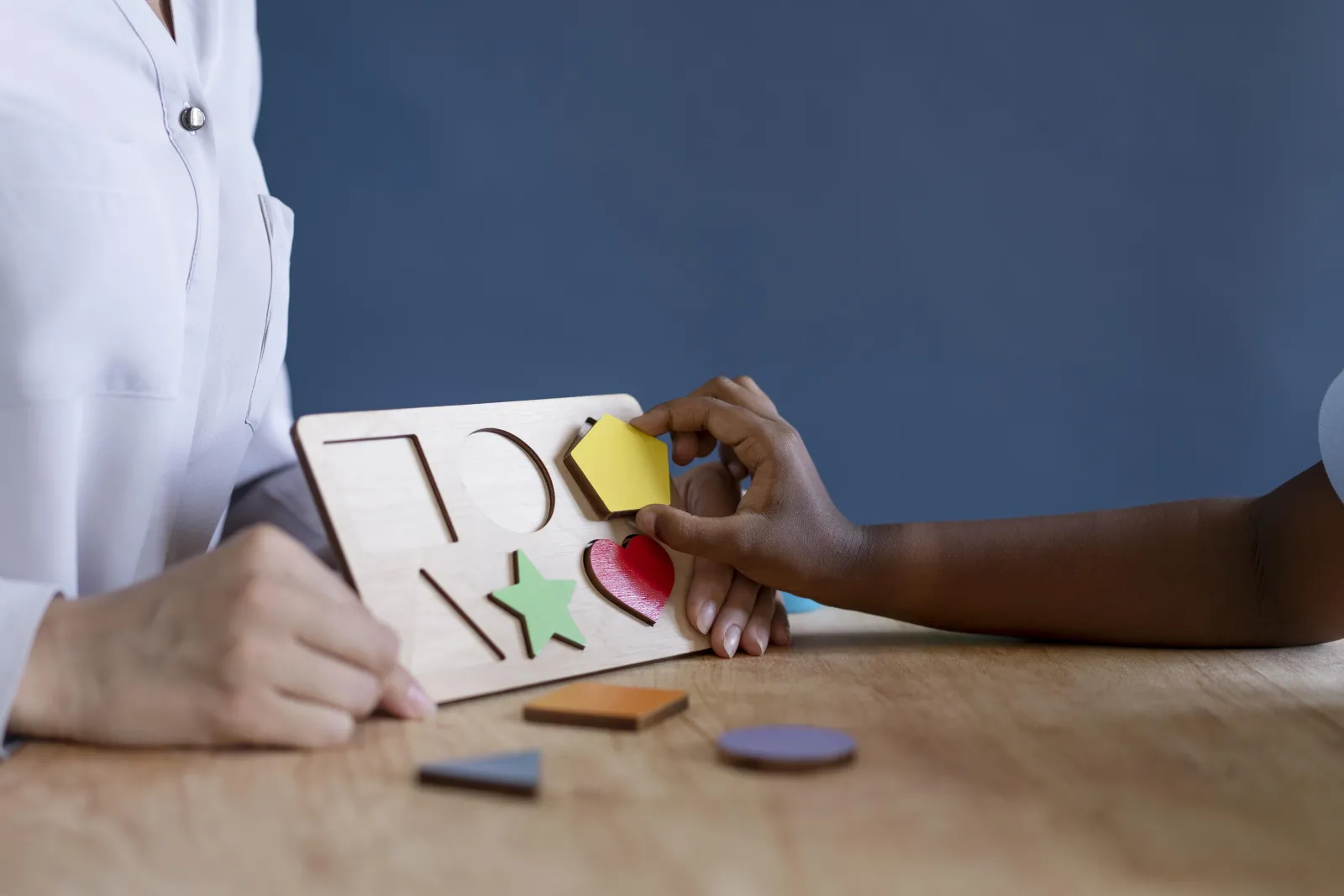
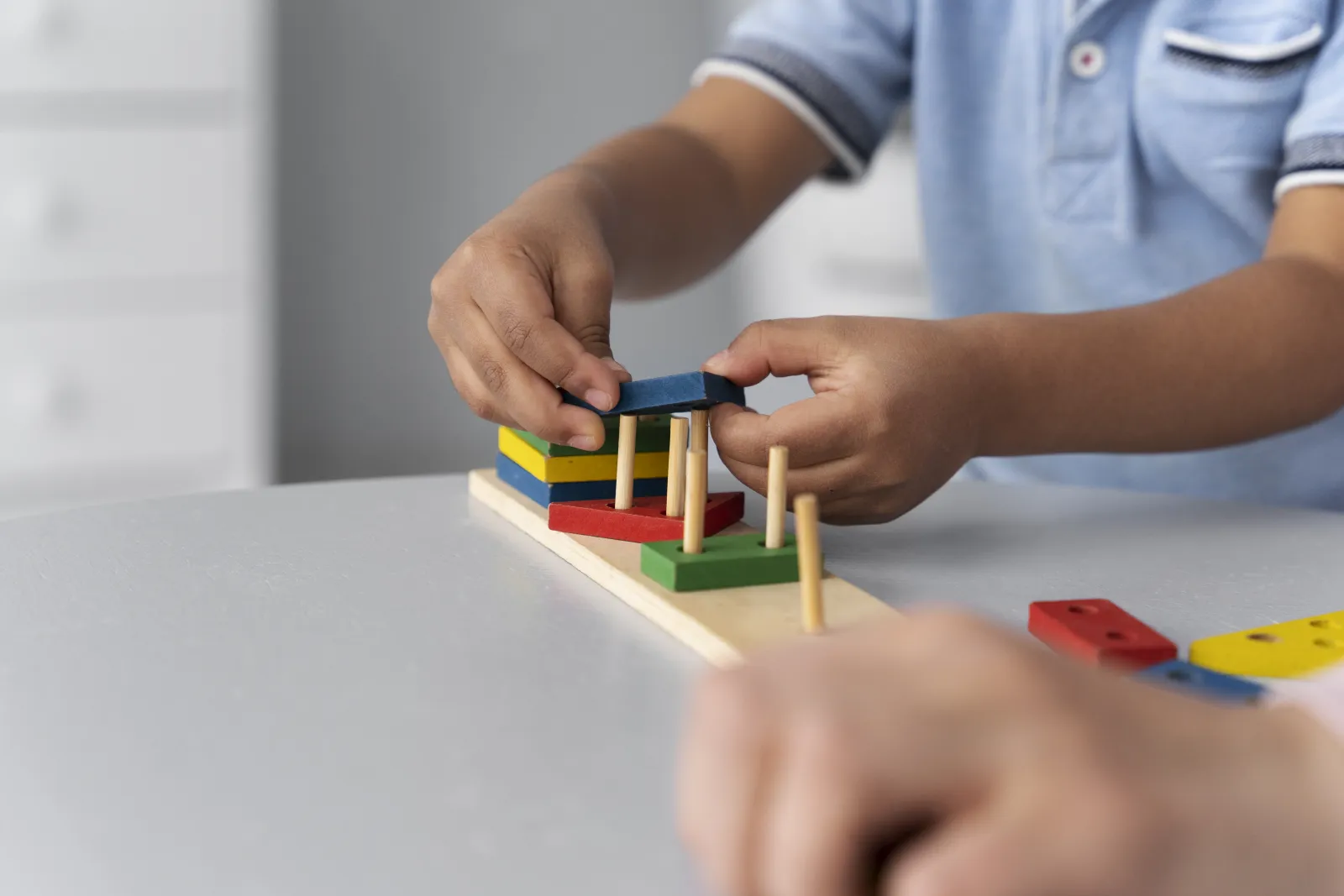
So what do we actually do during the session? Honestly, to your child, it will feel mostly like a giant playdate. We might ask them to hop through a soft obstacle course, balance on a beam, swing in a hammock swing, or catch a beanbag. While they play, the occupational therapist watches very closely. We look at things like:
- How they react to swings or spinning (do they love it, or does it make them feel uneasy?)
- How they handle different textures, like shaving foam, playdough, or sticky things
- Balance and whether their tummy and back muscles get tired quickly when sitting on the rug
- Motor planning, which is just the fancy way of saying how easily they figure out a new movement they haven't tried before
- Body awareness, like whether they press down way too hard with crayons or trip over their own feet
- How both sides of the body work together when using scissors or catching a soft ball
If you are coming in soon, here are a few simple ways you can get ready. You don't need to do any heavy homework, promise! Just jot down a quick note whenever your child has a tough time with things like hair washing, tags on shirts, or noisy malls. Ask their nursery or school teacher if they notice anything during circle time or out on the playground. Dress your child in comfy clothes (soft t-shirt and joggers are perfect) with grip socks or shoes that slip off easily. And just tell your child they are going to a fun playroom with swings and climbing mats.
Here is a quick look at how the whole thing unfolds:
First, we chat with you about your child's birth history, milestones, and what everyday mornings look like. Then we do the play-based clinical observation and standard movement tasks in our sensory gym. You can usually sit right there in the room, especially if your child feels shy. Afterward, the therapist scores everything up and writes a detailed report. Finally, we sit down together for a parent feedback meeting to walk through the findings and share practical ideas for home and nursery.
Parents ask us all the time if this is painful or scary for the child. Not at all. There are soft mats everywhere, and we never push a child into doing something that truly distresses them. People also ask how this is different from an autism assessment. An autism evaluation is a broader diagnostic process done by a multidisciplinary team (like a developmental pediatrician, clinical psychologist, and speech-language pathologist). A sensory assessment focuses specifically on how the body processes sensations and movement. Some autistic children have sensory differences, but many children who are not autistic have sensory processing difficulties too.
Living in Dubai brings its own unique sensory challenges, honestly. Going from burning 45-degree heat outside straight into freezing air-conditioned malls, huge echoing play areas, and busy international school classrooms can be a lot for a sensitive nervous system. Our pediatric occupational therapists practice under Dubai Health Authority (DHA) and Dubai Healthcare City (DHCC) guidelines, and we make sure our written reports give clear, practical recommendations that your child's school inclusion or SEND team can actually use in their Individualized Education Plan (IEP).
If you are unsure whether your child's sensory processing is developing as expected, an assessment can help identify strengths and areas that may need support.
Nutan Dhamale
B.O.TH
Head of Occupational Therapy Dept.
I am Nutan, Head of the Occupational Therapy Department at Bridges Speech Center. I hold a Bachelor’s degree in Occupational Therapy from Seth G.S. Medical College and KEM Hospital in India, and I have more than 10 years of experience working with children.
I enjoy helping children become more comfortable and confident in the activities that fill their day playing, getting dressed, eating, writing, and joining in at school. I take time to understand each child’s strengths and challenges, then work with parents and educators on practical strategies they can use beyond the therapy room.
My work includes supporting children with autism, ADHD, developmental delays, learning difficulties, and sensory processing challenges. I have training in sensory integration, reflex integration, Handwriting Without Tears, feeding difficulties, and neurodevelopmental therapy. I use individual goals and play-based activities to help each child build skills at their own pace.
If your child is finding everyday activities, sensory experiences, handwriting, or feeding difficult, an occupational therapy assessment can help identify their strengths and the support they need.
To schedule a consultation, contact Bridges Speech Center LLC:
04 358 1115 | 050 522 6054
References
- American Occupational Therapy Association. (2020). Occupational therapy practice framework: Domain and process—Fourth edition. American Journal of Occupational Therapy, 74(Supplement 2), 7412410010. https://doi.org/10.5014/ajot.2020.74S2001
- American Occupational Therapy Association. (n.d.-a). Early intervention. https://www.aota.org/practice/practice-settings/schools-early-intervention-community-education/early-intervention
- American Occupational Therapy Association. (n.d.-b). Practice guidelines and evidence-based clinical resources. https://www.aota.org/practice/practice-essentials/evidencebased-practiceknowledge-translation/practice-guidelines
- American Occupational Therapy Association. (n.d.-c). School-based settings. https://www.aota.org/practice/practice-settings/schools-early-intervention-community-education/schools
- Royal College of Occupational Therapists. (n.d.). Occupational therapy for children and young people. https://www.rcot.co.uk/explore-resources/children-young-people-families/OT-children-and-young-people