
Why Do Children with Autism Display Repetitive Behaviours?
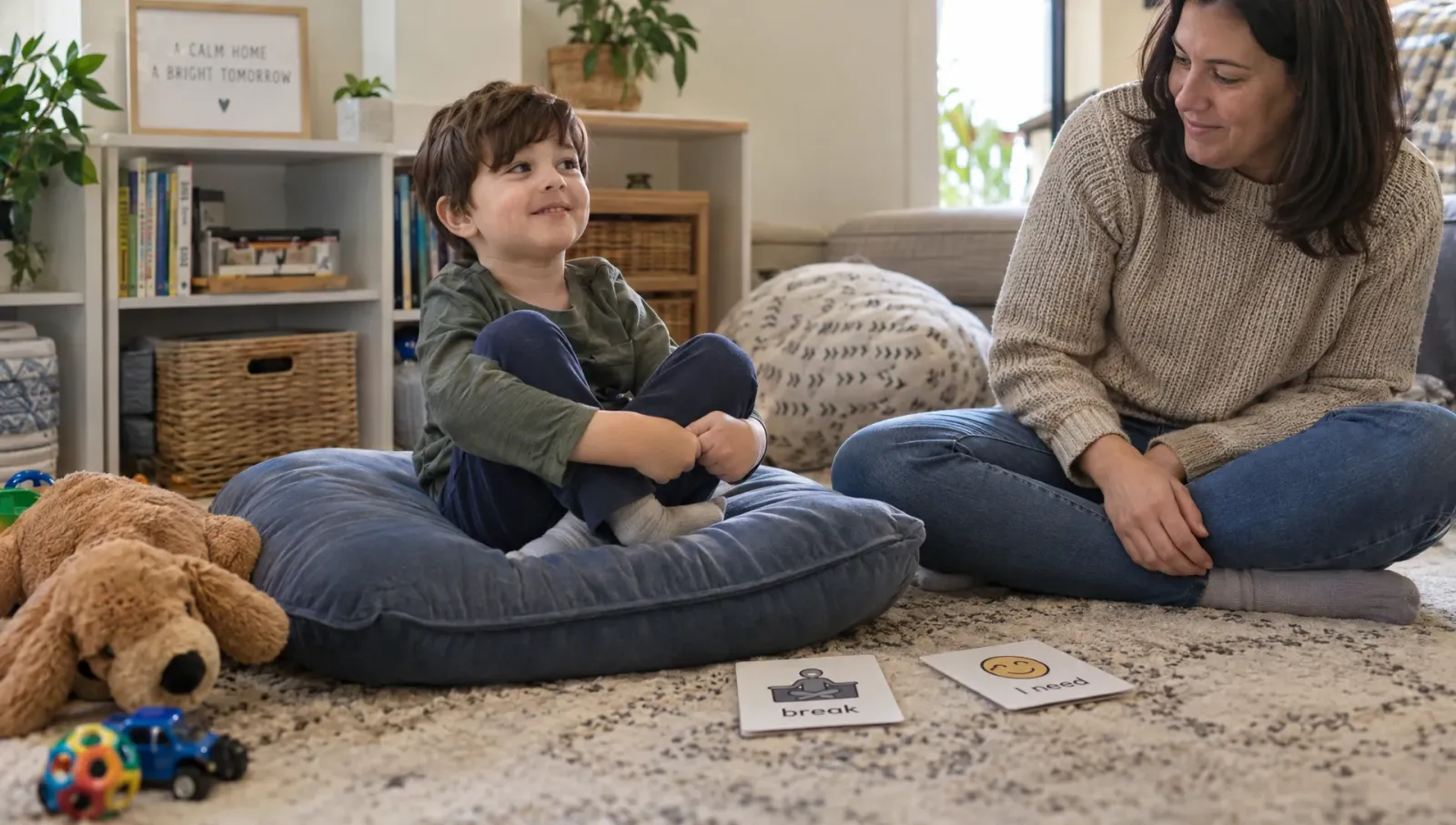
Repetitive behaviours such as hand flapping, rocking and repeating phrases are common in autism. Understand why children display these behaviours, when parents should seek professional support and how to respond with patience and appropriate strategies.
Hand flapping, rocking, repeating phrases or following the same routine can leave parents wondering what their child needs. Repetitive behaviour in autism often helps children manage sensory input, regulate emotions or enjoy familiar experiences. It is not automatically a problem that needs stopping.
The most useful question is whether a behavior helps your child, causes harm or makes everyday activities harder. Understanding its purpose makes it easier to respond with support rather than unnecessary correction.
Understanding repetitive behaviour in autism
Repetitive behaviors include repeated movements, sounds, actions and routines. Some are called “stimming,” short for self-stimulatory behavior. Stimming in autism can involve movement, touch, sound or visual experiences.
The CDC’s description of autism signs includes repetitive movements, repeated speech, strong interests and difficulty with changes. However, repetitive behavior alone does not establish an autism diagnosis.
| Pattern | Examples | Possible purpose |
| Repeated movements | Rocking, hand flapping or finger movements | Sensory regulation, excitement or comfort |
| Repeated speech | Repeating sounds, words or familiar phrases | Communication, enjoyment or processing language |
| Repeated play | Lining up toys or spinning wheels | Predictability or sensory enjoyment |
| Familiar routines | Taking the same route or arranging objects precisely | Reducing uncertainty |
These are possibilities, not explanations for every child. The same movement can serve different purposes at different times.

Why do children repeat movements and routines?
Managing sensory input
Some children experience sounds, lights, touch or movement intensely. Others seek additional sensory input. Repetitive movements in autism may help a child adjust their level of alertness or feel more settled.
For example, rocking might feel soothing after a noisy school day. Hand flapping might express delight during a favorite game. Stimming in autism can occur during happiness as well as distress, so context matters more than appearance.
Creating predictability
Familiar actions can make an unpredictable situation easier to manage. Repetitive actions in autistic children may increase during transitions, unfamiliar activities or changes in routine.
Repetitive behaviour in autism can provide consistency when expectations feel unclear. A child who repeatedly checks their schoolbag may need reassurance about what happens next, rather than repeated instructions to stop checking.
Expressing needs and enjoying interests
Some repetitive behaviors in autism communicate excitement, frustration or a need for a break. Others are simply enjoyable. A strong interest in spinning objects or repeating a favorite scene can be meaningful play.
Repeated language also deserves careful interpretation. Our guide to echolalia and autism explains why familiar phrases may support communication. Repetition should not automatically be treated as meaningless speech.
When should parents seek help?
Seek support when repetition causes injury, significant distress or substantial difficulty with daily life. Examples include biting that damages skin, head banging or routines that regularly prevent eating, sleeping or leaving home.
A sudden change also deserves attention. Increased repetition may accompany pain, illness, poor sleep or an overwhelming environment. Do not assume every new behavior is “just autism.” A clinician can check for physical causes.
Repetitive behaviors in autism do not need intervention simply because they look unusual. If you also notice communication differences or developmental concerns, this guide to when to seek an autism assessment explains useful next steps. Seek urgent medical care for serious injury or immediate danger.
How to support repetitive behaviour in autism
Observe before changing anything
For several days, briefly record what happens before the behavior, what your child does and what happens afterward. Include noise, transitions, tiredness and signs of discomfort.
When observing repetitive actions in autistic children, look for patterns without assuming one cause. Rocking before school and rocking during a favorite song may have different meanings. Ask your child what helps whenever they can communicate this through speech, gestures or another method.
Adjust the environment
Try reducing unnecessary noise, offering a quieter space or giving advance notice before transitions. A simple visual schedule can make the next activity clearer.
Build changes around your child’s preferences. Headphones or movement breaks help some children but not everyone. The ideas in our guide to autism therapy at home can support practice within familiar routines.
Make communication easier
Offer accessible ways to communicate “help,” “stop,” “more” and “break.” Depending on the child, these might include speech, gestures, pictures or augmentative and alternative communication (AAC).
Communication support does not require a child to stop moving first. When exploring speech therapy in Dubai, ask how goals will help your child express needs during real situations. A therapist can also help adults recognize communication that is already present.
Protect safety without punishing harmless stimming
Avoid repeatedly saying “quiet hands” or physically stopping safe movements simply to make them less noticeable. Instead, identify whether there is an actual safety or participation concern.
For unsafe repetitive movements in autism, seek an individualized assessment and safer alternatives that meet the same need. NICE guidance recommends considering communication, physical health, mental health and environmental factors when assessing behavior that challenges. Any strategy should be reviewed for its effect on the child’s comfort, not just its effect on visible behavior.
What professional support can help?
Support for repetitive behaviour in autism should begin with understanding the individual child. A speech-language therapist may address communication barriers. An occupational therapist can assess sensory needs and participation. A pediatrician or psychologist may help investigate pain, anxiety or other concerns.
Bridges Speech Center offers speech therapy, occupational therapy, psychological support and parent involvement. Families exploring autism therapy can discuss goals based on their child’s needs.
A neurodiversity-affirming approach prioritizes safety, choice and meaningful participation rather than making a child appear less autistic. For repetitive actions in autistic children, progress might mean requesting a break, tolerating a necessary transition with support or experiencing less distress. It does not have to mean less movement.
Support the need behind the behavior
Understanding repetitive behaviour in autism means looking beyond the movement or routine. Repetition may provide comfort, predictability, enjoyment or a way to communicate. Preserve safe behaviors while addressing pain, distress and barriers to daily life.
If you would like help understanding your child’s needs, contact us at Bridges Speech Center to discuss an individualized assessment and appropriate support.