
Is Constant Fidgeting ADHD or Sensory Seeking? What Parents Need to Know?
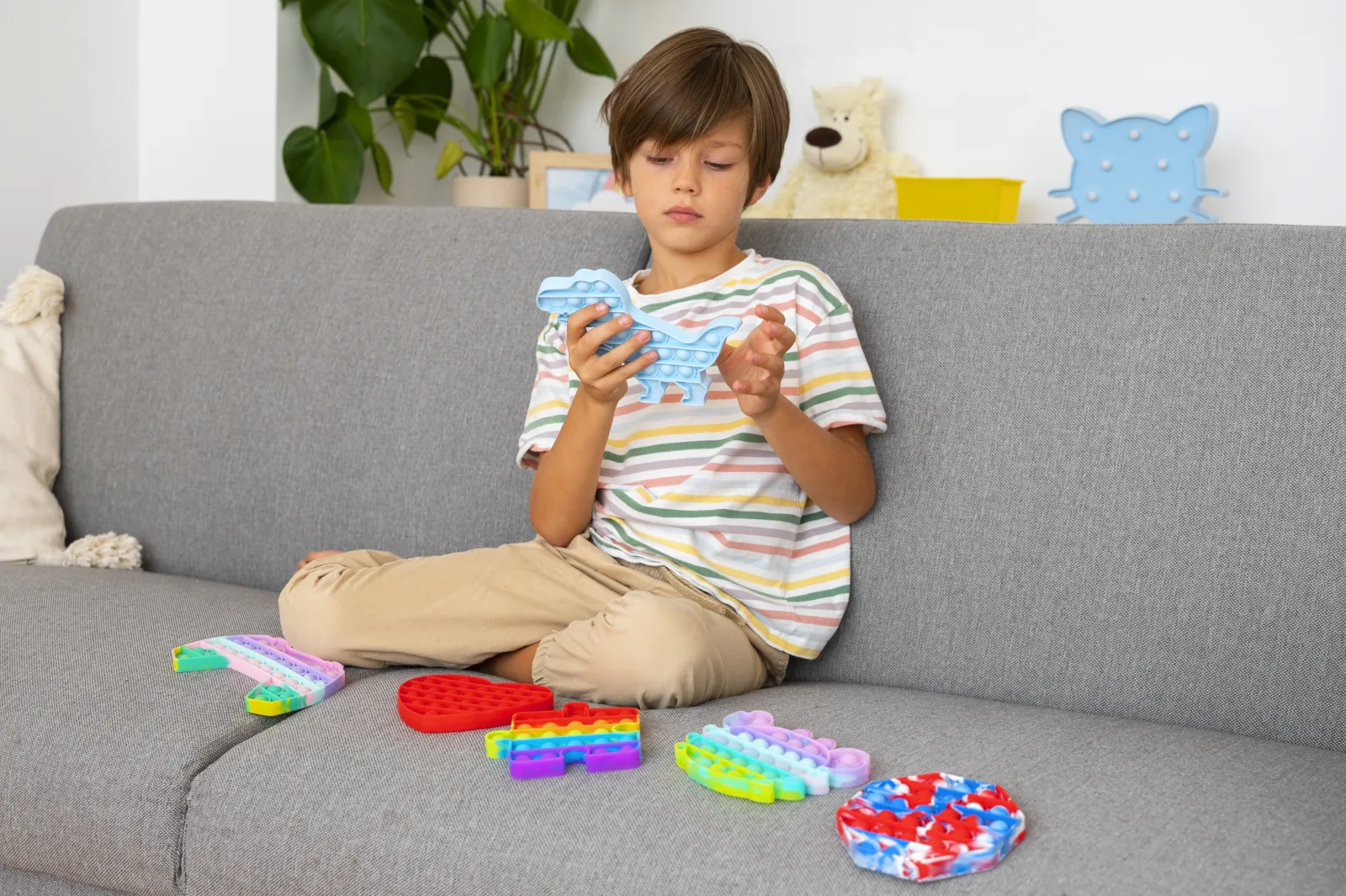
Is your child constantly moving, tapping or chewing objects? Learn how ADHD and sensory seeking can cause fidgeting, how to recognise the differences, and when occupational therapy may help.
If you are watching your little one constantly bounce their legs, chew their collar, or tap every single surface in the room, you are probably wondering what on earth is going on.
The short answer? It could be ADHD, it could be sensory seeking, or honestly, it is very often both at the same time. With ADHD, tiny movements work like a little spark plug to keep a sleepy brain awake during quiet tasks. With sensory seeking, a child's muscles and joints are practically starving for physical input just to feel settled and grounded.
They look almost identical from across the dinner table. But underneath, the brain and body are asking for completely different things.
Think about it this way. When a child has Attention-Deficit/Hyperactivity Disorder (ADHD), sitting still to listen to a long story is tough. Their brain's alertness drops right through the floor, so they wiggle, click pens, or rock back and forth. That movement gives their nervous system just enough juice to stay tuned in.
Sensory seeking is a whole different animal. Here, the nervous system has what we call a high threshold. It takes a lot more physical sensation for their body to actually register where it is in space. These are the kids who throw themselves onto sofa cushions, wrap their legs tightly around chair rungs, or want bone-crushing bear hugs. They aren't trying to fight off boredom, they just need to feel their own bodies.
Take two kids in a classroom.
Tariq starts drumming his pencil and sliding down his chair the minute the teacher starts a 20-minute verbal lesson. Give him a quick job to hand out worksheets or let him stand up, and suddenly he can focus again.
Then look at Maya. Maya fidgets even when she is doing her favourite art project, she leans all her weight against whoever is sitting next to her and chews the cuff of her jumper. Maya isn't mentally bored. Her body is just looking for deep pressure.
So how do you tell what is happening at home?
Watch “when” it happens. Does the wiggling only start when homework comes out or during a quiet meal? That usually points toward focus and alertness (ADHD). Does it happen all day long, even during fun playtime at the park? That is often sensory.
Also look at how they act afterwards. If you give a sensory seeker a big physical task like carrying heavy grocery bags or jumping on a trampoline, they usually sigh and look visibly calmer. But if a child with ADHD does intense physical activity without a clear structure, it can sometimes wind them up even more.
Living in Dubai brings its own unique spin to this, too. During the scorching summer months when kids are cooped up indoors for weeks on end, every child gets a bit restless. Combine that with long school days and high expectations across busy international schools, and it is no surprise little bodies start fidgeting to cope.
A few simple things you can try at home:
- Keep a little notebook for three days. Jot down what time the fidgeting peaked, what they were doing, and what kind of movement it was. Patterns will jump out at you pretty quickly.
- Give them 'heavy work' before they sit down. Carrying laundry baskets, doing wall push-ups, or animal walks can work wonders.
- Try discreet tools. A simple textured strip under the desk, a wobble cushion, or a bit of therapy putty gives hands something to do without distracting the whole room.
- Break seated tasks into 10 or 15 minute bites with a quick two-minute stretch in between.
When should you look into an assessment?
Occasional wiggling is just childhood. But if the constant movement is making school miserable, causing safety worries (like jumping off high cupboards), or leaving your child feeling exhausted and frustrated with themselves, getting some clarity can be a huge relief.
An Occupational Therapist looks closely at sensory processing, proprioception, and motor regulation. A Child Psychologist or Developmental Paediatrician evaluates attention, impulse control, and ADHD. Together, they can give you a clear map of what your child actually needs instead of everyone just telling them to 'sit still.'
If you are unsure whether your child's movement and focus are developing as expected, an assessment can help identify strengths and areas that may need support.
Nutan Dhamale
B.O.TH
Head of Occupational Therapy Dept.
I am Nutan, Head of the Occupational Therapy Department at Bridges Speech Center. I hold a Bachelor’s degree in Occupational Therapy from Seth G.S. Medical College and KEM Hospital in India, and I have more than 10 years of experience working with children.
I enjoy helping children become more comfortable and confident in the activities that fill their day—playing, getting dressed, eating, writing, and joining in at school. I take time to understand each child’s strengths and challenges, then work with parents and educators on practical strategies they can use beyond the therapy room.
My work includes supporting children with autism, ADHD, developmental delays, learning difficulties, and sensory processing challenges. I have training in sensory integration, reflex integration, Handwriting Without Tears, feeding difficulties, and neurodevelopmental therapy. I use individual goals and play-based activities to help each child build skills at their own pace.
If your child is finding everyday activities, sensory experiences, handwriting, or feeding difficult, an occupational therapy assessment can help identify their strengths and the support they need.
To schedule a consultation, contact Bridges Speech Center LLC:
04 358 1115 | 050 522 6054
References
- American Occupational Therapy Association. (2020). Occupational therapy practice framework: Domain and process—Fourth edition. American Journal of Occupational Therapy, 74(Supplement 2), 7412410010. https://doi.org/10.5014/ajot.2020.74S2001
- American Occupational Therapy Association. (n.d.-a). Early intervention. https://www.aota.org/practice/practice-settings/schools-early-intervention-community-education/early-intervention
- American Occupational Therapy Association. (n.d.-b). Practice guidelines and evidence-based clinical resources. https://www.aota.org/practice/practice-essentials/evidencebased-practiceknowledge-translation/practice-guidelines
- American Occupational Therapy Association. (n.d.-c). School-based settings. https://www.aota.org/practice/practice-settings/schools-early-intervention-community-education/schools
- Royal College of Occupational Therapists. (n.d.). Occupational therapy for children and young people. https://www.rcot.co.uk/explore-resources/children-young-people-families/OT-children-and-young-people