Can swimming and hydrotherapy replace clinic physiotherapy for a child with Cerebral palsy?
Can swimming or hydrotherapy replace clinic physiotherapy for children with cerebral palsy? Understand how water therapy helps ease muscle stiffness, improve movement and build confidence, while clinic physiotherapy develops strength, balance and everyday mobility skills.
Can swimming or hydrotherapy replace our clinic physiotherapy sessions?
Short answer? No, not completely. But honestly, it is one of the extra things you can do for a little one with cerebral palsy. Warm water takes the heavy ache out of stiff muscles and lets them kick freely. But day-to-day life happens on hard floors where gravity pulls down on us, so they still need clinic therapy to build the real bone strength, balance, and standing skills for everyday life.
Here is how to think about it. In a warm pool, water holds your child up like a gentle hug. It takes all the body weight off their tight little hips and legs. So muscles that usually feel tight (what we call spasticity) suddenly let go, relax, and stretch. Toddlers who struggle to roll over or kick on a floor mat can suddenly splash, reach for floating toys, and move in ways that feel easy and joyful. It feels like magic to them, really.
But we live on dry land.
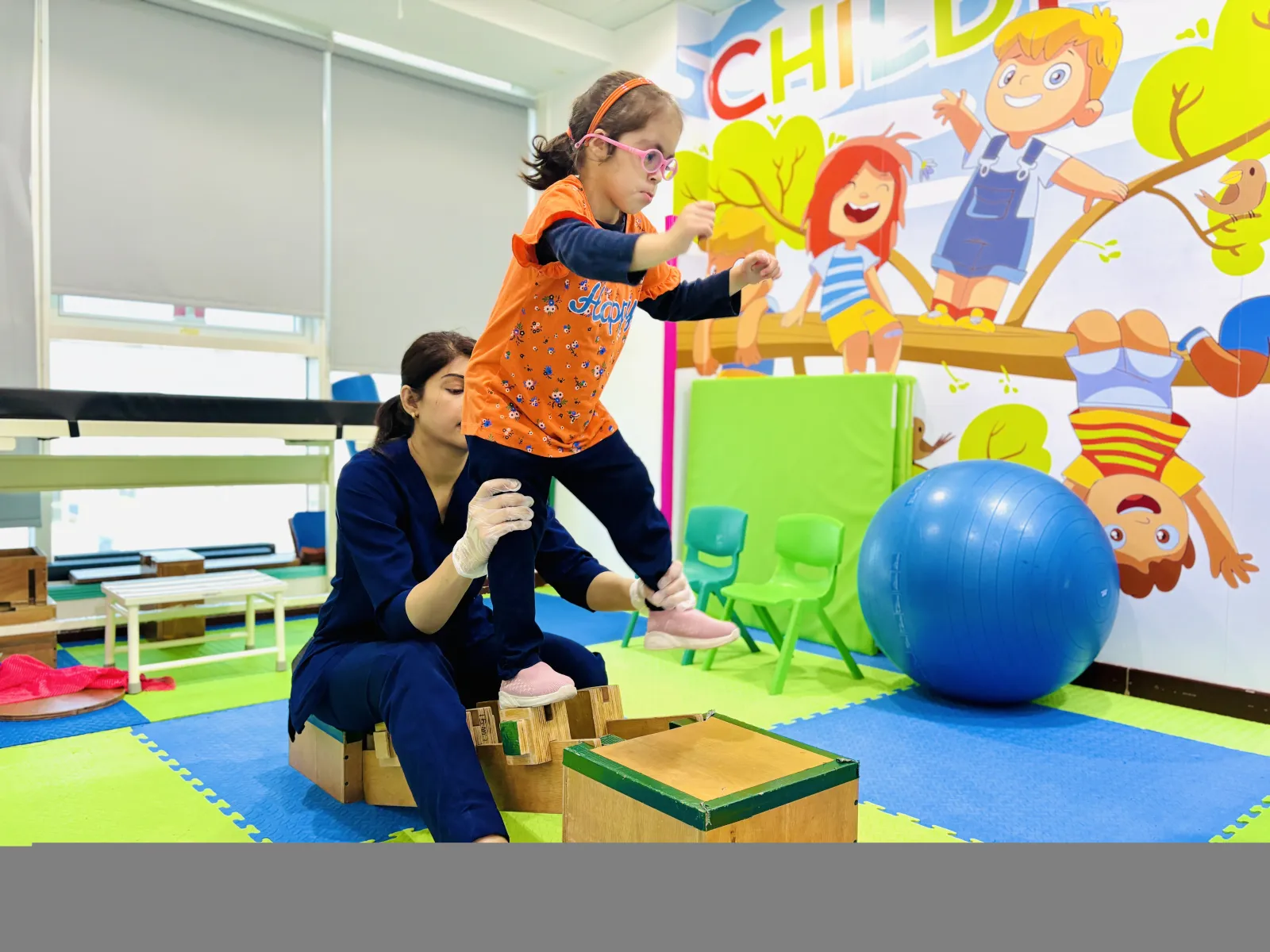
To learn how to sit tall on a carpet, bear weight on tiny feet, climb onto a sofa, or build strong, healthy bones, a child has to work directly against gravity. Water simply cannot teach a little ankle how to step onto a hard floor, or how to push up from a chair. Clinic physiotherapy also lets us practice with special footwear like splints (AFOs) or little walkers, which you obviously cannot use underwater.
Example: Take two-year-old Adam. Adam has spastic diplegia, which mostly makes his legs feel stiff and tight. When he is at the clinic, he spends time practicing pulling up to a low table with his foot braces on, balancing his hips while he plays with blocks. It can be hard work and sometimes he gets tired quickly. But once a week in his hydrotherapy session with his physiotherapist, the warm water lets him kick hard and work his hip muscles without any of that heaviness or achiness. The pool gives him the joy of free movement, and the clinic gives him the strength to stand and play in his living room.
When we sit down to figure out the right mix of pool and clinic time for your child, we look at a few practical things:
- How their muscle stiffness behaves when they are resting versus when they try to move
- What big skill we are chasing right now (like steady head control, sitting without falling over, or standing)
- How comfortable their hips and knees are when taking their own weight
- Joint alignment, especially keeping hips safe and stable
- How they react to pool noise, splashes in the ears, or water temperature
- Medical safety details, like ear tubes, skin issues, or making sure seizures are fully controlled
What can you do at home? Start by chatting with your child's pediatric physical therapist before signing up for any formal pool program. You want to make sure whatever happens in the water matches what you are working on in the clinic. Keep those clinic visits as your anchor for standing and stepping milestones. If you go for a family swim on the weekend, keep it light and fun, just cuddles and splashes rather than tough exercise drills. And keep an eye out for tiredness, because moving through water uses a lot of energy and toddlers tire out fast! Always keep hands-on supervision within arm's reach, use therapist-approved floaties, and pop custom earplugs in if your little one has ear tubes.
If you notice your toddler getting stiffer, or if land exercises are making them fussy and you want to try the water, a full physiotherapy assessment can help map out a safe balance between pool time and clinic mats.
Here is a quick look at how both pieces fit together:
Hydrotherapy in warm water is unmatched for easing tight tone, letting joints rest, and boosting active movement and confidence. Land physiotherapy in the clinic is where we build bone density, practice sitting balance, work on crawling and standing, and train with walkers and splints. They work together like two sides of the same coin.
Living here in Dubai, we have plenty of lovely temperature-controlled pools in residential areas and therapy centres, so water therapy is easy to do even in the middle of summer. Just make sure anyone leading therapy is properly licensed under local Dubai health authorities, and stay mindful of sun protection and plenty of fluids during the hotter months.
If you are unsure whether your child's communication is developing as expected, an assessment can help identify strengths and areas that may need support.
Dr. Mahrukh Mahmood
Head of Physio. Therapy Dept.
I am Dr. Mahrukh, Head of the Physiotherapy Department and Senior Pediatric Physiotherapist at Bridges Speech Center. I am DHA licensed and have more than 15 years of clinical experience supporting children with movement and developmental challenges.
For a child, being able to sit comfortably, keep their balance, take a step, or join in play can make a real difference to everyday life. I work closely with families to understand which of these goals matters most to their child and build a physiotherapy plan around their needs and abilities.
I am certified in Dynamic Movement Intervention (DMI) Level B, Neurodevelopmental Therapy (NDT), and Suit Therapy. My experience includes working with children with cerebral palsy, developmental delays, spina bifida, and other neurological and orthopaedic conditions. I also support children who need help with posture, walking, and balance.
If you have concerns about your child’s movement or motor milestones, a physiotherapy assessment can help you understand their strengths and the next steps for support.
To schedule a consultation, contact Bridges Speech Center LLC:
04 358 1115 | 050 522 6054
References
- American Academy for Cerebral Palsy and Developmental Medicine. (n.d.-a). Care pathways. https://www.aacpdm.org/publications/care-pathways/
- American Academy for Cerebral Palsy and Developmental Medicine. (n.d.-b). Central hypotonia. https://www.aacpdm.org/publications/care-pathways/central-hypotonia
- American Academy for Cerebral Palsy and Developmental Medicine. (n.d.-c). Early detection of cerebral palsy. https://www.aacpdm.org/publications/care-pathways/early-detection-of-cerebral-palsy
- National Institute for Health and Care Excellence. (2012). Spasticity in under 19s: Management (Clinical guideline CG145). https://www.nice.org.uk/guidance/cg145
- National Institute for Health and Care Excellence. (2017). Cerebral palsy in under 25s: Assessment and management (NICE guideline NG62). https://www.nice.org.uk/guidance/ng62