Cerebral Palsy Toe Walking: Why Children Walk on Their Toes
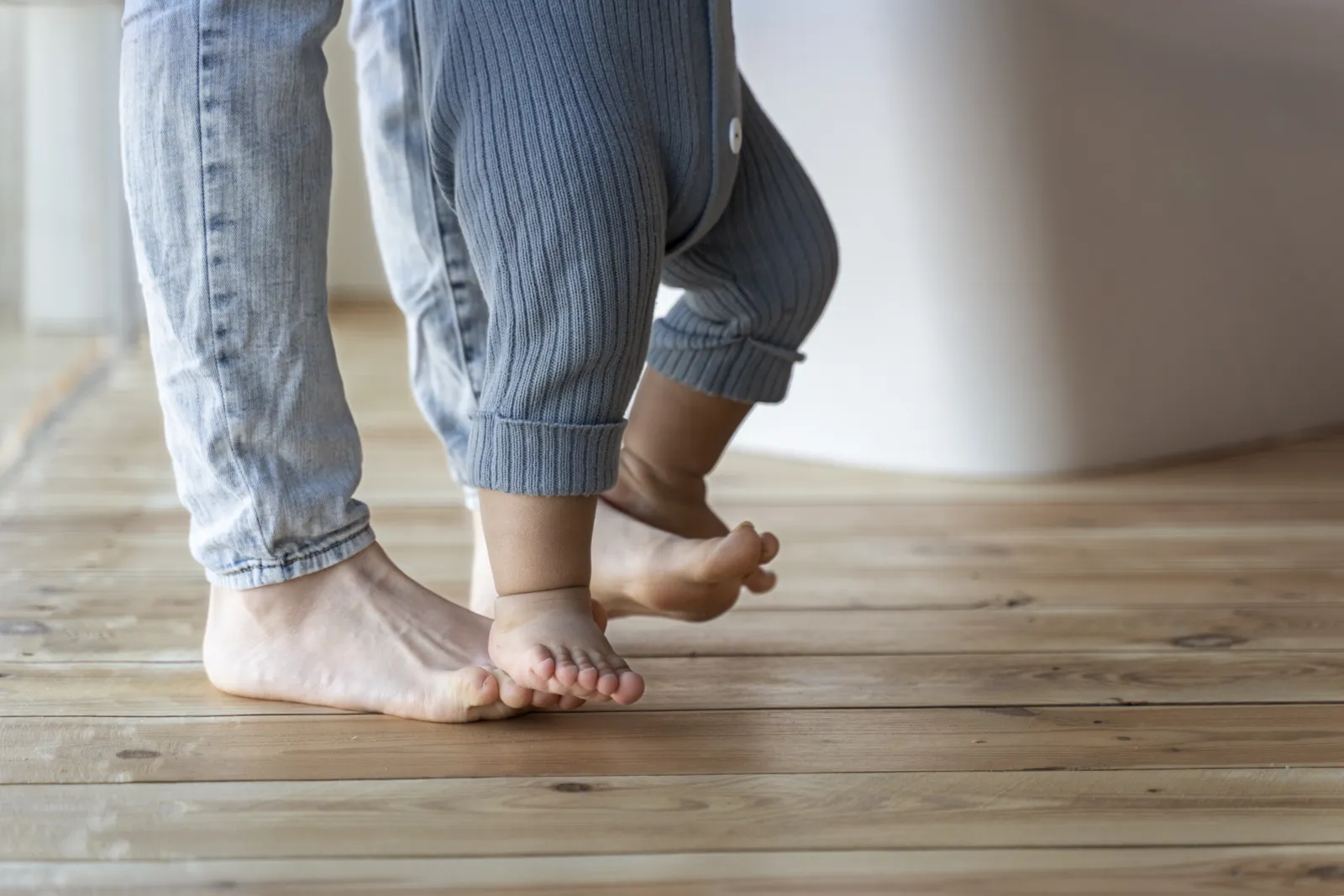
Cerebral palsy toe walking can affect a child's balance, mobility, and walking pattern. Learn about its causes, potential complications, and how physiotherapy can help children improve movement and function.
Parent Question: My two-year-old has cerebral palsy and just started pulling up to walk, but their heels never seem to touch the floor. Is this normal with CP, or is it going to hurt their little feet and joints later on?
The short answer: Yes, it is very common for toddlers with cerebral palsy to walk up on their toes. But it is not something to just wait out or ignore. What happens is that tight calf muscles (what therapists call spasticity) pull the heel upward like a tight rubber band. Gentle physiotherapy, occupational therapy, and everyday play can loosen things up, protect their joints, and help them take steadier, happier steps.
What is really going on under those tiny feet?
When most babies start cruising around furniture, they might pop up on their tiptoes for a few days just exploring how their balance works. That is totally typical.
With cerebral palsy, though, it is not a little phase or a quirky habit. It comes down to the brain sending too many "tighten up!" signals down into the calf muscles at the back of the leg. The muscle stays tight, the Achilles tendon pulls tight with it, and the little heel stays up in the air. It is not stubbornness at all, their little calves are just working overtime.
Why do we care so much about getting that heel down? Well, if a tendon stays pulled tight month after month, it can physically shorten (a contracture). And once it shortens, flattening the foot gets really tricky. That is why pediatric therapists like to gently step in early, not with anything scary, just with good play, soft stretches, and the right shoe support.
Imagine a little 26-month-old girl with mild spastic diplegia. She loves pulling herself up on the sofa, but she is perched right on the balls of her feet like a tiny ballerina. When she tries to cruise toward Mom, her heels stay off the floor, she wobbles on the slick tiles, and down she goes with a bump.
A pediatric physiotherapist showed her family how to play fun standing games on soft wedge mats to ease those tight calves down. Her medical team also fitted her with lightweight little splints called ankle-foot orthoses (AFOs). Within a few months, she was standing much flatter, feeling sturdy, and toddling from the living room to the kitchen without constantly tumbling over.
What a therapist checks during a session
| How tight the muscle feels | Does the calf feel stiff when your toddler is resting in your lap, or does it push back when we move it? |
| Ankle wiggle room | Can we gently lift their foot up toward the shin past a right angle while they are relaxed and playing? |
| Active stiffness vs. a short tendon | Is the tendon physically shortened, or is the muscle just firing too hard when they try to stand? |
| How they step: | Are they tiptoeing on both sides equally, or is one foot flatter than the other? |
| Tummy and hip strength: | A wobbly core or weak hips can sometimes make a toddler lean forward and pop onto their toes to catch themselves. |
When does an assessment make sense?
If your toddler never puts their heels down, trips over their own toes constantly, or seems stiff in the ankles, getting an assessment with a pediatric physiotherapist or occupational therapist is a wonderful next step. It gives you clear answers, eases your mind, and gives your child practical support while their bones and joints are still soft and growing.
Typical toe walking vs. Cerebral Palsy: Quick glance
| Feature | Typical Habitual Toe Walking | Toe Walking with Cerebral Palsy |
| Why it happens | Sensory preference or just a passing toddler phase | Extra muscle tightness (spasticity) from brain motor signals |
| How often | On and off; they can usually stand flat if you ask | Constant; lowering the heel feels very tight or physically impossible |
| Muscle tone | Normal, loose leg muscles | High tone, noticeable stiffness when stretched |
| Both sides? | Almost always identical on both feet | Can affect both legs (diplegia) or just one side (hemiplegia) |
| What helps | Sensory play, simple stretches, monitoring | Physiotherapy, orthotics (AFOs), medical tone care |
The heart of the matter
Tiptoe walking in a toddler with cerebral palsy is very expected, but it is not something to shrug off. With the right early physiotherapy and day-to-day positioning, you can protect their ankles, keep their muscles flexible, and give them a steady foundation to explore their world.
A note from our therapy team
Our goal in pediatric therapy is never to force a child to walk in one "picture-perfect" way. What matters most is that their movement is safe, comfortable, and does not exhaust them. Walking on narrow tiptoes takes double the energy and leads to lots of hard falls. By pairing medical care, gentle joint protection, and joyful play, we help your child move with confidence.
Living in Dubai
Here in Dubai, so many of our homes have sleek marble or tiled flooring. For a toddler perched on their tiptoes, that can turn the living room into an ice rink! Using non-slip socks, soft indoor footwear, or their prescribed splints at home makes a huge difference. In Dubai, pediatric physiotherapy and occupational therapy clinics follow strict standards set by the Dubai Health Authority (DHA), giving your family world-class clinical care close to home.
Dr. Mahrukh Mahmood
Head of Physio. Therapy Dept.
I am Dr. Mahrukh, Head of the Physiotherapy Department and Senior Pediatric Physiotherapist at Bridges Speech Center. I am DHA licensed and have more than 15 years of clinical experience supporting children with movement and developmental challenges.
For a child, being able to sit comfortably, keep their balance, take a step, or join in play can make a real difference to everyday life. I work closely with families to understand which of these goals matters most to their child and build a physiotherapy plan around their needs and abilities.
I am certified in Dynamic Movement Intervention (DMI) Level B, Neurodevelopmental Therapy (NDT), and Suit Therapy. My experience includes working with children with cerebral palsy, developmental delays, spina bifida, and other neurological and orthopaedic conditions. I also support children who need help with posture, walking, and balance.
If you have concerns about your child’s movement or motor milestones, a physiotherapy assessment can help you understand their strengths and the next steps for support.
To schedule a consultation, contact Bridges Speech Center LLC:
04 358 1115 | 050 522 6054
References
- American Academy for Cerebral Palsy and Developmental Medicine. (n.d.-a). Care pathways. https://www.aacpdm.org/publications/care-pathways/
- American Academy for Cerebral Palsy and Developmental Medicine. (n.d.-b). Central hypotonia. https://www.aacpdm.org/publications/care-pathways/central-hypotonia
- American Academy for Cerebral Palsy and Developmental Medicine. (n.d.-c). Early detection of cerebral palsy. https://www.aacpdm.org/publications/care-pathways/early-detection-of-cerebral-palsy
- National Institute for Health and Care Excellence. (2012). Spasticity in under 19s: Management (Clinical guideline CG145). https://www.nice.org.uk/guidance/cg145
- National Institute for Health and Care Excellence. (2017). Cerebral palsy in under 25s: Assessment and management (NICE guideline NG62). https://www.nice.org.uk/guidance/ng6