
What Is Psychological Assessment? How It Helps Identify Learning Difficulties in Children
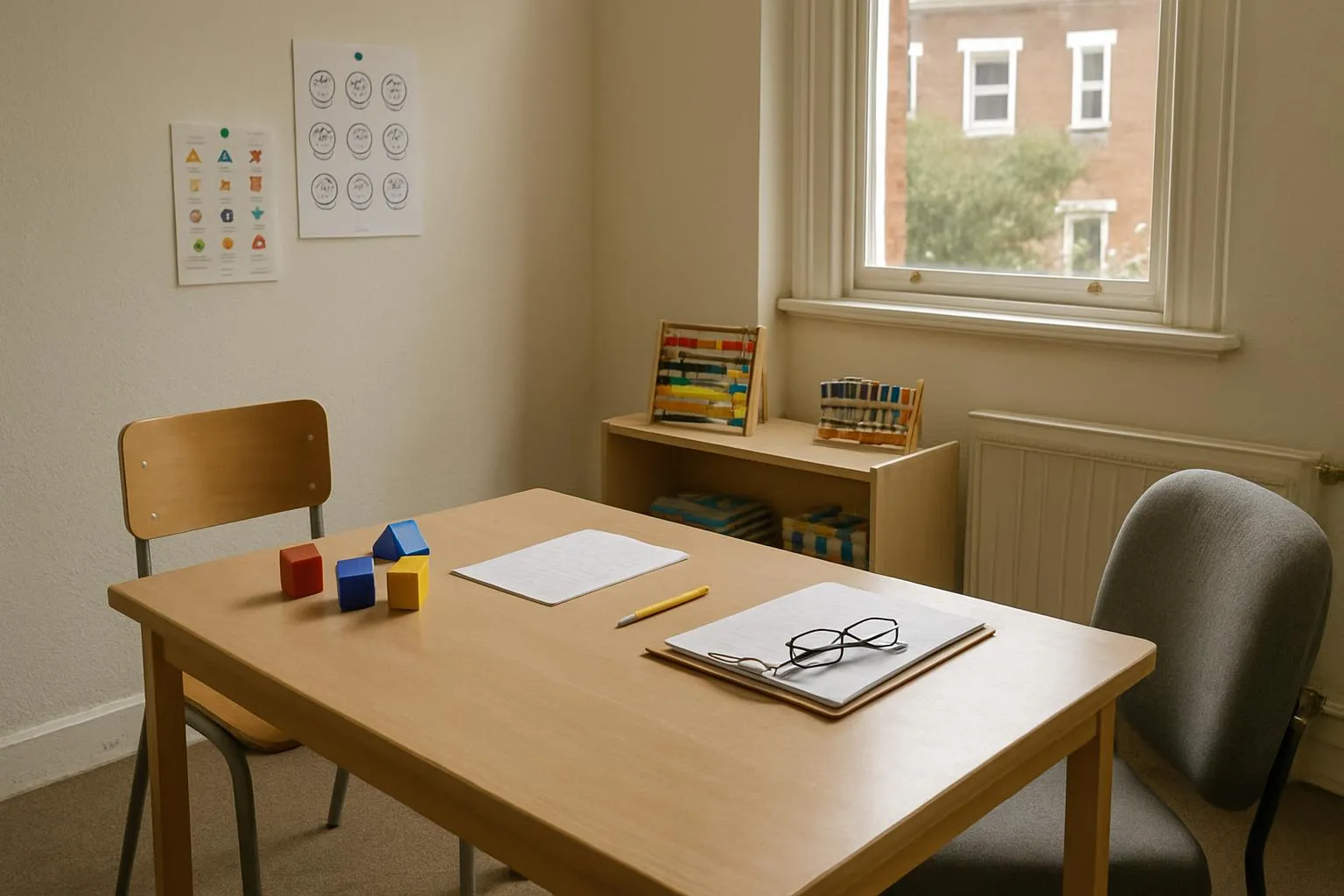
Learn what a psychological assessment is and how it helps identify learning difficulties in children. Discover the assessment process, benefits, and when to seek professional evaluation.
A psychological assessment is a systematic process that combines clinical interviews, behavioral observations, and standardized tests to build a detailed picture of how a person thinks, learns, and manages emotions. It is a core activity in clinical psychology, used to diagnose conditions, map strengths and weaknesses, and plan effective support. When a child struggles at school – with reading, attention, or social skills – an assessment can pinpoint whether those difficulties stem from a specific learning disorder, a developmental delay, or something else entirely.
The Core Components of a Psychological Assessment
Component |
|
|
| Clinical Interview | A structured conversation about developmental history, symptoms, and daily functioning with the child and caregivers. | Captures context that no test can reveal – such as when a problem started or how it plays out at home and in the classroom. |
| Behavioral Observation | The psychologist watches how the child approaches tasks, manages frustration, and interacts during the session. | Picks up real-time signs of inattention, anxiety, or impulsivity that formal scores alone may miss. |
| Standardized Testing | Administering norm-referenced tools like intelligence scales, achievement tests, and processing measures. | Provides objective, quantifiable data that compares the child’s performance to same-age peers, which is essential for identifying learning difficulties. |
| Integration and Interpretation | Drawing together all data sources – test scores, interview notes, school reports – into a coherent report with a diagnostic formulation and tailored recommendations. | Turns raw information into a working understanding of the child and a clear roadmap for intervention. |

How a Psychological Assessment Identifies Learning Difficulties in Children
Learning difficulties often hide behind generic labels like “lazy” or “unmotivated.” A thorough assessment uncovers the specific cognitive processing weaknesses that underlie persistent struggles with reading, writing, or mathematics. Tools such as the Wechsler Intelligence Scale for Children (WISC) or the Kaufman Assessment Battery for Children are not just IQ tests; they dissect verbal reasoning, visual-spatial skills, working memory, and processing speed. When a child shows a significant gap between general intellectual ability and, say, phonological processing or timed math fluency, it signals a possible learning disorder.
Achievement tests – like those measuring word reading, spelling, and numerical operations – complement the cognitive data. Neuropsychological subtests that examine executive functions, attention, and fine motor coordination can further clarify whether attention-deficit/hyperactivity disorder (ADHD) or developmental coordination disorder contributes to classroom challenges. Learning difficulties in children rarely present in a vacuum; many children have co-occurring language delays or speech sound errors. At Bridges Speech Center, psychological assessments for children are designed to identify these intertwined learning and communication issues, and the center also offers speech therapy to address language difficulties in a joined-up way.
Psychological Testing Versus Psychological Assessment
Though the terms get swapped casually, they are not synonyms. Psychological testing refers to the administration of a single standardized measure, such as a depression screening or an attention questionnaire, to generate a score. Assessment is the broader, integrative process that pulls together multiple tests, clinical judgment, and background data. A test gives you a number; an assessment gives you a meaning. This distinction is critical because a diagnosis should never rest on a single score, and children are far too complex to reduce to a checklist.
Types of Tests Used in a Child Assessment
A typical comprehensive evaluation draws from several categories:
Cognitive/Intelligence Tests:
Measure problem-solving, memory, and verbal and nonverbal reasoning. The WISC, Stanford-Binet, and Kaufman scales are common tools.
Achievement Tests:
Assess specific academic skills like word reading, comprehension, spelling, and mathematics against grade-level expectations.
Neuropsychological Measures:
Probe attention, language, memory, and motor speed to detect subtle deficits. The Halstead Category Test and continuous performance tasks are examples.
Behavioral and Social-Emotional Questionnaires:
Gather parent and teacher ratings of anxiety, attention, social skills, and mood. Instruments like the Beck Youth Inventories help quantify these concerns.
What Happens During a Child’s Psychological Assessment in Dubai
If you are considering an assessment in Dubai, you can expect a sequence that unfolds over two or more sessions. The first visit usually focuses on the clinical interview with parents and a brief encounter with the child to build rapport. Testing sessions follow, often spread across several mornings to match the child’s best alertness and avoid fatigue. The psychologist will administer the selected tests in a quiet, one-on-one setting, taking careful note of how the child approaches tasks – whether they rush, give up easily, or talk through problems.
After testing, the psychologist scores the instruments and writes a detailed report. A feedback session with the parents explains the findings, the diagnosis if any, and practical recommendations for school and home. In Dubai, schools commonly request such reports to grant accommodations like extra time, a separate exam room, or access to learning support. Psychologists performing these evaluations must hold a license from the Dubai Health Authority (DHA) or the Community Development Authority (CDA), and many are bilingual in English and Arabic.
Common Signs That It Is Time to Consider an Assessment
The child reads slowly, avoids reading, or guesses words despite good spoken vocabulary.
Written work is messy, disorganized, and far below the child’s verbal ability.
Homework becomes a nightly battle, not from lack of effort but from genuine confusion.
Teachers report inattention, fidgeting, or difficulty following instructions, but the child focuses well on non-academic activities.
The gap between what the child understands orally and what they produce on paper keeps widening.
Getting the Right Answers
A psychological assessment does not label a child – it explains them. The report you receive should never be a generic list of numbers; it should outline the child’s specific cognitive profile, name any clinical or learning condition clearly, and recommend concrete next steps. Look for a professional who specializes in pediatric assessments and who works within a multidisciplinary team when possible. In Dubai, families often find that combining a psychological evaluation with speech and language or occupational therapy yields faster, more sustainable progress because the interventions match the full picture. If a learning difficulty is confirmed, early and targeted support makes a measurable difference in academic confidence and emotional well-being.
If your child continues to struggle despite extra help, a psychological assessment can provide the clarity that changes everything. Book an assessment today.