
Stuttering With Anxiety: Why Speaking Can Feel More Difficult
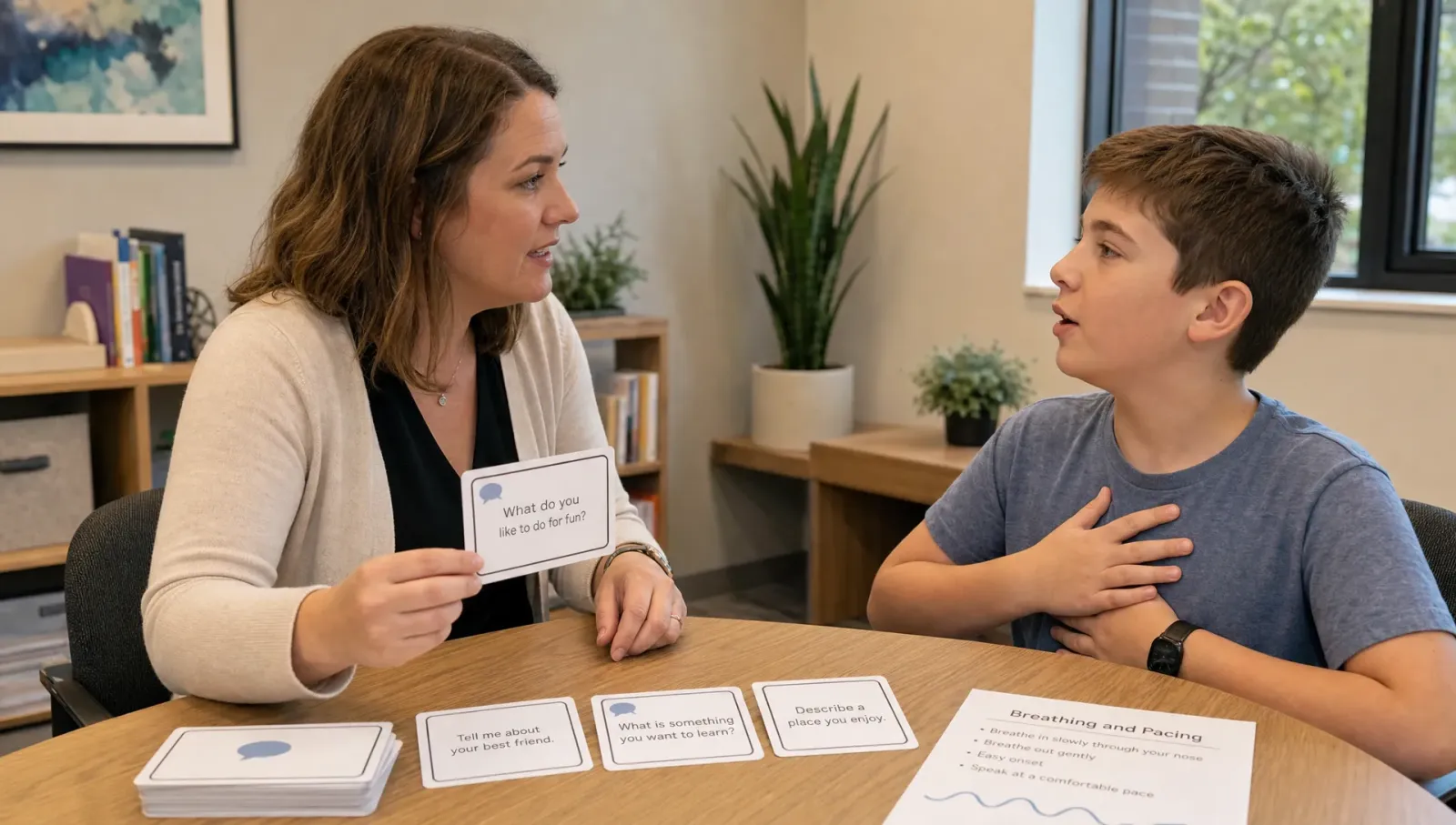
Learn why anxiety can make stuttering feel more difficult and discover practical speaking strategies, family support tips, and when speech therapy may help in Dubai.
Stuttering with anxiety can make a simple conversation feel like a high-pressure test. You may know exactly what you want to say but your body reacts with tightness, racing thoughts and a stronger block than usual. This does not mean the stutter is all in your head. It means speech, emotions and learned speaking experiences are interacting in a way that deserves practical support.
Many children, teens and adults in Dubai experience moments where speech anxiety increases stuttering. A phone call, classroom answer, work meeting or social introduction can trigger a fear of speaking long before the first word is spoken. If you are unsure whether a fluency difficulty is stuttering, stammering or a normal disfluency pattern, Bridges Speech Center has a helpful guide on what stammering is.
Why Stuttering with anxiety can make speech feel harder
Stuttering is a fluency disorder that can involve repetitions, prolongations, blocks or visible tension during speech. The National Institute on Deafness and Other Communication Disorders estimates that stuttering affects about 5 to 10 percent of children at some point and around 1 percent of adults.
Anxiety does not usually cause stuttering by itself. Yet anxiety and stuttering can reinforce each other. When a person expects to stutter, the body may prepare for danger even when the situation is safe. Breathing can become shallow. Jaw, neck and shoulder muscles may tighten. The speaker may rush to finish before a block happens.
Stuttering with anxiety is not a sign of weakness or lack of intelligence. It is often a learned response to past speaking pressure, teasing, time limits or repeated moments of embarrassment. For children, it may appear during rapid language development. Parents can also learn more about why a child may stutter when deciding whether to monitor fluency or seek professional guidance.
What happens during speech anxiety
Speech anxiety activates the body’s threat response. Heart rate rises. Breathing patterns change. Attention moves inward as the speaker starts checking every sound, word and facial expression. This self-monitoring can interrupt the natural rhythm of speech.
The fear of speaking can also lead to avoidance. A child may stop raising a hand in class. An adult may avoid phone calls, presentations or job interviews. Over time, avoidance can make speaking situations feel even more threatening because the person gets fewer chances to experience successful communication.
Anxiety response | How it may affect speech | Helpful first response |
| Shallow breathing | Less airflow for speech and more tension | Pause before speaking and breathe low into the abdomen |
| Muscle tightness | Harder speech starts and stronger blocks | Relax the jaw, shoulders and lips before the first word |
| Racing thoughts | More self-monitoring and less natural flow | Focus on the message rather than perfect fluency |
| Avoidance | Speaking situations feel more frightening over time | Practice small, planned speaking steps |
Stuttering and social anxiety: the avoidance loop
Stuttering and social anxiety can become connected when a person starts expecting negative reactions from others. This may include fear of being interrupted, laughed at, judged as nervous or seen as less capable. The actual stutter may last seconds but the worry before and after can last much longer.
This loop often looks like this: a speaking event is approaching, worry increases, the person tries to control every word, tension builds, stuttering increases, embarrassment follows and future speaking feels even harder. The cycle is common but it is treatable.
Professional treatment for stuttering may include fluency shaping, stuttering modification, desensitization and communication confidence work. When emotional distress is strong, therapy may also involve strategies that address anxiety directly.
Practical tips when speaking feels difficult
Stuttering with anxiety often improves when the goal shifts from hiding every disfluency to communicating with less tension. The aim is not to force perfect speech. The aim is to speak with more ease, control and confidence.
Before a speaking situation
Prepare the first sentence but avoid rehearsing the entire conversation repeatedly. Over-rehearsal can increase pressure. Try a short breathing routine, relax your shoulders and remind yourself that a pause is acceptable.
If you have speech anxiety before a meeting or class activity, practice in a low-pressure setting first. Say the same sentence to a family member, then to a friend and then in the real situation. This graded practice helps the brain learn that speaking is safe.
During speech
Use a slightly slower rate and allow natural pauses. If a block happens, resist the urge to force through it. Some people benefit from easy starts, gentle airflow and voluntary pauses. Others benefit from openly saying that they stutter, which can reduce shame and lower the fear of speaking.
For adults, practical exposure can include making one short phone call per day, asking a question in a shop or speaking for one minute in a team meeting. For children, practice should feel playful rather than corrective. Good speech therapy can help by matching techniques to the person’s age, fluency pattern and communication goals.
How families can support children who stutter
Stuttering with anxiety in children may show up as frustration, silence, avoidance, facial tension or comments like I cannot talk. The way adults respond can either reduce pressure or unintentionally increase it.
Parents can help by listening patiently, keeping eye contact and avoiding rushed corrections. Do not finish the child’s sentences unless the child asks for help. Slow your own speech slightly. Create daily moments where the child can talk without being questioned too quickly.
It also helps to reduce performance pressure. Instead of saying slow down, try saying I’m listening or take your time. For more home strategies, Bridges Speech Center offers a practical guide on How to help a stuttering child at home.
When to seek professional help in Dubai
You may want to consult a speech pathologist if stuttering lasts longer than six months, becomes more frequent, includes visible struggle or causes avoidance in school, work or social life. Seek support sooner if there is a family history of stuttering, bullying, emotional distress or sudden onset in an adult.
For adults, Stuttering with anxiety may affect career opportunities, relationships and daily independence. For children, early support can protect confidence and reduce negative speaking experiences. A therapist can assess fluency, language, oral motor patterns and emotional impact before creating an individualized plan.
At Bridges Speech Center, families and adults looking for speech therapy Dubai can access care that considers communication, confidence and daily participation. Support may include speech therapy, parent training, home care therapy, telehealth options and psychological support when anxiety is part of the picture.
Latest therapy trends for anxiety and stuttering
Current care for anxiety and stuttering is becoming more holistic. The focus is not only on reducing stuttered moments but also on helping people participate in real conversations. This matters because fluent speech in a therapy room does not always transfer automatically to school, work or social life.
Recent practice trends include real-world speaking tasks, teletherapy for consistent practice, parent coaching, mindfulness-based regulation and collaboration between speech-language therapists and mental health professionals. For people with stuttering and social anxiety, cognitive behavioural therapy principles may support unhelpful thoughts such as everyone will judge me or I must speak perfectly.
Technology can also support progress. Some clients use recordings, speech practice apps or online sessions to track patterns and rehearse target situations. These tools are most useful when guided by a therapist who can prevent practice from becoming another source of pressure.
Conclusion
Stuttering with anxiety can make speaking feel harder because the body, thoughts and speech system become caught in a pressure cycle. The good news is that this cycle can change. With patient support, practical fluency tools and confidence-building practice, communication can become easier and less stressful.
If stuttering is affecting your child, your work life or your confidence, Bridges Speech Center can help you explore the right next step. To speak with the team or book an assessment, please contact us.