
Speech Delay and Screen Time
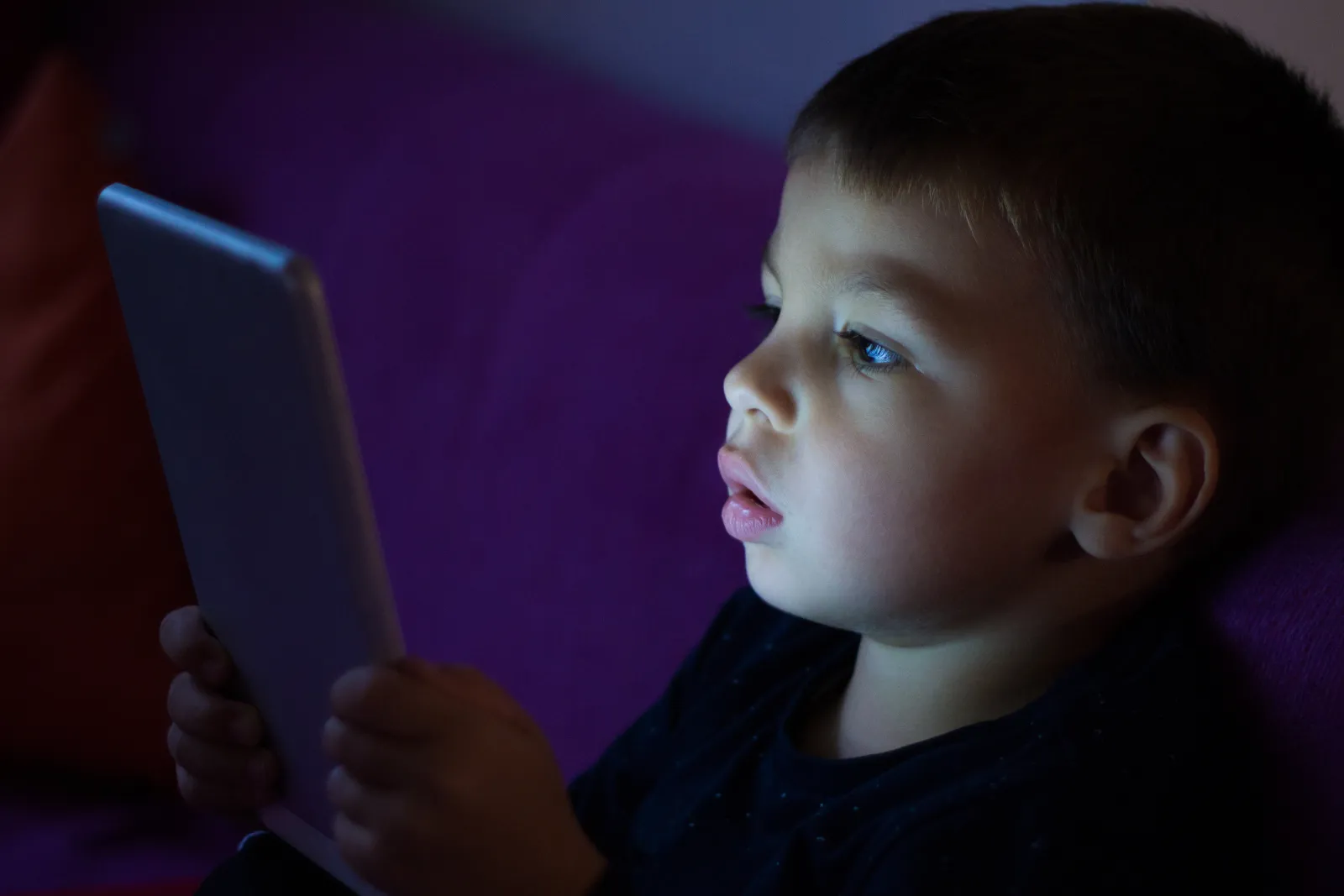
Worried that screen time or your busy schedule caused your toddler’s speech delay? Learn what can contribute to speech delay and how parents can support language development.
First things first: please take a deep breath and let go of the heavy guilt you've been carrying around.
No, working long hours at your job or letting your little one watch cartoons while you quickly cook dinner did not give them a speech delay. It truly didn't.
Here is why. How little kids learn to talk comes down to their biology, how their unique brain wires up to sort through sounds, move tiny mouth muscles, and connect with other people. If talking is hard for your toddler right now, it is because their little brain processes communication a bit differently. It is not because you answered work emails late or handed over an iPad so you could just breathe for twenty minutes. Parents carry so much worry about this, honestly, but biology is the real driver here.
Let me share an illustrative example of how this usually looks in real life.
Picture a sweet 26-month-old whose mum and dad both work very busy days here in Dubai. To get through the evening rush, they let him watch about 45 minutes of nursery rhyme videos every night. When he hit two and still had under ten words, his parents were completely heartbroken, blaming themselves for working so much and leaning on the telly.
But when they took him for a developmental assessment, the team found two clear physical things: fluid trapped behind his middle ear (glue ear) muffling what he heard, plus some tricky motor speech planning that made forming words tough. Once his ears cleared up and he started speech therapy, he began picking up words steadily. The cartoons didn't cause it, and working late didn't either. His body just needed some medical and therapeutic help.
| Common Parent Worry | What Clinical Evidence Shows | Helpful Next Step |
| My job is keeping me away from talking to my toddler enough. | Quality of interaction matters far more than total hours spent together. Short, connected moments help to build language. | Focus on 10-15 minutes of focus, without phone,floor play each day. |
| Screens ruined my toddler's growing brain and caused them a delay | Screen reduces natural opportunities for two-way conversation, but they do not directly create any motor speech or genetic delays. | Slowly replace solo screen time with interactive engagement time with use of songs, books, and shared play. |
| If I had been a housewife/house husband, my child would be talking fluently. | Children of stay-at-home parents experience speech delays too at comparable rates . | Seek a professional speech-language evaluation to identify your child's specific developmental profile. |
When speech therapists look closely at a child who isn't talking yet, we look at real biological pieces:
- How their ears and hearing are doing (like silent ear fluid or frequent infections)
- What they understand when you talk, even if they cannot say the words back yet
- How they connect with you, eye contact, pointing, sharing a laugh during peek-a-boo
- How their tongue, jaw and lips move together to make sounds
- How they play, move, and handle everyday sights and sounds
So, what can you actually do today at home?
Stop blaming yourself, for starters. You love your child, and working to provide for your family is something to be proud of, not ashamed about. When you are home together, do not worry about setting up fancy teaching lessons. Just talk out loud about normal daily things. When you wash their toes in the bath, say "splash splash!" or "warm water". When you ask them a question, wait. Count silently to eight in your head before jumping in, because little brains just need extra seconds to gather their thoughts.
If you do turn on the TV, try sitting next to them for five minutes and point at the dog on screen. That tiny shift turns quiet watching into shared fun.
And if your gut tells you something is off, like if they are 18 months and not pointing, or two years old with fewer than fifty words, booking a speech-language assessment is a wonderful, gentle step. It does not mean anything is broken forever, it just gives you a clear map so you know exactly how to help.
For reference, the American Academy of Pediatrics suggests keeping digital screens away from toddlers under 18 to 24 months (except video calls with family), and keeping it to one hour a day of good quality shows for kids aged 2 to 5 years, watching together when you can.
Professional Perspective
Rupali Ranjith
20+ years in the field of Rehabilitation
MASLP, QASP-S, BCaBA
I am Rupali Ranjith, Consultant Speech and Language Therapist, Assistant Behaviour Analyst, Qualified Autism Specialist as well as Medical Director of Bridges Speech Center, Bridges Care, and Bridges Synergy Pro. I hold a master’s degree in Speech and Hearing and more than 20 years of experience across India and the UAE. I have supported clients of all ages. Along with speech and Language Pathology , I hold BCaBA and QASP-S credentials. I am trained in evidence-based approaches including PROMPT, DTTC, ReST, AVT, PECS, AVAZ, Gestalt Language Processing, Orofacial Myofunctional Therapy, Oral Placement Therapy, Reflex Integration, Sensory Integration, and the Hanen Program.
If you are really concerned about your child’s communication development, an assessment can help identify their strengths, underlying challenges, and appropriate next steps.
To schedule a speech and language consultation, contact Bridges Speech Center LLC: 04 358 1115 | 050 522 6054
References
- American Speech-Language-Hearing Association (ASHA), Communication Milestones: How Does Your Child Hear and Talk?
- American Academy of Pediatrics – HealthyChildren.org, Developmental Milestones for Two-Year-Olds.
- Royal College of Speech and Language Therapists (RCSLT), Early Years Speech and Language Development.