

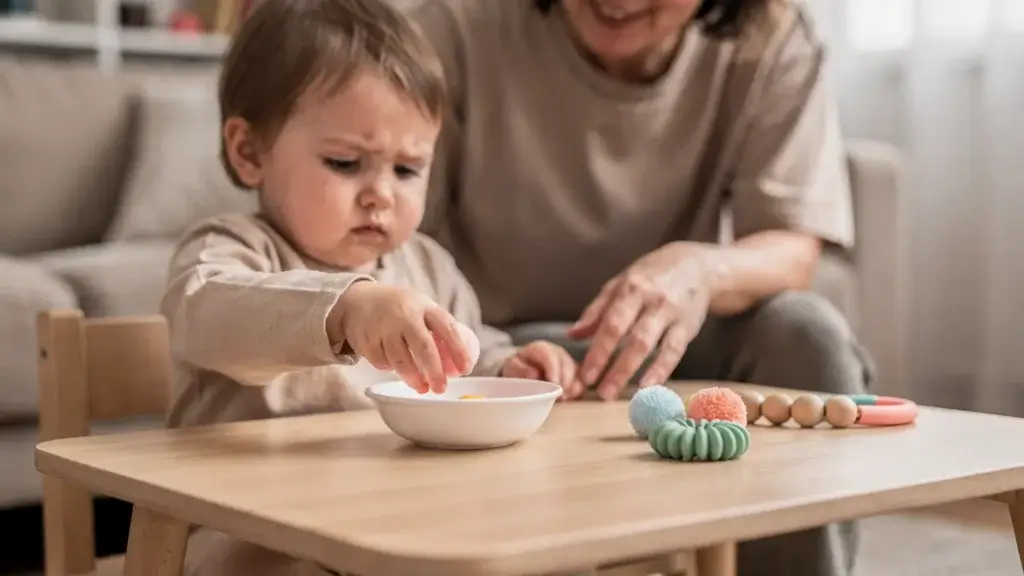
A tiny thumb-and-index-finger pinch may look simple, but it is a major building block for independence. Developing pincer grasp helps children pick up finger foods, turn pages, peel stickers, hold crayons, manage buttons, and explore toys with better control. The good news is that you do not need expensive equipment or long practice sessions. Everyday routines can become playful opportunities for fine motor growth.
For parents, the goal is not to make home feel like therapy. It is to offer small, safe, enjoyable challenges that invite your child to use the tips of the thumb and index finger again and again. Over time, those repetitions support strength, coordination, hand awareness, and confidence.
Table of Contents
ToggleWhat is pincer grasp?
Pincer grasp is the ability to pick up a small object using the thumb and index finger. Early on, babies use the whole hand to scoop or rake objects toward themselves. As hand control matures, they begin to use the thumb side of the hand, then the pads of the thumb and index finger, and eventually the fingertips.
This skill matters because it supports many daily activities, including:
- Self-feeding with small, safe pieces of food
- Turning board book pages and lifting flaps
- Picking up blocks, puzzle pieces, stickers, and small toys
- Starting crayon control and later pencil grasp
- Dressing skills such as zippers, buttons, and snaps
- Early school tasks such as cutting, gluing, sorting, and writing
Pincer grasp is a fine motor skill, but it depends on more than the fingers. A child also needs shoulder stability, wrist control, visual attention, hand-eye coordination, body posture, sensory processing, and motivation. That is why play-based practice works so well, it engages the whole child, not just the hand.
When does pincer grasp usually develop?
Every child develops at their own pace, and some variation is normal. Prematurity, medical history, muscle tone, vision, sensory needs, and opportunities for play can all influence timing. As a general guide, many babies begin showing a more refined pincer grasp around the end of the first year. The CDC’s 1-year developmental milestones include picking things up between the thumb and pointer finger.
Age range | Common hand skill stage | What parents may notice |
4 to 6 months | Whole-hand grasp | Baby reaches, bats, and holds larger toys with the palm |
6 to 8 months | Raking grasp | Baby uses several fingers to drag objects toward the palm |
8 to 10 months | Thumb-side grasp | Baby begins using the thumb side of the hand to pick up items |
10 to 12 months | Early pincer grasp | Baby picks up small, safe items using thumb and index finger pads |
12 to 18 months | More precise pincer grasp | Toddler uses fingertips with better accuracy and less effort |
The exact age matters less than the overall pattern. Progress should generally move from whole-hand grabbing toward more precise finger use, with both hands gradually becoming more coordinated.
Before you start: make pincer play safe and successful
Pincer practice often uses small items, so safety comes first. Always supervise closely, especially with babies and toddlers who still mouth objects. Avoid coins, batteries, magnets, beads, hard candies, and any object small enough to be swallowed or inhaled. For food activities, choose textures and sizes that match your child’s chewing and swallowing abilities. The American Academy of Pediatrics offers helpful guidance on choking prevention.
The best activities are challenging but not frustrating. If a child keeps dropping items, use larger pieces, stickier materials, or items with texture. If the task is too easy, make the object flatter, smaller, or slightly harder to separate from a surface.
A few simple setup changes can make a big difference:
- Seat your child with feet supported when possible, because stable posture helps hand control.
- Place items slightly to the left and right to encourage reaching across the body.
- Use short practice bursts of 2 to 5 minutes instead of long sessions.
- Let your child try first, then model slowly if they need help.
- Celebrate effort, not perfect finger placement.
Daily activities that naturally build pincer grasp
Developing pincer grasp is easiest when practice is built into routines your child already knows. Repetition feels more meaningful when it helps the child eat, dress, clean up, or play with a favorite object.
Daily routine | Playful activity | Pincer skill being practiced |
Snack time | Pick up one soft food piece at a time | Thumb-index coordination and self-feeding |
Dressing | Pull a zipper tab or peel socks from toes | Pinch strength and bilateral hand use |
Bath time | Peel foam shapes from the tub wall | Finger isolation and controlled release |
Story time | Turn thick pages or lift flaps | Precision, wrist control, and attention |
Art time | Peel stickers or tear paper strips | Fingertip strength and graded force |
Clean-up time | Pick up small blocks and place them in a cup | Release control and hand-eye coordination |
Outdoor play | Pick up leaves, flower petals, or large pebbles | Sensory exploration and visual motor control |
Snack time: make self-feeding a fine motor moment
Snack time is one of the most natural ways to practice pincer grasp. For children who are developmentally ready for finger foods, place one safe piece at a time on the tray instead of offering a pile. This encourages the child to visually locate the food, reach with purpose, and use a smaller grasp.
Soft cooked vegetables, small pieces of ripe fruit, or dissolvable finger foods may be appropriate for some children, but only if they match the child’s feeding skills. If your child coughs, gags frequently, avoids textures, stores food in the cheeks, or struggles with chewing, seek guidance from a feeding therapist or pediatrician before using food for motor practice.
For older toddlers, snack prep can become part of the activity. They can pinch small pieces of soft banana, pull apart bread, or place fruit pieces into a bowl. This builds both hand control and independence.
Dressing: use clothes as built-in therapy tools
Dressing routines are full of pinch opportunities. A toddler can pull socks off by pinching the fabric near the toes. Preschoolers can help pull zipper tabs, open Velcro, push snaps together, or hold a button while an adult guides the fabric.
The key is to slow down the routine just enough to let your child participate. If mornings are rushed, try these skills during bath-to-pajama time or weekend dress-up play. Functional practice often carries over better than isolated exercises because the child understands the purpose.
Bath time: peel, pinch, and place
Bath time offers a sensory-rich environment that many children enjoy. Foam bath shapes stuck to the wall are excellent for pincer grasp because the child must pinch an edge, pull it away, and release it into the water. You can also float large bottle caps or bath toys and ask your child to pick them up one by one.
If your child dislikes wet textures, do not force the activity. Start with dry foam shapes outside the bath, then gradually introduce water play. Children with sensory processing differences may need a slower, more predictable approach.
Story time: strengthen fingers while building language
Board books are perfect for fine motor practice. Encourage your child to turn thick pages, lift flaps, remove a sticky note from a page, or point to tiny details in pictures. This is also a wonderful time to build language by naming what your child touches.
For example, if your child pinches a flap and opens a picture of a cat, you can say, cat, open, soft cat, or the cat is hiding. This connects movement, attention, and communication in a natural way.
If you want more ideas that connect movement and visual skills, Bridges Speech Center also has a guide on hand-eye coordination in child development.
Art time: keep it simple and tactile
Art does not need to be neat to be therapeutic. Peeling stickers, tearing paper, crumpling tissue, picking up small pieces of paper, and placing them on glue dots all support pincer grasp. For beginners, use large stickers with one edge lifted. For children who are ready for a challenge, use smaller stickers or ask them to place stickers along a line.
Broken crayons can also help. A short crayon naturally encourages the child to use the fingertips instead of wrapping the whole hand around a large crayon. Keep the activity playful by drawing dots, roads, rain, or tiny circles rather than focusing on correct writing.
Clean-up time: turn tidying into a sorting game
Clean-up can become a quick fine motor routine. Ask your child to pick up small blocks, puzzle pieces, clothespins, pom-poms, or toy food and place them into a cup, bowl, or container. The container gives a clear goal, and the repeated pick-up-and-release action builds coordination.
For younger children, use larger items. For older children, sort by color, size, or shape. This adds cognitive skills while keeping the fine motor practice functional.
A simple 10-minute daily pincer routine
If you prefer a structured routine, keep it short. Ten focused minutes a day is often more effective than a long session that leaves the child tired or resistant.
Time | Activity | Example |
2 minutes | Hand warm-up | Clap, squeeze a soft sponge, push palms together, or crawl like a bear |
3 minutes | Pinch and pick up | Move soft pom-poms, large buttons, or snack pieces into a bowl |
3 minutes | Peel or pull | Peel stickers, lift tape tabs, or pull foam shapes from a surface |
2 minutes | Functional finish | Turn book pages, zip a pouch, or help clean up small toys |
This structure gives the hands a warm-up, a precision challenge, a strength challenge, and a real-life ending. If your child loses interest, stop while the activity is still positive. Fine motor development is a long-term process, and consistency matters more than perfection.
For more home ideas, you may also find this Bridges resource helpful: Fine Motor Skills Activities at Home: Starter List.
How to make pincer activities easier or harder
Children progress best when the task is matched to their current ability. Too easy, and the child may not improve. Too hard, and they may avoid using their hands.
If you notice this | Try this adjustment |
Child uses the whole hand | Use larger items with texture, then gradually reduce size |
Child gets frustrated quickly | Offer fewer items and model slowly before asking them to try |
Child drops objects often | Use a shallow bowl, non-slip mat, or slightly sticky items like tape tabs |
Child avoids touching textures | Start with preferred dry objects before adding messy or wet play |
Child uses only one hand | Place items at midline and encourage both hands during play |
Child mouths everything | Use larger safe objects and avoid small loose items until mouthing reduces |
It is also helpful to watch the wrist. A slightly extended wrist often allows better finger control. If the wrist is constantly bent forward or the child collapses onto the table, posture and upper body strength may need attention.
Common mistakes parents can avoid
One common mistake is jumping too quickly to tiny items. Smaller is not always better. A child needs success first, then gradual challenge. Start with objects they can manage and reduce the size only when their grasp becomes more controlled.
Another mistake is forcing the fingers into position. Gentle modeling is usually better than repeated correction. You can show the movement, place the object so it invites a pinch, or offer an item that naturally encourages fingertip use.
It is also important not to compare siblings or classmates too closely. Development is influenced by many factors. What matters most is whether your child is gaining new skills over time and using their hands more effectively in daily life.
When should you seek occupational therapy support?
Many children refine pincer grasp with everyday practice, but some need extra support. Consider speaking with a pediatrician or occupational therapist if you notice persistent concerns such as:
- No attempt to reach, grasp, or transfer toys between hands by the expected age range
- Very stiff, very floppy, or unusually fisted hands
- Strong preference for one hand before 12 months, especially with reduced use of the other hand
- No emerging pincer grasp around 12 to 15 months
- Frequent dropping, poor hand control, or frustration that limits play and feeding
- Difficulty with self-feeding, textures, chewing, or swallowing
- Regression, meaning the child loses a hand skill they previously had
- Fine motor delays along with speech, sensory, movement, or learning concerns
An occupational therapy assessment can look at the bigger picture, including muscle tone, posture, sensory processing, visual motor skills, bilateral coordination, play skills, and independence in daily routines. If feeding concerns are present, occupational therapy and speech-language or feeding therapy may work together to support safe, functional progress.
Bridges Speech Center provides pediatric occupational therapy, sensory integration support, feeding therapy, speech therapy, physiotherapy, home care therapy services, and telehealth options in Dubai. A multidisciplinary approach can be especially helpful when fine motor delays appear alongside sensory, communication, feeding, or developmental challenges.
Support your child’s fine motor development in Dubai
If you are concerned about your child’s hand skills, feeding, sensory responses, or overall development, early guidance can make daily routines easier and more enjoyable. Bridges Speech Center in Dubai offers individualized occupational therapy and multidisciplinary support for children and families, with parent involvement built into the process.
To discuss your child’s needs , book an assessment with Bridges Speech Center. A therapist can help you understand your child’s current skills and create practical strategies that fit your home, school, and daily life.
Frequently Asked Questions
What is the best age to start developing pincer grasp?
You can support hand development from infancy through safe reaching, grasping, mouthing-safe toys, tummy time, and interactive play. More specific pincer activities usually become relevant as babies move toward 8 to 12 months, depending on readiness.
Is it normal if my 10-month-old still uses a raking grasp?
It can be normal for a 10-month-old to use a mix of raking and early thumb-side grasping. Watch for gradual progress. If there is no improvement over time or you notice stiffness, weakness, or asymmetry, ask a professional for guidance.
Can pincer grasp affect handwriting later?
Pincer grasp is one early foundation for refined finger control, but handwriting also depends on posture, shoulder stability, wrist strength, visual motor integration, attention, and practice. A weak pincer grasp does not automatically mean a child will have handwriting problems, but it can be one clue to monitor.
What if my child hates stickers, playdough, or messy textures?
Texture avoidance may be related to sensory processing. Start with dry, preferred objects such as fabric tabs, puzzle pieces, or chunky blocks. Gradually introduce new textures without pressure. If avoidance affects feeding, dressing, or play, occupational therapy can help.
Should I buy special toys for pincer grasp?
Special toys are not always necessary. Many household routines offer excellent practice, including snack time, dressing, books, bath play, and clean-up. The most important ingredients are safety, repetition, the right level of challenge, and a playful attitude.