Recovery after a stroke is rarely a straight line. Some people regain skills quickly while others need longer support for movement, speech, swallowing, thinking or daily activities. Post Stroke Rehabilitation gives the brain and body repeated, guided opportunities to rebuild function and confidence.
The goal of stroke recovery rehabilitation is not only to “get back to normal.” It is to help each person return to the safest and most meaningful version of daily life, whether that means walking to the bathroom, speaking with family, eating safely, returning to work or living more independently.
Table of Contents
ToggleWhat Post Stroke Rehabilitation Means
Post Stroke Rehabilitation is a structured recovery program that begins after medical stabilization and continues as long as the person is making functional gains. It may include physiotherapy, speech and language therapy, occupational therapy, swallowing support, cognitive training, emotional support and caregiver education.
A stroke can affect different parts of the brain. That is why two people with the same diagnosis may need very different care plans. One person may struggle with right-sided weakness. Another may speak fluently but not understand language. A third may walk well but have poor memory, low mood or swallowing difficulties.
According to the American Stroke Association, rehabilitation is most effective when it is started early and delivered by a coordinated team. At Bridges Speech Center in Dubai, post-stroke support is built around individualized goals through multidisciplinary services including Stroke management, physiotherapy, occupational therapy, psychological support and speech therapy.
Stages of Stroke Recovery Rehabilitation
A good Post Stroke Rehabilitation program changes as the patient improves. Early therapy may focus on safe positioning and basic movement. Later therapy may focus on walking outdoors, cooking, communication at work or community participation.
Recovery stage | Typical timing | Main goals | Common therapy focus |
Acute stage | First days after stroke | Medical stability, safety and early movement | Positioning, swallowing screen, gentle mobility and family guidance |
Early rehabilitation | First days to weeks | Prevent complications and restart core skills | Sitting balance, transfers, basic communication and self-care practice |
Active rehabilitation | Weeks to months | Build strength, independence and confidence | Gait training, arm use, speech-language therapy, daily living tasks and cognitive support |
Community reintegration | Months and beyond | Return to home, work, hobbies and social life | Advanced mobility, home routines, caregiver training, emotional wellbeing and long-term exercise |
Timelines vary. Age, stroke severity, medical conditions, motivation, sleep, nutrition, mood and therapy consistency all influence progress. The important message is that improvement can continue for months and sometimes years when practice is meaningful and consistent.
Key Therapies in Post Stroke Rehabilitation
Physiotherapy after stroke: rebuilding movement and balance
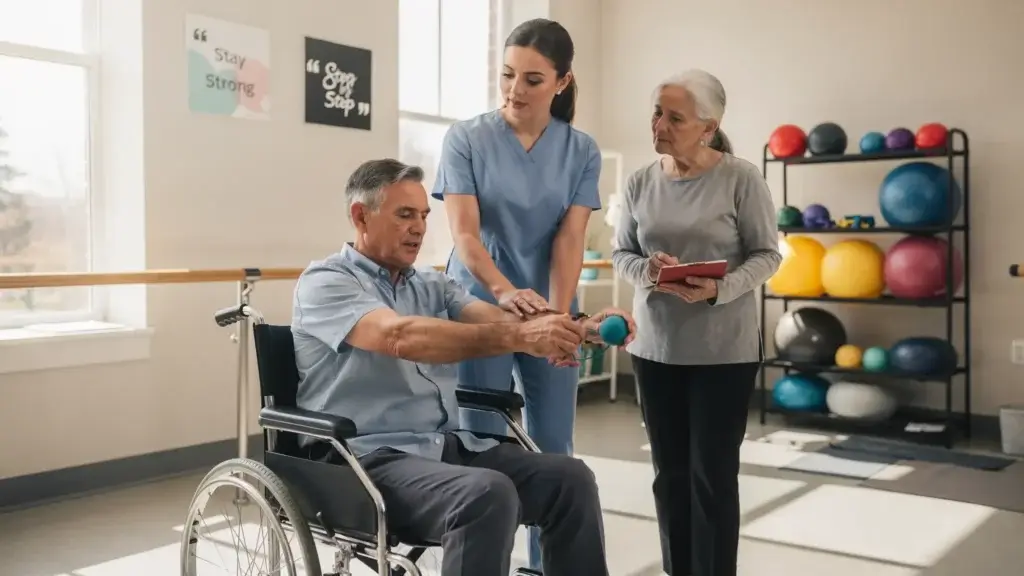
Physiotherapy after stroke helps improve strength, balance, coordination, posture, walking and transfers. The therapist assesses how the stroke has affected muscle tone, joint range, sensation, endurance and fall risk.
In physiotherapy after stroke, exercises are usually task-specific. Instead of only doing general strengthening, the patient practices real movements such as standing from a chair, stepping, reaching, turning, climbing stairs and walking safely on different surfaces.
Therapy may include:
- Balance and gait training to reduce fall risk
- Strengthening exercises for weak muscles
- Stretching and positioning to manage stiffness
- Functional electrical stimulation when appropriate
- Breathing and endurance work for daily stamina
- Home exercise plans for carryover between sessions
Consistency makes physiotherapy after stroke more effective. Short daily practice is often better than occasional long sessions, especially when fatigue is managed carefully.
Speech therapy for stroke patients: restoring communication and swallowing
Stroke may cause aphasia, dysarthria, apraxia of speech, cognitive-communication difficulty or dysphagia. These conditions can affect speaking, understanding, reading, writing, memory, attention and safe swallowing.
Speech therapy for stroke patients can target word-finding, sentence building, speech clarity, voice strength, oral motor control, comprehension, conversation skills and safe eating strategies. For some people, therapy may also include augmentative and alternative communication tools so they can express needs while speech is recovering.
Early speech therapy for stroke patients is especially important when swallowing is affected. Coughing during meals, wet voice after drinking, food pocketing in the cheek, recurrent chest infections or unexplained weight loss should be assessed promptly.
Families searching for Speech therapy Dubai services should look for a team that understands adult neurological communication disorders and can support both the patient and caregiver. Bridges Speech Center provides speech-language support for adults with stroke-related communication and swallowing needs.
Occupational therapy for stroke recovery: returning to daily life
Occupational therapy for stroke recovery focuses on practical independence. It helps a person relearn the activities that matter at home, work and in the community.
This may include dressing, bathing, grooming, cooking, handwriting, using a phone, managing medications, planning a routine or adapting the home for safety. The therapist may also work on arm and hand function, visual perception, attention, memory, fatigue management and problem-solving.
With occupational therapy for stroke recovery, the goal is not just movement for the sake of movement. The goal is participation. A person may practice reaching because they want to make tea. They may train hand coordination because they want to button a shirt or sign their name again.
For adults who need daily living support, Bridges Speech Center also offers information on occupational therapy for adults as part of a broader rehabilitation approach.
Psychological and cognitive support
Stroke affects more than the body. Many survivors experience frustration, anxiety, depression, emotional changes, reduced confidence or fear of another stroke. Cognitive difficulties can also affect attention, memory, planning and decision-making.
Psychological support, counselling, psychotherapy and cognitive strategies can help patients and families adjust. This part of Post Stroke Rehabilitation is often overlooked, but it can strongly influence motivation and long-term independence.
Practical Tips for the Recovery Journey
Recovery improves when therapy goals are connected to everyday routines. A patient may not feel motivated to repeat an exercise ten times, but may be more engaged when the same movement helps them stand safely from their favorite chair.
Try these practical steps at home:
- Set small goals such as walking to the dining table or saying a full greeting clearly.
- Keep a simple progress diary with notes on walking distance, speech clarity, fatigue and mood.
- Practice at the same time each day to build routine.
- Reduce distractions during communication practice.
- Use safe seating, good lighting and clutter-free walking paths.
- Involve caregivers so strategies are used outside therapy sessions.
- Watch for red flags such as new weakness, facial drooping, sudden confusion, chest pain or severe headache and seek urgent medical help.
The CDC stroke warning signs guide highlights the FAST signs: face drooping, arm weakness and speech difficulty. If these appear suddenly, emergency care is needed.
For patients who cannot travel easily, a Home care service can make rehabilitation more practical. Home-based sessions allow therapists to assess real-life barriers such as bathroom transfers, bedroom layout, stairs, meal routines and caregiver needs.
Latest Trends in Stroke Recovery Rehabilitation
Modern stroke recovery rehabilitation is becoming more personalized, measurable and family-centered. While traditional hands-on therapy remains essential, newer approaches are helping patients practice more consistently.
Current trends include hybrid therapy, where clinic sessions are combined with telehealth check-ins and home programs. Wearable sensors can help track steps, arm use or activity levels. Virtual reality and game-based rehabilitation may improve motivation for repetitive practice. Robotic-assisted therapy and functional electrical stimulation can support movement training for selected patients.
Another major trend is caregiver coaching. Families are not expected to become therapists, but they can learn safe ways to support practice during meals, dressing, walking and conversation. This makes stroke recovery rehabilitation more continuous and meaningful.
Technology should never replace clinical judgment. The best stroke recovery rehabilitation plan uses tools only when they match the patient’s goals, safety needs and medical condition.
What to Expect at Bridges Speech Center in Dubai
At Bridges Speech Center, Post Stroke Rehabilitation starts with understanding the person, not only the diagnosis. The team considers medical history, communication, swallowing, mobility, daily routines, emotional wellbeing, family priorities and the home environment.
A care plan may include speech-language assessment, physiotherapy evaluation, occupational therapy screening, cognitive or psychological support and caregiver training. Patients may receive clinic-based sessions, telehealth guidance or home-based care depending on safety, mobility and goals.
Bridges Speech Center supports adults through coordinated services such as speech and language therapy, physiotherapy, occupational therapy, feeding and swallowing therapy, psychotherapy and rehabilitation planning. For many families, this integrated model reduces confusion and helps everyone work toward the same recovery goals.
Conclusion: Recovery Is a Journey, Not a Single Step
Post Stroke Rehabilitation works best when it is early, individualized and consistent. Physiotherapy helps rebuild movement. Speech therapy supports communication and swallowing. Occupational therapy restores daily independence. Psychological and caregiver support help the person stay engaged through the emotional side of recovery.
Frequently asked Questions
How soon should Post Stroke Rehabilitation begin?
Rehabilitation often starts as soon as the medical team confirms that the patient is stable. Early support may include positioning, swallowing checks, gentle movement and communication screening.
How long does stroke recovery rehabilitation take?
Recovery time varies widely. Some people improve within weeks while others continue making gains over many months. Progress depends on stroke severity, health, therapy intensity, home practice and family support.
Why is speech therapy for stroke patients important?
Speech therapy for stroke patients helps with communication, swallowing, speech clarity, word-finding, memory and social confidence. It also helps families learn better ways to communicate during recovery.
What does occupational therapy for stroke recovery include?
Occupational therapy for stroke recovery focuses on daily living skills such as dressing, bathing, cooking, writing, using devices, home safety, fatigue management and returning to meaningful routines.