

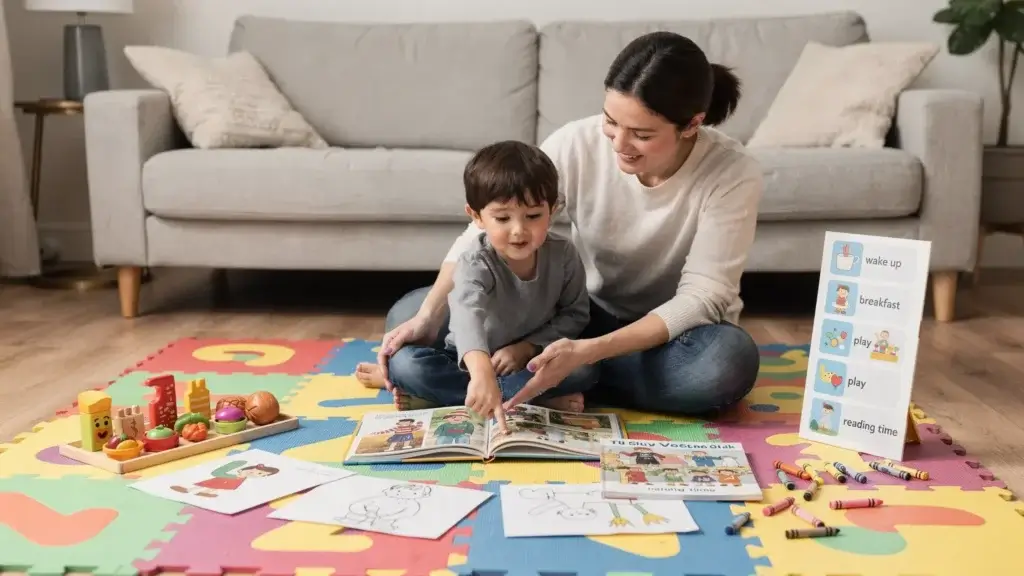
Starting school is a major milestone. For many children, success in the classroom begins long before the first day of school. The factors affecting school readiness include communication, attention, motor coordination, sensory processing and self-care. They also include confidence, emotional regulation and the support a child receives at home.
Parents often ask what affects school readiness beyond age. The answer is rarely one single skill. A child may know letters but struggle to follow group instructions. Another child may be bright and curious but find it hard to sit, share or manage transitions. At Bridges Speech Center in Dubai, our multidisciplinary team helps families understand each child’s strengths and needs through structured school readiness support.
Table of Contents
ToggleWhat Does School Readiness Mean?
School readiness is not about forcing preschoolers to read early or sit still for long periods. It means a child has the foundation to participate in classroom routines, interact with others and begin formal learning with confidence.
Important school readiness skills include listening to instructions, using words or gestures to express needs, holding a pencil, taking turns, managing frustration and completing simple tasks. These skills support early learning development because young children learn best when they can communicate, move, play and regulate their emotions.
The CDC’s developmental milestone resources encourage families to monitor development across communication, movement, social skills and problem-solving. If a child is not meeting expected milestones, early guidance can make the transition to school smoother.
What Affects School Readiness?
Main Factors Affecting School Readiness
The main factors affecting school readiness are connected. Communication affects social play. Sensory regulation affects attention. Motor development affects writing and independence. When one area is delayed, the child may need extra support in more than one setting.
These factors affecting school readiness are often noticed during daily routines such as dressing, snack time, play, story time and group activities.
Readiness area | What parents may notice | Helpful support |
Speech and language | Limited vocabulary, unclear speech, difficulty answering questions | speech therapy and parent coaching |
Fine motor skills | Trouble with crayons, scissors, buttons or feeding utensils | Occupational therapy and hand skill activities |
Attention and listening | Difficulty following directions or staying with a task | Short routines, visual schedules and therapy goals |
Social-emotional skills | Meltdowns, separation anxiety, difficulty sharing | Play-based therapy, psychology support and caregiver strategies |
Sensory processing | Overreaction to noise, textures or movement | Sensory integration and regulation plans |
Self-care | Difficulty with toileting, dressing or eating | Step-by-step routines and independence practice |
Communication and Language Readiness
Language is one of the strongest foundations for classroom success. Children need to understand instructions such as line up, put your bag away and come sit on the mat. They also need to express needs such as I need help, I am hungry or I do not understand.
For families searching for speech therapy Dubai, early assessment can identify whether a child needs support with speech sounds, vocabulary, sentence building, auditory processing or social communication. A child who cannot express needs may appear shy, frustrated or inattentive in class.
A qualified speech therapist can also support children who stutter, have articulation difficulties or struggle with conversation. Therapy is most effective when it connects clinic goals to everyday communication at home and school.
Motor, Sensory and Self-Care Skills
School readiness for preschoolers includes body-based skills that are easy to overlook. Children need posture for sitting, hand strength for writing, coordination for playground play and oral motor skills for eating safely. They also need to manage sensory input in busy classrooms.
If a child avoids messy play, dislikes loud sounds, becomes overwhelmed in crowds or has difficulty with transitions, sensory processing may be affecting participation. Occupational therapy can help children build regulation tools, improve fine motor skills and develop independence in daily tasks.
Self-care is equally important. A child who can open a lunchbox, wash hands, manage clothing and ask for toilet help will feel more confident in school routines.
Emotional Regulation and Social Confidence
School is a social environment. Children learn through sharing, waiting, negotiating and asking for help. Emotional regulation helps them recover after disappointment and keep trying when tasks feel difficult.
One of the strongest factors affecting school readiness is how a child responds to change. Preschoolers who struggle with transitions may cry, run away or refuse activities. This does not mean the child is naughty. It may mean the child needs predictable routines, visual supports, reduced language during distress and gradual exposure to new settings.
At Bridges Speech Center, therapists may combine speech and language support with occupational therapy, ABA, psychology or parent training when a child needs support across more than one area.
School Readiness for Preschoolers: Signs a Child May Need Extra Support
Some children need more time. Others need targeted support before school demands increase. Consider a professional screening if your preschooler often shows these signs:
- Has unclear speech that unfamiliar adults struggle to understand
- Uses very short sentences for their age
- Does not follow two-step instructions
- Avoids drawing, puzzles, blocks or fine motor play
- Finds group play, sharing or turn-taking very difficult
- Has frequent meltdowns during transitions
- Struggles with feeding, dressing, toileting or sleep routines
- Seems overwhelmed by sounds, textures, lights or movement
If you are unsure whether these signs are typical, a speech therapist at Bridges Speech Center can guide you toward the right assessment pathway.
Practical Tips to Strengthen School Readiness Skills at Home
Parents do not need complicated worksheets to support early learning development. Short, playful routines are often more effective than long practice sessions.
- Read one picture book daily and ask simple what, who and where questions
- Practice two-step directions during real routines such as get your shoes and bring your bag
- Use pretend play to build vocabulary, turn-taking and problem-solving
- Encourage drawing, stickers, playdough and safe cutting activities for hand strength
- Create a morning picture schedule to support independence
- Practice calm transitions with countdowns, first-then language and praise for effort
- Limit passive screen time and increase face-to-face conversation
For children who need more structure, Bridges Speech Center offers a dedicated school readiness program that can target communication, learning, behavior and independence in a child-centered way.
Latest Trends in School Readiness Support
In 2026, school readiness for preschoolers is becoming more holistic. Families and educators are moving away from narrow academic checklists and looking at communication, sensory needs, emotional regulation and daily independence.
Parent coaching is also growing. Therapists now focus on helping caregivers use strategies during real routines instead of limiting progress to clinic sessions. Hybrid support, including home programs and telehealth check-ins, can help families stay consistent.
Another important trend is early collaboration with nurseries and schools. When therapists, parents and teachers share goals, children receive consistent cues across settings. This improves carryover and helps school readiness skills become part of everyday life.
For children with autism, ADHD, developmental delay, speech delay or sensory challenges, early individualized support is especially important. Targeted speech therapy support can improve communication before school frustration increases.
How Bridges Speech Center Supports Early Learning Development
Bridges Speech Center provides speech therapy, occupational therapy, physiotherapy, feeding therapy, sensory integration, ABA, clinical psychology and home care services for children and adults in Dubai. For school readiness, the team looks at the whole child rather than one isolated skill.
A typical pathway may include developmental screening, speech and language assessment, occupational therapy evaluation, goal planning and parent guidance. Therapy may focus on speech clarity, listening, vocabulary, social communication, fine motor skills, sensory regulation or independence.
Working with a speech therapist can be especially helpful when communication barriers are affecting confidence, peer interaction or early classroom participation.
Conclusion
Understanding the factors affecting school readiness helps parents focus on the skills that matter most: communication, regulation, motor development, social confidence and independence. Every child develops differently but early support can make the school transition more positive.
If your child is preparing for nursery or school in Dubai, Bridges Speech Center can help you identify strengths, address delays and build practical skills for early learning development. To discuss your child’s needs, contact us today.
Frequently Asked Questions
What are the most important school readiness skills?
Important school readiness skills include communication, listening, attention, fine motor control, emotional regulation, social interaction and self-care. A child does not need to master everything before school but should have enough foundation to participate with support.
How do I know what affects school readiness for my child?
Look at daily routines. Notice how your child communicates, follows instructions, plays with others, handles transitions, uses their hands and manages self-care. A professional assessment can identify which areas need support.
Is school readiness for preschoolers only about academics?
No. School readiness for preschoolers includes language, play, movement, social confidence, sensory regulation and independence. Early academic skills are only one part of the bigger picture.
When should I seek therapy before my child starts school?
Seek support if your child has unclear speech, limited language, frequent meltdowns, sensory difficulties, poor attention, feeding issues or trouble with daily routines. Early support can reduce stress and build confidence before school begins.