
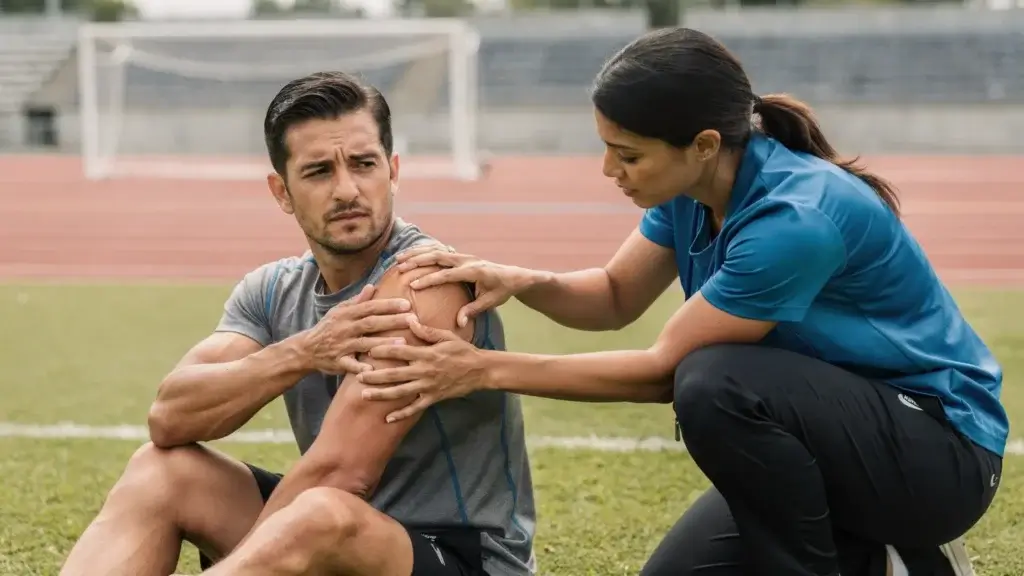
Shoulder Injuries in Sports are common because the shoulder is one of the most mobile joints in the body. It allows throwing, swimming, tackling, lifting, serving and reaching overhead. That mobility helps performance but it also makes the joint vulnerable when muscles, tendons, ligaments or joint surfaces are overloaded.
For athletes in Dubai, early attention matters. Shoulder pain after sports activity may start as a mild ache then progress into weakness, stiffness or instability if ignored. Bridges Speech Center supports rehabilitation through physiotherapy and multidisciplinary care. The clinic is also known for Speech therapy Dubai which can be relevant when sports injuries occur alongside head, neck or neurological concerns.
Table of Contents
ToggleWhy Shoulder Injuries in Sports Happen
Shoulder Injuries in Sports often develop from a mix of force, repetition and poor recovery. Overhead athletes such as swimmers, tennis players, volleyball players, cricket bowlers and baseball players place repeated stress on the rotator cuff and shoulder blade muscles. Contact athletes may injure the shoulder during falls, tackles or collisions.
A sports shoulder injury treatment plan should start by understanding the cause. Pain may come from one sudden event such as a fall onto an outstretched arm. It may also build gradually from training errors, weak shoulder stabilizers, poor throwing mechanics, limited upper back mobility or returning to play too soon after pain.
Common risk factors include:
- Sudden increase in training volume or intensity
- Poor warm-up before overhead activity
- Weak rotator cuff or scapular control
- Limited mobility in the upper back or chest
- Previous shoulder injury or repeated instability
- Technique faults during throwing, swimming or lifting
- Fatigue that changes movement quality during sport
Common Shoulder Injuries in Athletes
The phrase common shoulder injuries in athletes covers several different problems. Some are tendon-related. Others involve ligaments, cartilage, bones or joint stability. The table below gives a practical overview.
Injury Type | Common Cause | Key Symptoms | Early Action |
Rotator cuff strain or tendinopathy | Repeated overhead motion or overload | Pain when lifting the arm, weakness and night discomfort | Reduce painful load and seek assessment if symptoms persist |
Shoulder impingement | Poor shoulder blade control or tight soft tissues | Pinching pain during overhead reach | Modify activity and begin guided mobility work |
Shoulder dislocation or instability | Fall, tackle or forceful arm position | Feeling the shoulder slip, visible deformity or sudden severe pain | Stop sport and seek urgent medical care |
Labral tear | Throwing, collision or traction injury | Deep pain, clicking, catching or instability | Medical assessment and structured rehabilitation |
AC joint sprain | Fall onto the shoulder | Pain on top of the shoulder and pain reaching across the body | Protect the joint and assess severity |
Fracture | High-force fall or collision | Severe pain, swelling, bruising or inability to move the arm | Urgent medical evaluation |
Common shoulder injuries in athletes can look similar at first. That is why guessing the diagnosis is risky. A physiotherapist can test range of motion, strength, joint stability and sport-specific movement to guide the next step.
Symptoms of Shoulder Injuries in Sports
Symptoms of Shoulder Injuries in Sports vary depending on the structure involved. Some athletes feel pain only during sport. Others struggle with daily tasks such as dressing, reaching a shelf or sleeping on the affected side.
Watch for these signs:
- Shoulder pain after sports activity that lasts beyond normal soreness
- Pain when lifting the arm overhead
- Weakness during throwing, pushing or pulling
- Clicking, catching or grinding with pain
- Loss of range of motion or stiffness
- Swelling, bruising or visible change in shoulder shape
- Numbness, tingling or pain spreading down the arm
- Repeated feeling that the shoulder may slip out
Shoulder pain after sports activity is not always serious but it should not be ignored when it repeats or worsens. If you need more detail on shoulder movement and joint-focused rehab, read about shoulder pain and joint therapy.
Seek urgent medical care if there is severe pain after trauma, visible deformity, loss of feeling, major weakness or inability to lift the arm.
Sports Shoulder Injury Treatment: What Recovery Usually Involves
Sports shoulder injury treatment depends on the injury type, the athlete’s age, sport demands and symptom severity. Some injuries settle with activity modification and physiotherapy. Others need medical imaging, specialist review or a period of immobilization.
A good recovery plan usually has four stages.
Calm Pain and Protect the Shoulder
The first step is to reduce irritation. This may include stopping painful drills, changing training volume, using safe positions and following medical advice after acute trauma. Ice may help in the early phase for some injuries but it should not replace assessment when pain is significant.
Athletes should avoid playing through sharp pain, instability or weakness. Continuing to train with poor mechanics can delay recovery.
Restore Mobility
Once it is safe, therapy focuses on regaining comfortable motion. This may include gentle shoulder range exercises, upper back mobility, chest flexibility and posture work. The goal is not aggressive stretching. It is to restore smooth movement without provoking symptoms.
Rebuild Strength and Control
This stage is central to physiotherapy for shoulder injuries. The rotator cuff helps keep the shoulder joint centered. The scapular muscles help position the shoulder blade for efficient movement. When these muscles are weak or poorly coordinated, pain can return during sport.
Therapy may include resistance band work, closed-chain exercises, controlled overhead loading, balance and trunk stability tasks. At Bridges Speech Center, physiotherapy may be coordinated with broader rehabilitation needs through services such as orthopedic physiotherapy.
Return to Sport Gradually
Return to sport should be based on function rather than the calendar alone. The athlete should have pain-free range of motion, near-normal strength, good shoulder blade control and confidence with sport-specific drills.
A structured sports injury therapy plan can help athletes progress from basic strength to throwing, swimming, serving, tackling or lifting in a measured way.
Physiotherapy for Shoulder Injuries: What to Expect
Physiotherapy for shoulder injuries begins with a detailed assessment. The therapist asks about the injury, sport demands, training history, pain behavior and goals. They may assess shoulder motion, neck movement, strength, stability, posture, balance and technique.
Treatment can include manual therapy, exercise therapy, movement retraining, taping, education and home exercises. The best plans are active. Passive treatment may reduce symptoms temporarily but long-term recovery usually requires strength, control and gradual loading.
For athletes who cannot attend clinic sessions easily, a home care service can support safe practice in a familiar environment. Home-based care can be useful after surgery, during early mobility limits or when daily routines affect recovery.
In some sports injuries, shoulder pain may occur with concussion, neck trauma or neurological symptoms. In these cases, multidisciplinary input matters. Bridges Speech Center offers speech therapy along with rehabilitation services for people who need communication, swallowing or cognitive support after neurological events.
Practical Recovery Tips for Shoulder Injuries in Sports
Recovery from Shoulder Injuries in Sports improves when athletes respect symptoms while staying appropriately active. Total rest for too long can lead to stiffness and weakness. Pushing too hard too early can restart pain.
Use these practical tips:
- Stop the activity if pain is sharp, sudden or linked with a pop or slip sensation
- Track pain during exercise and the next morning to judge tolerance
- Keep the shoulder moving within a comfortable range unless told otherwise
- Build strength gradually with correct technique
- Train the upper back, trunk and hips because shoulder power depends on the whole body
- Sleep in a position that does not compress the painful shoulder
- Return to sport through planned steps rather than one full session immediately
Shoulder pain after sports activity should reduce as strength and movement quality improve. If symptoms keep returning, the plan may need reassessment.
Latest Trends in Sports Shoulder Rehabilitation
In 2026, sports shoulder injury treatment is becoming more individualized and data-informed. Therapists increasingly use criteria-based return-to-sport decisions rather than fixed timelines. This means athletes progress when they meet movement, strength and confidence markers.
Other trends include wearable sensors for workload tracking, video analysis for throwing or swimming technique, hybrid care that combines clinic sessions with guided home programs and stronger focus on sleep, nutrition and recovery habits.
Physiotherapy for shoulder injuries also places more attention on the kinetic chain. For example, a tennis serve is not only a shoulder movement. It involves legs, trunk rotation, scapular timing and wrist control. Treating only the sore spot may miss the real performance problem.
Preventing Shoulder Injuries in Sports
Preventing Shoulder Injuries in Sports starts before pain appears. Athletes should warm up well, strengthen the rotator cuff, train shoulder blade control and manage workload across the season.
Coaches and parents should watch for visible fatigue, dropping technique quality, reduced throwing speed or a child avoiding overhead movement. Young athletes may not always describe pain clearly. A change in performance or confidence can be an early clue.
A prevention routine can include shoulder mobility, band external rotations, rows, wall slides, controlled overhead carries and trunk strength exercises. These should be matched to age, sport and ability.
Conclusion: Recover Stronger and Return Safely
Shoulder injuries can interrupt sport but early action can reduce downtime and lower the risk of repeat problems. The key steps are recognizing symptoms, getting the right assessment, following a structured rehab plan and returning to sport gradually.
Bridges Speech Center provides multidisciplinary rehabilitation support in Dubai for children and adults. If you or your child has shoulder pain after training, a fall or repeated overhead activity, contact us to discuss the next step toward safe recovery.
Frequently Asked Questions
Can I play through shoulder pain after sports activity?
Mild muscle soreness may settle with rest and load adjustment but sharp pain, weakness, instability or pain that keeps returning should be assessed before continuing sport.
What are the most common shoulder injuries in athletes?
Common shoulder injuries in athletes include rotator cuff strains, impingement, dislocations, labral tears, AC joint sprains and fractures after high-force trauma.
How long does recovery from a shoulder injury take?
Recovery depends on the injury, severity, sport demands and consistency with rehabilitation. Minor strains may improve faster while instability, labral injuries or post-surgical cases often need longer guided rehab.
When is physiotherapy for shoulder injuries needed?
Physiotherapy is recommended when pain lasts more than a few days, limits movement, affects sport technique, causes weakness or returns each time the athlete trains.