

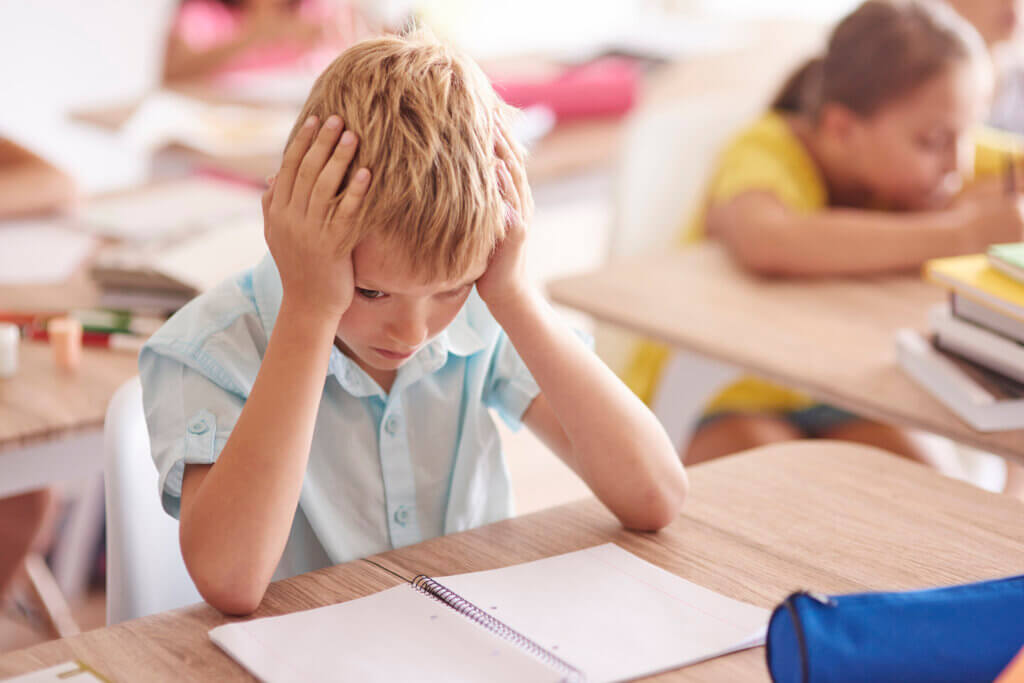
Why So Many Children Fall Apart at the School Gate? You know the drill. Sunday night rolls around and suddenly your child has a stomachache. Monday morning there are tears before breakfast. And by the time you have driven home from drop-off, half of you wondered whether the whole thing was a bit theatrical and the other half felt genuinely terrible for leaving them.
School anxiety is far more common than most parents realise, especially in Dubai where schools are demanding, class sizes are large, and children are often navigating not just academics but a multilingual, multicultural social world that adults sometimes underestimate.
It can show up in nursery aged three or in secondary school aged fifteen. It is not linked to how bright a child is, and it is not caused by overprotective parenting, despite what some corners of the internet suggest.
Table of Contents
ToggleWhat Is School Anxiety, Exactly?
It is not a formal diagnosis. School anxiety is better understood as a pattern, a recurring experience of fear or dread specifically tied to school or school-related situations. It can sit underneath several different conditions including generalised anxiety, social anxiety, or separation anxiety, but what they share is that school is where everything gets harder.
The key distinction worth making is between not liking school and being genuinely anxious about it. Anxiety-driven school refusal involves real physiological distress. Heart racing. Stomach turning. Genuine inability to regulate, not a child choosing to perform upset. That distinction matters because the response it calls for is quite different.
Children with ASD, ADHD, sensory processing differences, or speech and language delays tend to be more vulnerable here. School places enormous demands on the very skills these children are already working hardest to manage.
What School Anxiety Symptoms Actually Look Like
The Physical Stuff
- Stomachaches and headaches that cluster around Sunday evenings and Monday mornings, then disappear by mid-afternoon
- Nausea or vomiting before drop-off
- Complaints that vanish the moment school is off the table
- Becoming the school nurse’s most regular visitor
The Behavioural Stuff
- Crying, clinging, meltdowns at the school gate
- Asking the same reassurance questions on a loop
- Avoiding anything socially exposed: group projects, sports day, eating in the cafeteria
- Going very quiet around teachers or refusing to ask for help even when they clearly need it
- Lying awake on school nights, which feeds into exhaustion that makes everything harder the next day
The Emotional Stuff
- Worrying about tests weeks before they happen
- Fear of being called on in class or getting something wrong in front of people
- Low confidence tied specifically to school, not necessarily how they are at home
- Coming home and decompressing through irritability or tears that seem to come from nowhere
Three Patterns in School Anxiety
Separation Anxiety at School
The goodbye moment tends to be the hardest part. The child genuinely believes something bad might happen while you are apart, and that fear is completely real to them even when the logic does not hold up.
Short goodbyes work better than long drawn-out ones. A consistent drop-off person helps. A small ritual, a handshake, a note in the lunchbox, can bridge the gap. What does not help, even though it feels kind, is going back because they are crying. It almost always makes the following morning worse.
Social Anxiety at School
The children with social anxiety actually want friends. That is what most parents miss. They are not indifferent to socialising; they are frightened of it. Frightened of saying the wrong thing, being laughed at, being seen trying and failing.
Open-ended play is hard for them. Lunch clubs, structured activities, paired work in class, anything that gives them a reason to interact without requiring them to cold-start a conversation, those are situations where they tend to actually cope and sometimes even enjoy themselves.
When a Child Flat Out Refuses School
Keeping them home feels kind. It is also, in most cases, making things worse. Every time the child avoids school and feels the relief of not having to go, the brain files that away as confirmation that school is dangerous and avoidance is the solution.
The goal is not forced attendance. It is gradual, supported exposure: small steps toward the feared situation with someone alongside them through it.
What Actually Helps
Acknowledge the feeling. There is a version of validation that helps and a version that accidentally confirms the child’s fear is as serious as they think. “That sounds hard, and I know you can get through it” lands very differently from “I know, it is awful, let’s think about whether you really need to go today.”
Keep mornings predictable. Anxiety feeds on uncertainty. If your child already knows what breakfast looks like, what the drive involves, and roughly what their day holds, there is less mental energy going toward managing the unknown. Visual schedules work particularly well for children with ASD or ADHD.
Teach regulation skills when things are calm. The worst time to introduce a breathing technique is mid-meltdown. Practise when everything is fine. Three deep breaths, a grounding exercise, a phrase the child picks for themselves. The goal is something they can reach for before things escalate.
Get the school involved early. A trusted adult who checks in at the start of the day, a quiet space during breaks, a small adjustment to how your child gets called on in class. Most schools in Dubai are used to making these adjustments. The children who struggle most are often those whose parents tried to manage everything without involving the school, not wanting to make a fuss.
Do not avoid it. Every time anxiety wins, it gets a little stronger. Gradual, supported exposure to the feared situation in manageable steps is what actually reduces anxiety over time.
When Therapy Comes In
If anxiety is causing regular absences, affecting sleep or friendships, or if home strategies have not shifted things after a few weeks, it is probably time to bring in professional support.
Cognitive behavioural therapy (CBT) delivered by a paediatric psychologist is the most well-researched approach for school anxiety specifically. It helps children identify the thoughts driving the fear, test them against reality, and build practical coping tools. It also gives parents a clearer framework for responding at home without accidentally reinforcing avoidance. Many children make real progress within a few months.
Occupational therapy is worth considering when sensory processing is part of the picture. A noisy cafeteria, crowded corridors between lessons, the unpredictability of PE class. An occupational therapist can assess how your child processes that environment and work with the school on practical adjustments that reduce the daily sensory load.
At Bridges Speech Center in Dubai, children presenting with school anxiety are assessed across multiple areas rather than through a single lens. Emotional regulation, sensory processing, and behaviour interact with each other, and the children who tend to do best are those whose whole picture gets looked at together.
A Final Word
School anxiety is not a character flaw in your child and it is not a failing on your part. It is a signal that something in the gap between what school demands and what your child currently has available needs attention. The good news is that it responds well to support. Most children who get the right help do not just manage school. They actually start to settle into it.
If your child has been struggling and you are not sure where to start, the clinical psychology team at Bridges Speech Center in Dubai can help you make sense of what is going on and figure out the right next step. Whether that is a full assessment, a parent consultation, or connecting with one of the other specialists on the team, you do not have to work it out alone.
Book an assessment with the team at Bridges Speech Center today. Early support makes a real difference, and the first conversation costs nothing.
Frequently Asked Questions
What are the symptoms of school anxiety?
School anxiety symptoms may include stomachaches, headaches, sleep problems, excessive worry, school refusal, and emotional distress before school.
How can I help my child with school anxiety?
Parents can help by maintaining routines, validating emotions, encouraging gradual exposure to school, and seeking professional support when needed.
Is school anxiety normal?
Occasional nervousness is normal, but persistent anxiety that affects attendance, learning, or friendships may require professional support.
When should I seek therapy for school anxiety?
Consider therapy if anxiety regularly interferes with school attendance, academic performance, social relationships, or daily wellbeing.