Picture Talk for Kindergarten: How Visual Conversations Build Speech and Language Skills
Kindergarten is a busy stage for communication. Children are learning new words, longer sentences, classroom routines, social rules and early storytelling all…
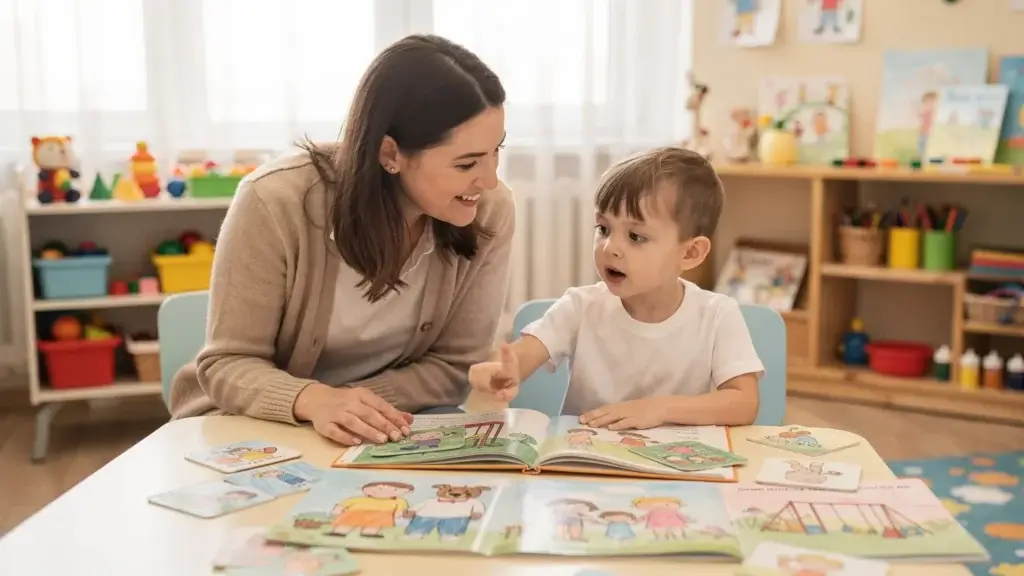
Kindergarten is a busy stage for communication. Children are learning new words, longer sentences, classroom routines, social rules and early storytelling all at once. Picture Talk for Kindergarten gives them a simple bridge between what they see and what they want to say. Instead of asking a child to talk from memory alone, adults use pictures, photos, story scenes or drawings to start meaningful conversations.
This approach supports attention, vocabulary, sentence building and confidence. It is also easy to use at home, in nursery settings and during therapy. If you are new to this method, Bridges Speech Center has a helpful guide on what is picture talk and how it is used in speech and language therapy.
For parents looking for practical ways to support language development in kindergarten, visual conversation is one of the most natural starting points. A picture gives the child something concrete to look at, point to, name, describe and discuss.
Why Picture Talk for Kindergarten works so well
Young children often understand more than they can express. A picture reduces the pressure to “think of something to say” because the topic is already visible. The child can point before speaking, choose a word before forming a sentence and notice details that help them expand their ideas.
A strong Picture Talk for Kindergarten session is not about testing the child. It is about creating a warm, back-and-forth conversation. The adult models language, waits for the child to respond and gently expands the child’s words. For example, if a child says “dog,” the adult may respond, “Yes, a brown dog is running.” This simple expansion teaches vocabulary, grammar and sentence structure without making the child feel corrected.
Pictures also support children who are shy, multilingual, easily distracted or still developing speech clarity. Families searching for Speech therapy Dubai often ask for practical activities they can use between sessions, and picture-based conversation is one of the easiest to carry into daily routines.
How visual conversations build key speech and language skills
Vocabulary, grammar and language development in kindergarten
Pictures help children learn nouns, verbs, adjectives, locations and early concepts such as big, small, first, next and behind. A farm picture can teach animal names, action words like eating or jumping and descriptive words like muddy or noisy.
This makes picture talk different from memorizing flashcards. The child is not only naming objects. They are connecting words to ideas, actions and relationships. That is why visual communication activities for children are so useful for real communication.
Sentence building and storytelling
Kindergarten children are beginning to move from short phrases to fuller sentences. Picture talk gives them a structure for this growth. A child can start with “girl eating” and gradually learn to say “The girl is eating an apple at the table.”
Story pictures are especially powerful. When children describe what happened first, what is happening now and what might happen next, they practice sequencing. Sequencing is important for classroom learning, reading comprehension and daily conversation.
Speech clarity and confidence
Picture-based work can also support pronunciation. If a child is practicing a sound such as “s,” the therapist or parent can choose pictures with target words like sun, soup, seal or socks. This turns practice into a playful conversation rather than a drill.
Compared with many speech development activities for kids, picture talk feels natural because the child is talking about something meaningful. This can reduce frustration and help the child enjoy speaking.
Social communication and listening
A picture gives children a shared focus. They learn to take turns, answer questions, ask questions and comment on what others say. These are important social language skills for kindergarten, especially during group learning and peer play.
Picture talk vs ordinary picture naming
Many adults naturally ask, “What is this?” when showing a picture. That question is useful sometimes, but Picture Talk for Kindergarten goes further. It turns naming into conversation.
Approach | What the child does | Skills supported | Example prompt |
Picture naming | Names one object | Vocabulary | “What is this?” |
Picture description | Talks about details | Sentences and adjectives | “What is the boy doing?” |
Picture prediction | Guesses what may happen | Reasoning and storytelling | “What do you think will happen next?” |
Picture Talk for Kindergarten | Shares ideas in a conversation | Vocabulary, grammar, listening and confidence | “Tell me what you notice in this picture.” |
The goal is not to ask too many questions. Children learn best when adults balance questions with comments. Try saying, “I see a cat hiding under the chair,” then pause. This gives the child a model and an invitation to respond.
Simple picture talk activities for kindergarten
The best picture talk activities for kindergarten are short, playful and connected to the child’s interests. You can use storybooks, family photos, magazine pictures, printed cards or drawings. Bridges Speech Center also offers Picture talk support for families who want more structured guidance.
Try these therapist-informed ideas:
- I spy in the picture: Ask the child to find something by color, size or function, such as “Find something you can eat.”
- Action detective: Choose pictures with people or animals doing actions and model verbs like running, washing, climbing or sleeping.
- Silly scene talk: Use a funny picture and ask what is strange, such as a fish in a tree or a shoe on a plate.
- Feelings picture: Look at facial expressions and ask, “How does she feel?” or “Why might he be sad?”
- Story sequence: Use three pictures and help the child tell what happened first, next and last.
- Sound hunt: Pick a speech sound and search for items in the picture that include that sound.
The most effective picture talk activities for kindergarten follow the child’s lead. If the child is excited about cars, animals or food, start there. Motivation improves attention and increases the chance that the child will try new words.
A 10-minute routine parents can use at home
You do not need a long session. In fact, short daily practice often works better than a long session once a week. Use this Picture Talk for Kindergarten routine before bedtime, after school or during quiet play.
Time | What to do | Parent example |
2 minutes | Let the child choose a picture | “Which picture should we talk about today?” |
3 minutes | Name and describe | “I see a little boy. He is holding a red ball.” |
3 minutes | Ask open questions | “Where is he going?” or “What else do you see?” |
2 minutes | Expand and repeat | Child: “Ball.” Adult: “Yes, the boy has a red ball.” |
These speech development activities for kids work best when the adult speaks slowly, uses clear models and gives the child enough time to respond. If the child says one word, expand it. If the child says a short sentence, add one more idea. If the child does not answer, model the answer kindly and move on.
For multilingual families in Dubai, picture talk can be used in more than one language. It is usually helpful for parents to speak the language they are most comfortable using. Rich, responsive conversation in any home language can support overall communication growth.
When picture talk may not be enough
Picture talk is helpful, but it is not a replacement for professional assessment when a child has ongoing difficulty. Consider support from speech therapy if your kindergarten child is hard to understand, uses very short sentences, struggles to follow simple directions or avoids talking with adults and peers.
You may also seek help if language development in kindergarten seems slower than expected, your child cannot answer simple “what,” “where” or “who” questions or they become frustrated when trying to communicate. Stuttering, voice concerns, feeding issues or difficulty with oral movements may also need professional attention.
A qualified speech therapist can identify whether the child needs support with articulation, receptive language, expressive language, social communication or fluency. Therapy goals should be individualized, measurable and practical for home and school routines.
At Bridges Speech Center, children and families can access individualized care in a supportive environment. Therapy may include parent coaching, play-based language work, oral motor support, feeding therapy, occupational therapy or other services when needed.
Latest trends in picture-based speech support
In 2026, therapists and educators are using more personalized visuals. Instead of only using generic cards, many families use real photos from the child’s home, school or community. A photo of the child’s lunchbox, classroom, sibling or favorite park often creates more meaningful conversation than a random image.
Modern Picture Talk for Kindergarten also connects well with inclusive learning. Children with autism, language delay, hearing differences, developmental delays or attention challenges may benefit from clear visuals, predictable routines and repeated practice. For some children, pictures can also support early AAC use because they learn that symbols and images can carry meaning.
Another trend is parent-first coaching. Therapists are helping caregivers learn how to model language during daily routines rather than saving communication practice only for clinic time. This makes visual communication activities for children more consistent and easier to maintain.
Technology can help, but it should be used thoughtfully. A printed photo, storybook or simple drawing often creates better face-to-face interaction than a fast-moving screen. If digital images are used, keep the focus on conversation rather than passive watching.
Conclusion: pictures can open the door to confident communication
Picture Talk for Kindergarten is simple, flexible and powerful. It helps children connect what they see with what they say, building vocabulary, grammar, storytelling, listening and social confidence. With the right prompts, pictures become more than learning tools. They become conversation starters.
If your child needs extra support with speech, language or communication confidence, professional guidance can make home practice more effective. To speak with the team at Bridges Speech Center in Dubai, contact us and take the next step toward clearer, more confident communication.
It is most useful for children around kindergarten age, but the strategy can be adapted for younger preschoolers and older children depending on their communication level.
Start with family photos, storybook scenes or action pictures. Ask the child what they see, model a short sentence and expand their answer by adding one new word or idea.
Yes, many shy children find it easier to talk when there is a shared picture to focus on. The picture reduces pressure and gives them a clear topic.
Short daily practice is ideal. Even 5 to 10 minutes of warm, playful conversation can support vocabulary, sentence growth and confidence over time.