
Parents often notice motor skills in everyday moments: a toddler climbing onto the sofa, a preschooler struggling with buttons, or a school-age child avoiding handwriting. These small observations matter because movement is closely linked to play, independence, learning, feeding, confidence, and social participation.
Fine and large motor skills develop at different speeds for every child, but knowing the typical patterns helps parents support progress and recognize when extra help may be useful. This guide explains what to watch for, how to encourage skills at home, and when occupational therapy or physiotherapy may help.
Table of Contents
ToggleWhat Are Fine and Large Motor Skills for Preschoolers?
Fine motor skills involve small, precise movements of the hands, fingers, wrists, lips, tongue, and eyes working together. Children use these skills to grasp toys, feed themselves, turn book pages, draw, cut with scissors, button clothes, type, and write.
Large motor skills, more commonly called gross motor skills, involve bigger muscles of the body such as the neck, trunk, arms, and legs. These skills help children roll, sit, crawl, walk, run, jump, climb, balance, throw, and participate in playground or sports activities.
Both types of skills depend on more than muscle strength. Children also need body awareness, balance, coordination, motor planning, attention, sensory processing, and motivation. For example, a child who avoids climbing may not only have weak legs. They may be unsure how to plan the movement, fearful of balance changes, or overwhelmed by the noise and movement of the playground.
Skill area | What it involves | Everyday examples |
Fine motor skills | Small hand, finger, wrist, and visual-motor movements | Holding a spoon, using crayons, opening containers, building with blocks, doing buttons |
Large motor skills | Whole-body strength, balance, posture, and coordination | Sitting, crawling, walking, running, jumping, climbing stairs, catching a ball |
Motor planning | Figuring out how to start, sequence, and complete a movement | Learning a new playground game, copying dance actions, using scissors correctly |
Bilateral coordination | Using both sides of the body together | Holding paper while cutting, climbing, riding a scooter, opening a lunchbox |
Why Motor Skills Matter Beyond Movement
Motor development is not only about physical activity. It affects how children explore the world, communicate needs, participate in school, and build self-esteem. A child who can move confidently is more likely to join games, try new activities, and practice problem-solving through play.
Fine motor skills support early learning. Before children can write neatly, they need shoulder stability, hand strength, finger control, visual tracking, and the ability to coordinate both hands. A child who tires quickly during coloring or handwriting may appear careless or unmotivated, when the real issue is motor endurance or pencil control.
Large motor skills support posture and attention. Sitting upright at a table, listening during circle time, and using both hands for tasks all depend on core strength and postural control. When the body works hard just to stay balanced, less energy is available for language, learning, and social interaction.
Motor skills can also affect feeding and speech-related functions. Stable posture helps children chew, swallow, and use their hands during mealtimes. Oral motor coordination supports safe eating and clear speech sounds in some children, especially when feeding, drooling, or muscle tone concerns are present.
Typical Fine and Large Motor Milestones by Age
Milestones are guides, not strict deadlines. Some children walk early but develop pencil skills later. Others love puzzles but are cautious climbers. The key is to look at the whole child, the pattern over time, and whether motor challenges interfere with daily life.
The CDC developmental milestone checklists are a helpful starting point for parents who want age-based guidance. If you notice a delay, regression, or ongoing frustration, it is better to ask for advice early rather than wait and worry.
Age range | Large motor skills parents may notice | Fine motor skills parents may notice |
0 to 6 months | Lifts head during tummy time, rolls, brings hands to mouth, begins sitting with support | Opens hands more often, reaches for toys, holds a rattle, brings objects toward mouth |
6 to 12 months | Sits without support, moves by rolling or crawling, pulls to stand, may cruise along furniture | Transfers toys between hands, bangs objects together, starts pincer grasp, points or pokes |
12 to 24 months | Walks independently, squats to pick up toys, climbs onto furniture, begins stairs with help | Stacks blocks, scribbles, uses spoon with spills, turns book pages, places objects into containers |
2 to 3 years | Runs, jumps with both feet, kicks a ball, climbs playground equipment, walks up stairs with support | Turns single pages, strings large beads, completes simple puzzles, snips with scissors, starts dressing participation |
3 to 4 years | Pedals a tricycle, catches a large ball, balances briefly on one foot, climbs with more confidence | Copies lines and circles, uses child-safe scissors, builds towers, begins using a more controlled crayon grip |
4 to 5 years | Hops, skips emerging, throws and catches more accurately, uses stairs with alternating feet | Copies simple shapes, buttons larger buttons, draws people with parts, begins writing some letters |
5 to 6 years | Joins group games, balances longer, improves running and jumping coordination, starts sports skills | Uses a more mature pencil grasp, writes name, cuts along lines, manages many dressing and school tasks |
Signs Parents Should Watch For
A single late skill does not always mean there is a problem. Children develop differently, especially if they were born premature, have medical conditions, or are naturally cautious. However, certain patterns deserve closer attention.
Consider speaking with a pediatrician, occupational therapist, or physiotherapist if you notice:
- Loss of a motor skill the child previously had.
- Very floppy or very stiff muscles.
- Strong preference for one hand before 18 months.
- Frequent falling, poor balance, or difficulty keeping up with peers.
- Avoidance of playgrounds, stairs, running, jumping, or climbing.
- Difficulty feeding, using utensils, drinking from a cup, or chewing safely.
- Ongoing trouble with buttons, zippers, scissors, crayons, or handwriting.
- Extreme frustration, fatigue, or refusal during motor tasks.
- Sensory distress with messy play, movement, touch, noise, or certain clothing textures.
- Pain, swelling, limping, or unusual walking patterns such as persistent toe walking.
Parents sometimes hear, “They will grow out of it.” Sometimes that is true, but not always. Early support can prevent secondary problems such as low confidence, avoidance, delayed school readiness, or behavior that develops because a child is overwhelmed by tasks that feel too hard.
How Parents Can Support Motor Development at Home
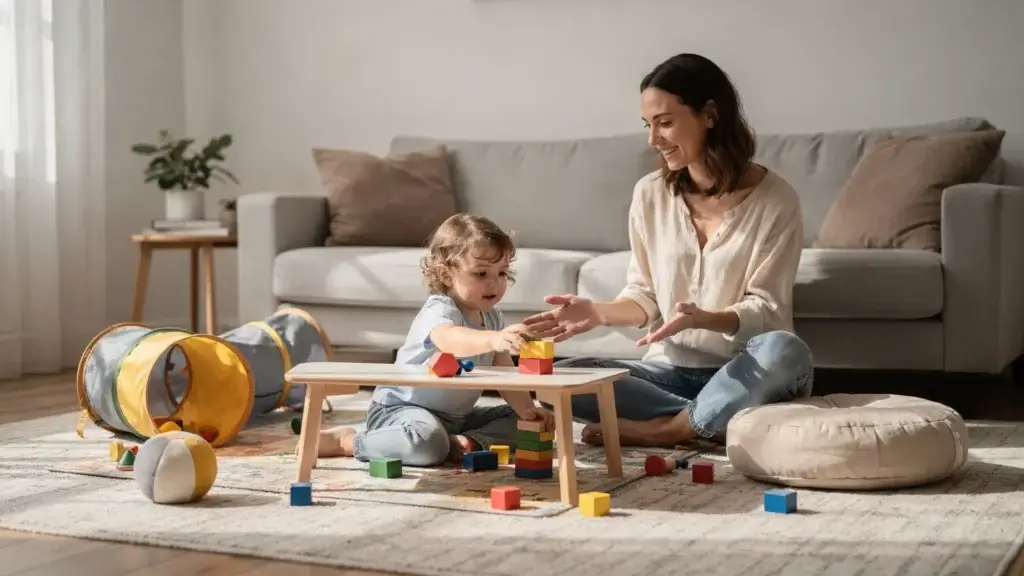
The best motor practice often happens in ordinary routines. Children do not need expensive toys or long therapy-style sessions to build skills. They need safe repetition, playful challenge, and adults who notice effort more than perfection.
The World Health Organization recommends plenty of active play for young children, including at least 180 minutes of physical activity across the day for children aged 1 to 4 years, with more energetic play as children get older. This does not have to be formal exercise. Dancing, crawling through tunnels, helping with chores, and outdoor play all count.
Home activity | Motor skills supported | Simple way to try it |
Floor play and tummy time | Neck, shoulder, trunk, and arm strength | Place toys slightly out of reach so your child turns, reaches, and shifts weight |
Laundry helper games | Squatting, carrying, bilateral coordination | Ask your child to toss socks into a basket or carry light clothes to a drawer |
Snack preparation | Pincer grasp, hand strength, coordination | Let your child peel a banana, open containers, use tongs, or spread soft foods |
Obstacle courses | Balance, motor planning, confidence | Use pillows, tape lines, cushions, and tunnels to step over, crawl under, and jump across |
Vertical drawing | Shoulder stability, wrist control, pre-writing skills | Tape paper to a wall and let your child draw, trace, or place stickers while standing |
Ball play | Eye-hand coordination, timing, balance | Start with rolling a ball, then progress to tossing, catching, kicking, and target games |
Dressing practice | Fine motor control, sequencing, independence | Practice one step at a time, such as pulling up socks or fastening large buttons |
Try to choose activities that are just difficult enough. If a task is too easy, the child may not build new skills. If it is too hard, the child may shut down or avoid it. A good challenge usually looks like effort, concentration, and small successes with encouragement.
A Simple 15-Minute Motor Routine for Busy Families
You can support fine and large motor skills in short daily routines. A balanced routine may include movement, hand strengthening, coordination, and one real-life self-care task.
Start with three minutes of big movement, such as animal walks, jumping over tape lines, marching, or pillow stepping. Follow with five minutes of hand activity, such as playdough squeezing, sticker peeling, tong games, or building with blocks. Add five minutes of coordination practice, such as ball rolling, beanbag toss, cutting along thick lines, or threading large beads. Finish with two minutes of independence practice, such as opening a lunchbox, putting on shoes, washing hands, or helping set the table.
Keep the tone playful. If your child becomes frustrated, reduce the difficulty and end with success. The goal is consistency, not pressure.
When Therapy Can Help
Therapy is not only for children with a diagnosis. It can help any child whose motor skills are affecting daily routines, learning, play, feeding, confidence, or independence.
An occupational therapist often supports fine motor skills, hand strength, visual-motor integration, sensory processing, dressing, feeding participation, handwriting readiness, and daily living skills. If your child avoids messy play, struggles with pencil control, has difficulty with buttons, or becomes overwhelmed by everyday sensations, occupational therapy may be helpful.
A physiotherapist often supports large motor skills such as posture, strength, balance, walking, running, jumping, coordination, pain, gait patterns, and rehabilitation after injury or medical conditions. If your child falls often, avoids movement, has delayed walking, toe walks, or struggles with stairs and playground skills, physiotherapy may be appropriate.
A speech-language therapist or feeding therapist may be involved when motor challenges affect oral movements, feeding, swallowing, drooling, or communication. Children do not develop in isolated categories, so coordinated care is often the most effective approach.
At Bridges Speech Center in Dubai, families can access multidisciplinary support, including occupational therapy, physiotherapy, speech therapy, feeding therapy, sensory integration support, ABA and behavior therapy, psychology, home care therapy, and telehealth services. If you are unsure where to start, a professional assessment can help identify which support is most relevant for your child.
You may also find these Bridges Speech Center resources helpful: Does my child need occupational therapy?, Common Pediatric Physiotherapy Conditions Every Parent Should Know, and Fine Motor Skills Activities at Home.
Motor Skills, School Readiness, and Accommodations
Motor skills become especially visible when children enter nursery, kindergarten, or school. Tasks such as sitting on the carpet, holding a pencil, opening snack boxes, using scissors, carrying a backpack, joining PE, and copying from the board all require coordination.
Some children with motor difficulties may need school-based support. This could include adapted pencils, movement breaks, extra time for written work, keyboard access, reduced copying, seating support, or help with self-care routines. For older students with documented disabilities affecting writing, speed, attention, or physical access, families may also need guidance on formal exam accommodations. Resources that explain standardized test accommodation guidance can help parents understand documentation, requests, and appeal processes for major exams.
If school tasks are becoming stressful, ask teachers what they observe during writing, PE, lunch, and transitions. A child may perform differently at school than at home because of time pressure, noise, social expectations, and fatigue.
What Happens During a Motor Skills Assessment?
A motor skills assessment should be practical, child-centered, and connected to real life. The therapist will usually begin with a parent interview about pregnancy and birth history, medical background, developmental milestones, daily routines, school concerns, strengths, and the family’s priorities.
The therapist may observe posture, balance, walking, hand use, play, visual-motor skills, coordination, sensory responses, and self-care tasks. Standardized tools may be used when appropriate, but clinical observation and parent input are just as important. For example, a child may complete a task in a quiet clinic but struggle with the same skill in a busy classroom.
After assessment, parents should receive clear goals and a realistic plan. Good goals are functional, measurable, and meaningful, such as “button school shirt with minimal help,” “climb stairs safely,” “write name with improved control,” or “join playground play with confidence.” Parent coaching is essential because children make the most progress when strategies carry over into home, school, and daily routines.
Helping Your Child Build Confidence Through Movement
Fine and large motor skills are not about making every child meet the same timeline. They are about helping each child participate more confidently in play, school, self-care, feeding, and family life.
If you are concerned about your child’s movement, coordination, handwriting, posture, sensory responses, or daily independence, Bridges Speech Center can help you understand what is happening and plan the next step. Our Dubai-based team provides individualized therapy support across occupational therapy, physiotherapy, speech therapy, feeding therapy, psychology, ABA, home care, and telehealth services.
To discuss your child’s needs, visit Bridges Speech Center or contact us to book an assessment.
Frequently Asked Questions
What is the difference between fine and large motor skills?
Fine motor skills use small muscles for precise tasks like drawing, feeding, and buttoning. Large motor skills, or gross motor skills, use bigger muscles for sitting, walking, running, jumping, climbing, and balance.
At what age should I worry about motor delays?
It depends on the skill, the child’s overall development, and whether daily life is affected. Seek advice if your child loses skills, has persistent stiffness or floppiness, falls often, avoids movement, struggles with self-care, or is significantly behind peers.
Can motor delays affect speech or learning?
Yes, they can. Motor skills support posture, attention, play, feeding, handwriting, and classroom participation. Some children also have oral motor or sensory challenges that affect speech clarity, feeding, or communication confidence.
Are home activities enough to improve motor skills?
Home activities are very helpful for mild challenges and for practice between therapy sessions. If difficulties persist, cause frustration, or affect school, play, feeding, or independence, a professional assessment can identify the underlying cause and guide targeted support.