Choosing the right speech-language pathology support is not just about “working on speech.” Strong SLP services can help a toddler learn to communicate wants and needs, support a school-age child with language and learning, and help an adult regain communication and swallowing skills after a neurological event.
At Bridges Speech Center in Dubai, our speech-language pathologists work with children, teens, and adults using individualized, evidence-informed plans, with the option of clinic sessions, home care therapy, and telehealth/online services when appropriate.
What “SLP services” include (and what an SLP actually treats)
A speech-language pathologist (SLP) assesses and treats communication and swallowing challenges across the lifespan. This can include:
- Speech sound clarity (articulation/phonology)
- Language (understanding and using words, grammar, narratives)
- Fluency (stuttering/stammering)
- Voice (hoarseness, strain, vocal fatigue)
- Social communication (pragmatics)
- Cognitive-communication (attention, memory, problem solving that affect communication)
- Feeding and swallowing (dysphagia and select pediatric feeding concerns)
For a broader overview of the profession’s scope, you can also reference the American Speech-Language-Hearing Association (ASHA).
How SLP care works at Bridges Speech Center
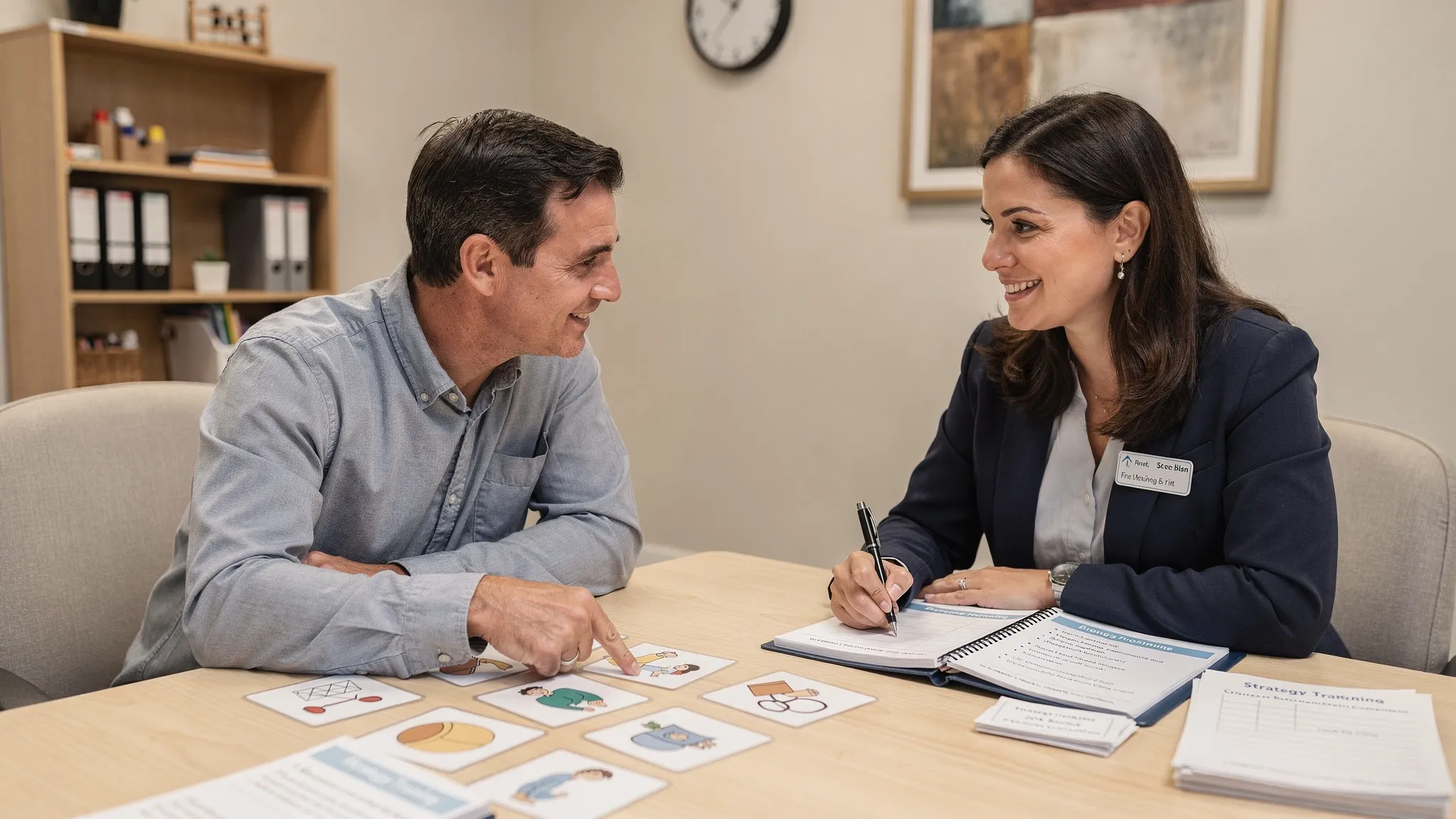
Families and clients often ask what happens first, especially if this is their first therapy experience. While each plan is personalized, a typical care pathway looks like this:
1) Initial intake and functional interview
We start by understanding the day-to-day impact, for example classroom participation, social confidence, workplace communication, or mealtime safety. For children, we also review developmental and school history, and for adults we review medical history and current supports.
2) Assessment and clinical observation
Depending on needs, the SLP may use standardized tools, informal language sampling, speech sound analysis, oral-motor and feeding observation (when relevant), and caregiver/client reports.
If concerns suggest hearing, ENT, neurology, GI, or other medical input, we may recommend coordinating with the appropriate physician. (SLP therapy is most effective when medical factors are identified early.)
3) Individualized goal setting and therapy plan
Goals are designed to be measurable and meaningful. A great goal is not only “say R correctly,” it is “be understood clearly in class,” “order independently at a restaurant,” or “participate in a meeting without avoiding speaking.”
4) Home practice and carryover
Progress depends on what happens between sessions. That’s why our model emphasizes parent and caregiver involvement, practical home programs, and realistic routines.
If you want a deeper look at what SLPs do across settings, see our related guide on speech and language therapist roles and responsibilities.

Pediatric SLP services at Bridges Speech Center
Children’s communication needs can look very different from one child to the next. Our pediatric SLP services commonly support the areas below.
Speech delays and late talking
For toddlers and preschoolers who are not meeting early communication expectations, therapy often focuses on building:
- Joint attention and interaction
- Understanding of language (receptive skills)
- First words, phrases, and early grammar (expressive skills)
- Play and early social communication
We frequently use naturalistic, play-based approaches so skills transfer into real life. If you are unsure whether your child’s communication is on track, our language milestones guide can help you decide when to seek support: What Are All the Language Development Milestones?.
Articulation and speech sound clarity
If a child is difficult to understand, the SLP may work on speech sound production, sound patterns, pacing, and intelligibility strategies. Therapy is tailored to the child’s age and the type of errors observed.
Motor speech support (including childhood apraxia of speech)
Some children have difficulty planning and coordinating the movements needed for speech. In those cases, therapy may be more intensive and motor-based.
Bridges Speech Center also provides specialized approaches when clinically appropriate, such as PROMPT. You can learn more here: PROMPT Technique speech therapy.
Stuttering and fluency (stammering)
Stuttering is more than repeating sounds. It can affect confidence, participation, and emotional well-being. Therapy may include fluency strategies, communication confidence building, and parent coaching.
Related reading:
Social communication support and AAC
Some children benefit from support with pragmatic language skills like turn-taking, topic maintenance, asking for help, and understanding nonverbal cues.
For children who need additional tools to communicate, we also provide Augmentative and Alternative Communication (AAC) assessment and therapy, including communication partner training for parents and educators. Start here:
Feeding therapy support
Feeding challenges can involve sensory responses, oral-motor coordination, mealtime behavior, or swallowing safety. At Bridges, feeding support may involve coordinated care across SLP and occupational therapy, depending on the child’s profile.
If this is a concern for your family, you may find these helpful:
- Feeding Therapy: Supporting Picky Eaters, Sensory Challenges, and Oral Skills
- How to Overcome Sensory Food Aversion?
Adult SLP services at Bridges Speech Center
Adults often seek speech therapy after a medical event, a neurological diagnosis, or gradual cognitive-linguistic changes. Our adult SLP services focus on improving real-world functioning and quality of life.
Aphasia and language difficulties after stroke
After a stroke, some people experience difficulty finding words, understanding speech, reading, writing, or forming sentences. Therapy targets functional communication, with strategies that support participation at home, in the community, and at work.
For a broader view of adult services, see: Adult Speech Therapy: Improving Communication and Quality of Life.
Dysarthria and speech clarity in neurological conditions
Conditions such as Parkinson’s disease and other neurological disorders can affect strength, coordination, and breath support for speech. Therapy may focus on improving intelligibility, volume, pacing, and communication strategies for daily conversations.
Apraxia of speech and motor planning challenges
Some adults experience difficulty planning speech movements (often after stroke or brain injury). Therapy is structured, repetitive, and individualized to rebuild motor patterns and functional speech.
Cognitive-communication and dementia support
Cognitive changes can affect communication long before or alongside memory concerns. SLP therapy may focus on compensatory strategies, routines, functional language tasks, and caregiver education.
You can explore related guidance here: Why Is Cognitive Health Important for Adults?.
Voice therapy and functional voice use
Voice problems can show up as hoarseness, strain, vocal fatigue, or reduced clarity. Therapy often includes vocal hygiene, breath support, resonance work, and exercises chosen for the client’s voice profile.
A useful starting resource: Voice Therapy Exercises for Nodules and Clarity.
Swallowing therapy (dysphagia)
Swallowing issues can occur after stroke, with Parkinson’s disease, and with other medical conditions. Dysphagia care typically involves a clinical swallowing evaluation, coordination with medical providers when needed, and individualized strategies and exercises.
Related reading: Dysphagia and Heartburn: What You Need to Know.
SLP services at a glance (children and adults)
| Service area | Common goals | Who it supports |
|---|---|---|
| Speech sound therapy | Clearer speech, improved intelligibility | Children with articulation/phonology needs |
| Language therapy | Better understanding, vocabulary, grammar, narration | Late talkers, language delays, school-age language needs |
| Fluency therapy | Reduced struggle, better confidence, smoother speech | Children and adults who stutter |
| Motor speech therapy | Improved planning/coordination for speech | CAS in children, apraxia in adults |
| AAC services | Functional communication using tools and systems | Children with complex communication needs |
| Voice therapy | Less strain, improved clarity and endurance | Children and adults with voice difficulties |
| Feeding and swallowing support | Safer, more efficient eating and drinking | Children with feeding challenges, adults with dysphagia |
| Cognitive-communication therapy | Strategies for attention, memory, functional communication | Adults after stroke/TBI, dementia support |
Where you can receive therapy: clinic, home care, or telehealth
Bridges Speech Center offers multiple service delivery options so therapy can fit your family’s schedule, mobility needs, and goals.
| Option | Best for | What it looks like |
|---|---|---|
| In-clinic therapy | Most pediatric and adult programs, access to multidisciplinary support | Structured sessions in a therapy environment with direct coaching |
| Home care therapy services | Busy families, mobility limitations, real-life routines | Therapy in your home, with practical carryover into daily activities |
| Telehealth/online services | When travel is difficult, or as a supplement | Video-based sessions, caregiver coaching, home programs |
If you are exploring in-home speech support in Dubai, you can review: Speech Therapist Home Service for Children and Adults.
When to consider an SLP assessment
If you are on the fence, these signs often justify at least a screening or consultation.
- Your child is not meeting language milestones, or has lost previously learned words
- Your child is hard to understand compared to peers
- Your child avoids talking, struggles with stuttering, or seems anxious about speaking
- You notice persistent hoarseness or voice strain
- An adult has new word-finding, slurred speech, or comprehension difficulties after illness or injury
- There are coughing, choking, or frequent “sticking” sensations with food or liquids
For families who want guidance on choosing a provider locally, you may also find this helpful: Quick Guide to selecting a speech therapy clinic in Dubai.
Frequently Asked Questions
What are SLP services? SLP services are assessment and therapy services provided by a speech-language pathologist to support communication (speech, language, fluency, voice, social communication), cognitive-communication, and swallowing or feeding concerns across children and adults.
Do you offer speech therapy for adults at Bridges Speech Center? Yes. Bridges Speech Center provides adult speech therapy support for communication and related needs, including neurological rehabilitation (for example after stroke), cognitive-linguistic support, voice therapy, and swallowing therapy pathways when appropriate.
Can therapy happen at home in Dubai? Yes. Bridges Speech Center offers home care therapy services for clients who benefit from therapy in their daily environment, and we also provide telehealth/online services when suitable.
How do I know whether my child needs speech therapy or occupational therapy? Many children benefit from both, depending on the underlying profile. Speech therapy targets communication and feeding/swallowing skills, while occupational therapy often targets sensory processing, fine motor skills, regulation, and daily living abilities. At Bridges, multidisciplinary coordination helps clarify priorities after assessment.
How long does speech therapy take to work? Timelines vary based on the diagnosis, the client’s profile, and consistency of practice between sessions. After assessment, your SLP can outline expected phases of progress and the best ways to track functional improvement.
Book an SLP assessment at Bridges Speech Center
If you are looking for clear, individualized SLP services in Dubai for your child, teen, or yourself, Bridges Speech Center can help you take the next step with a structured evaluation and a practical therapy plan.
Call +971-505226054 or 043581115, or visit Bridges Speech Center to book an appointment and learn which therapy option (clinic, home care, or telehealth) fits your needs.