
Fine Motor Activities for Kids: A 10-minute Daily Routine
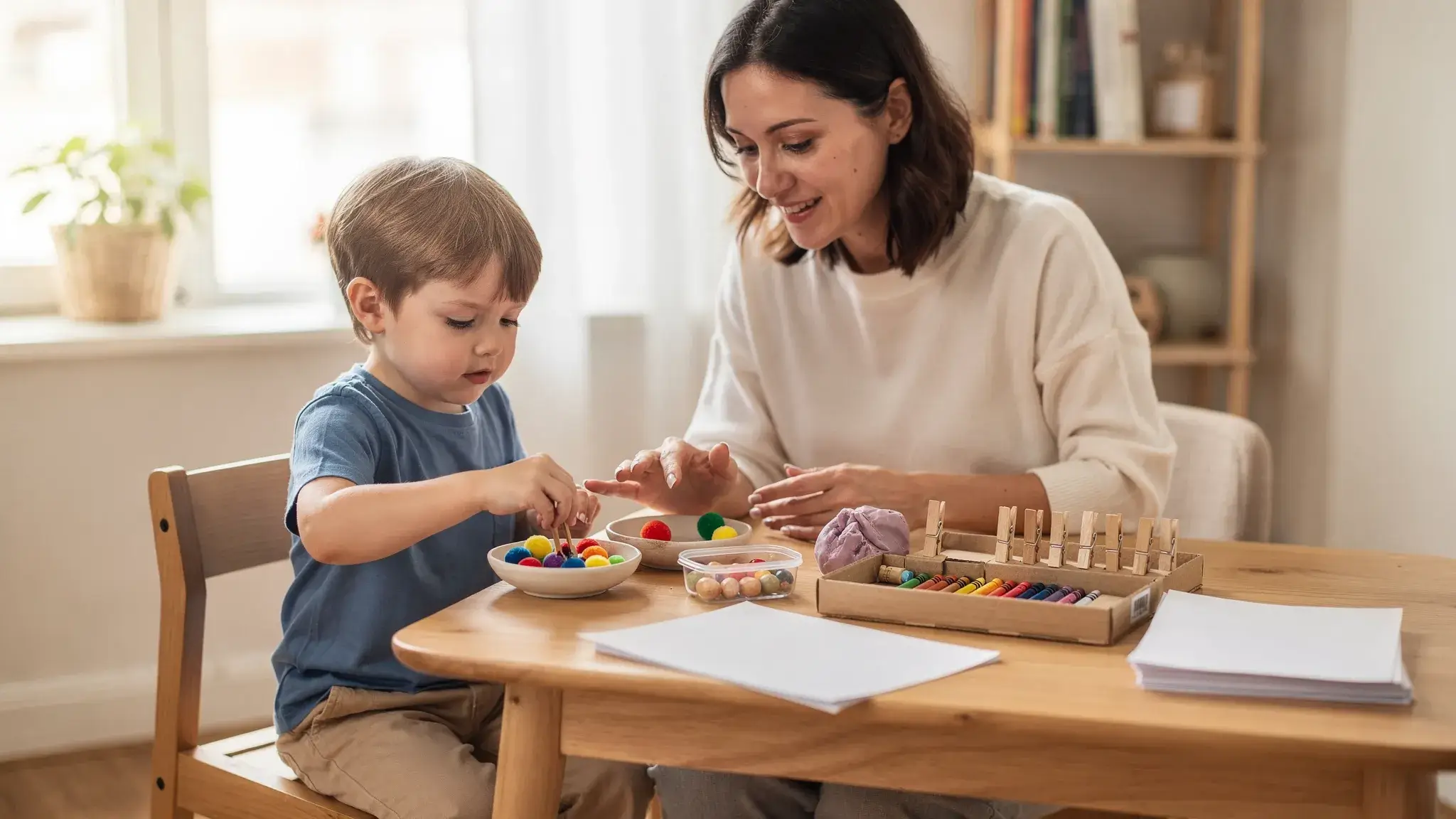
Fine motor activities are the small, precise movements that help kids do everyday “big kid” tasks, like holding a pencil, using scissors, buttoning a shirt, opening lunch boxes, and feeding themselves neatly. The good ne
Fine motor activities are the small, precise movements that help kids do everyday “big kid” tasks, like holding a pencil, using scissors, buttoning a shirt, opening lunch boxes, and feeding themselves neatly. The good news is you do not need fancy equipment to develop fine motor skills. What kids need most is short, consistent practice that feels like play.
Below is a therapist-style 10-minute daily routine you can do at home with simple items you likely already have. Use it as a steady foundation, then rotate activities to keep motivation high.
What this 10-minute routine improves (and why it matters)
A good fine motor routine targets a few core building blocks:
- Hand strength and endurance (so kids can write or color without fatigue)
- Pincer grasp (thumb and index finger control for pencil grip, zippers, small objects)
- Bilateral coordination (both hands working together, needed for cutting and dressing)
- Wrist and finger separation (stable wrist with active fingers, important for neat writing)
- Hand-eye coordination (accuracy when placing, stacking, threading, or copying shapes)
If you want a deeper overview of how these skills develop, see Bridges Speech Center’s guide on motor skills development milestones and activities.
Before you start: set up for success in 60 seconds
Your child will progress faster when the body is stable and the task is “just-right” difficult.
Quick setup checklist
- Sit with feet supported (on the floor or a box) and hips, knees, ankles roughly at 90 degrees.
- Use a table height where elbows rest comfortably.
- Keep materials in a small tray to reduce distraction.
- Aim for “focused fun,” not perfection.
The 10-minute daily routine (simple, structured, and kid-friendly)
Think of this routine as three mini-blocks: warm up, skill work, and functional finish. Choose one activity per block, so you stay within 10 minutes.
Minutes 0 to 2: Hand warm-up (pick 1)
Warm-ups wake up the small muscles of the hands and fingers.
Option A: Playdough “finger pops” Roll a small ball, then have your child pinch tiny pieces off using thumb and index finger.
Option B: Paper crumple and smooth Crumple a sheet of paper into a tight ball using one hand, then open it and smooth it flat.
Option C: Finger taps Touch thumb to each fingertip (index, middle, ring, pinky), then reverse. Try both hands.
Tip: If your child tires quickly, do the warm-up for 30 to 60 seconds and move on. Consistency beats intensity.
Minutes 2 to 6: “Pinch and place” precision (pick 1)
This block builds pincer grasp, control, and accuracy.
Option A: Tweezer or tongs transfer Move small items (pom-poms, cotton balls, pasta) from one bowl to another using kitchen tongs.
Option B: Sticker dot trail Draw a simple road on paper and place small stickers along the line, one at a time.
Option C: Clothespin pick-up Clip clothespins around the edge of a container (or onto a piece of cardboard). Encourage thumb and index finger pressure.
If you want more pincer-focused ideas, Bridges has a full activity list here: pincer grasp activities kids love.
Minutes 6 to 9: Two-hands-together coordination (pick 1)
Bilateral coordination supports cutting, dressing, and handwriting.
Option A: Bead threading Thread beads or pasta onto a string or shoelace. One hand stabilizes the string, the other threads.
Option B: Tear and paste collage Tear paper into small pieces (tearing is great hand work), then glue onto a drawing.
Option C: Simple lacing card Punch holes around a paper plate and lace yarn through the holes.
Minute 9 to 10: Functional “real life” finish (pick 1)
This final minute helps your child use skills for independence.
Option A: Button practice Use a shirt on the table, or practice on what they are wearing if they tolerate it.
Option B: Open and close Practice opening snack containers, lunchbox clips, or zip-lock bags.
Option C: Quick “writing readiness” Draw 3 shapes (circle, cross, square) and have your child copy them once.
One table to make it easy (print this plan)
Use this as your daily template and rotate options.
Time | What you do | Example activities | Skills targeted |
0 to 2 min | Warm-up | playdough pinches, paper crumple, finger taps | finger activation, endurance |
2 to 6 min | Precision | tongs transfer, sticker trail, clothespins | pincer grasp, control, hand strength |
6 to 9 min | Two hands together | threading, tear-and-paste, lacing | bilateral coordination, sequencing |
9 to 10 min | Functional finish | buttons, containers, copy shapes | independence, pre-writing |
How to “grade” fine motor activities (so kids do not melt down)
In occupational therapy, we adjust tasks to stay in the learning zone. You can do the same at home.
Make it easier (if your child avoids or gets frustrated)
- Use bigger objects (large pom-poms instead of beads).
- Reduce the amount (transfer 5 items, not 25).
- Stabilize the materials (tape the paper down, use non-slip matting).
- Offer a model and do “my turn, your turn.”
Make it harder (if it is too easy)
- Use smaller items (mini erasers, small beads).
- Add a timer (30 seconds of “fast fingers”).
- Add patterns (red-blue-red-blue sorting).
- Change position (standing at a counter for core stability plus hand control).
If you would like a larger menu of home activities beyond this routine, Bridges also shares a practical list here: fine motor skills activities at home: starter list.
Common mistakes that slow progress
Most parents are doing the right thing, they just need small tweaks.
Doing “hand exercises” without a goal
Strength alone is not enough. Aim for control plus function, like using tongs to move snacks, or clipping clothespins to “feed” a toy.
Practicing too long
For many kids, 10 minutes is the sweet spot. Longer sessions can lead to sloppy movement and frustration, especially for children with attention or sensory regulation challenges.
Skipping stabilization
If the body wobbles, the hands struggle. Support the feet, use good sitting posture, and keep the workspace calm.
When fine motor difficulties may need an occupational therapy evaluation
Every child develops at their own pace, but it is worth seeking support when hand skills interfere with daily life.
Consider an OT assessment if you notice patterns like:
- Frequent dropping items, clumsy finger movements, or avoiding puzzles and coloring
- Strong resistance to crayons, scissors, or writing tasks
- Persistent difficulty with buttons, zippers, utensils, or opening containers
- Very messy coloring with limited control beyond age expectations
- Hand fatigue, pain, or switching hands constantly during tasks
Bridges Speech Center explains these indicators in more detail in does my child need occupational therapy?.
If you are in Dubai and home routines are hard to implement, you may also benefit from structured carryover at home through occupational therapy at home support.
Safety notes (especially for toddlers)
- Supervise small objects (beads, coins, mini erasers) due to choking risk.
- Watch for pain, tingling, or joint swelling. Exercises should feel like effort, not pain.
- If your child has known medical or neurological conditions, ask your therapist which activities are most appropriate.
How Bridges Speech Center can help (when home practice is not enough)
A daily routine builds great momentum, but some children need a personalized plan to address underlying challenges such as poor motor planning, sensory processing differences, low tone, attention difficulties, or fatigue.
At Bridges Speech Center in Dubai, occupational therapists can:
- Assess fine motor skills, hand strength, grasp patterns, and visual-motor integration
- Create a tailored home program that fits your child’s age and motivation
- Support related needs, including sensory integration and daily living skills
- Coordinate care with speech therapy, psychology, feeding therapy, physiotherapy, or ABA when appropriate
(For many children, fine motor and communication goals overlap because play, attention, and classroom participation depend on both.)
Book an occupational therapy consultation in Dubai
If your child is struggling with pencil skills, dressing, scissors, or day-to-day independence, a targeted occupational therapy plan can make practice easier and more effective. Contact us to schedule an assessment or ask about clinic-based, home care, or telehealth options.