

Most people search about the difference between counselling and psychotherapy when something’s been off for a while. You’re coping, technically. Getting through the days. But it feels heavier than it should, and you start thinking, okay, I probably need to talk to someone, but who?
Counselling and psychotherapy both fall under “talking to a professional,” which is why they get mixed up so often. And yes, both can help. But they don’t always help in the same way, and they’re not always meant for the same stage of things.
Knowing the difference doesn’t mean you have to label yourself or decide everything upfront. It just gives you a bit of orientation so you’re not walking into that first session completely blind.
The difference, without the textbook language
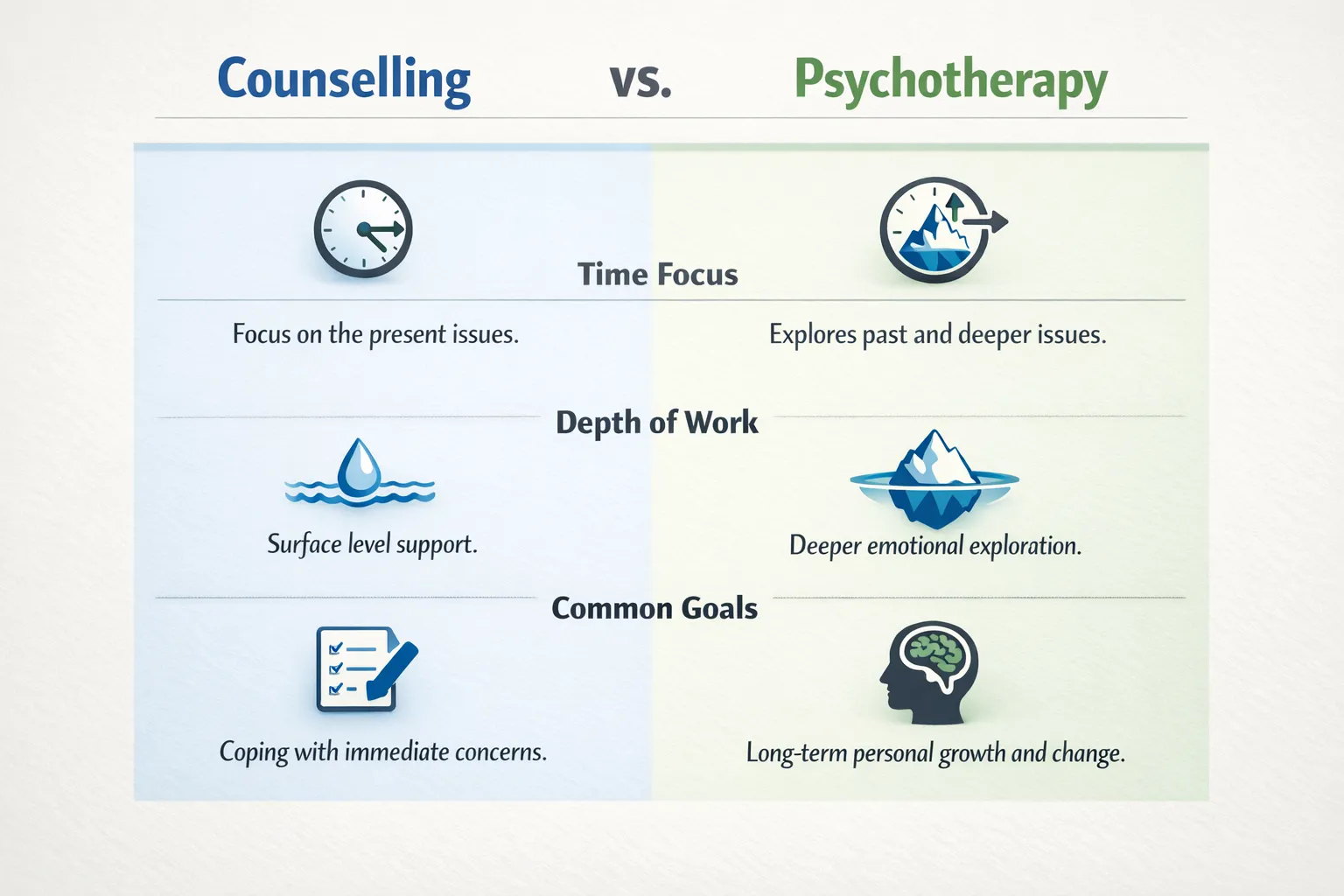
The difference between counselling and psychotherapy isn’t about one being lighter or more serious. It’s more about how deep the work goes and what kind of change you’re hoping for.
In normal conversations, people use the terms interchangeably. Even therapists sometimes do. And in real life, the boundary isn’t always sharp. But once you’re actually in therapy, the difference tends to show up in how sessions feel and where they’re headed.
Very generally speaking, psychotherapy is usually described as structured treatment for emotional or mental health difficulties. Counselling tends to focus more on coping, adjustment, and getting through specific situations. The American Psychological Association, for example, talks about psychotherapy as helping people change patterns in how they think, feel, and behave.
That already tells you something. One looks at patterns. The other often looks at pressure points.
What counselling usually helps with
Counselling is often about the present moment. What’s going on right now. What’s weighing on you. What feels urgent.
If you’re dealing with work stress, relationship issues, parenting overwhelm, grief, or a big life change, counselling often fits. Sessions usually focus on emotional support, clarity, and practical ways to cope so things feel less unmanageable.
When people ask about the difference between counselling and psychotherapy, counselling is usually the option that stays closer to the surface not in a shallow way, but in a grounded, day-to-day way.
Counselling is often used for things like:
- Adjusting to life changes (moving, marriage, separation, career shifts)
- Grief and loss
- Parenting stress or family communication issues
- Mild to moderate anxiety
- Confidence, self-esteem, and speaking up for yourself
It’s less about digging through your entire past and more about steadying yourself where you are.
What psychotherapy does that’s different
Psychotherapy usually goes deeper and takes more time. There’s more structure to it, even if it doesn’t feel obvious at the moment.
The difference between counselling and psychotherapy becomes clearer when problems keep repeating. Same relationship issues. Anxiety that keeps returning. Panic attacks. Trauma reactions. A low mood that doesn’t really lift, no matter what you try.
Psychotherapy often makes room to explore why these patterns exist, not just how to cope with them. That doesn’t mean every session is heavy or intense, but the direction is longer-term change rather than short-term relief.
There are many evidence-based psychotherapy approaches – CBT, trauma-focused therapies, psychodynamic work, and others. If you want a no-frills overview, the NHS psychotherapy guidance is actually quite helpful.
Key Difference Between Counselling and Psychotherapy (at a glance)
The Difference Between Counselling and Psychotherapy is easiest to understand when you compare goals, timeline and typical session content.
| Aspect | Counselling | Psychotherapy |
|---|---|---|
| Main focus | Current stressors and practical coping | Deeper patterns and symptom reduction |
| Timeframe | Often short to medium term | Often medium to long term |
| Typical goals | Support, clarity, decision-making, skills | Long-term emotional change and healing |
| Common topics | Work stress, family issues, grief, life transitions | Trauma, chronic anxiety, depression, personality patterns |
| Tools used | Psychoeducation, coping strategies, communication skills | Structured therapies such as CBT, trauma therapy, depth work |
If you are still unsure, remember that the Difference Between Counselling and Psychotherapy does not prevent you from starting with one and moving to the other. Many people begin with counselling and later shift into psychotherapy as new needs emerge.
What a counselling session often feels like
The first counselling session usually includes a short intake. You’ll talk about:
- What made you book now
- What feels most pressing
- What you want daily life to feel more manageable
- What support you already have
After that, counselling tends to be fairly collaborative. You might talk through boundaries, routines, communication, stress, sleep, practical stuff that affects your everyday life.
When people talk about the difference between counselling and psychotherapy, counselling is often described as more skills-based. You usually leave with something to think about or try, even if it’s small.
What psychotherapy sessions are like
Psychotherapy usually starts with a more detailed assessment, especially if symptoms are interfering with work, school, or relationships. Your therapist might ask about:
- Mood and anxiety
- Medical and family history
- Relationships and attachment patterns
- Past stress or trauma
- Safety concerns, if relevant
From there, therapy may involve learning skills and doing deeper emotional work. In CBT, that might mean noticing thought patterns that fuel anxiety and testing new ways of thinking. In trauma-informed therapy, a lot of focus goes into feeling safe and regulated before processing anything difficult.
One noticeable difference between counselling and psychotherapy is pacing. Psychotherapy can feel slower at first, but that’s usually intentional.
Deciding what might suit you
If you’re unsure, it helps to look at how much this is affecting your daily life.
Counselling may be a good starting point if you:
- Feel overwhelmed by a specific situation
- Want tools you can use fairly quickly
- Are adjusting to a change
- Need help communicating better
Psychotherapy may be more appropriate if you:
- Have anxiety or low mood that keeps coming back
- Notice the same issues repeating in relationships
- Experience trauma-related symptoms
- Feel stuck despite trying self-help strategies
If you’re experiencing severe distress or thoughts of harming yourself, seek urgent professional support through local emergency services.

When therapy isn’t the only piece
Mental health doesn’t exist in isolation. This is especially true for children and teens.
At Bridges Speech Center in Dubai, families often come in with overlapping concerns. A child with anxiety might also struggle with social communication. An adult recovering from a neurological condition might notice emotional changes alongside speech or swallowing difficulties.
That’s why coordinated care matters. Psychotherapy can support emotional regulation, while speech and language therapy focuses on communication. Together, they often work better.
If communication is part of what’s going on, exploring speech therapy alongside mental health support can be useful. Families searching for Speech therapy Dubai services often benefit from this kind of collaboration. You can also review Bridges’ Speech therapist team page if you’re looking for qualified clinicians.
For mental health care, Bridges offers psychotherapy in Dubai through clinical psychology and psychotherapy services. If you’re curious about counselling from a psychology perspective, the guide on What is Counseling Psychology? is a helpful follow-up.
If anxiety is part of the picture, it can also help to understand the difference between everyday shyness and clinical anxiety. See What Is Social Anxiety? for practical signs. For obsessive thoughts and compulsive behaviours, evidence-based psychotherapy is often central. Bridges also shares an overview in Can You Cure OCD? Understanding Treatment Approaches.
What a first appointment at Bridges usually involves
Whether you come in for counselling or psychotherapy, you can generally expect:
- Time spent listening to your story
- A conversation about goals that actually matter in daily life
- A plan that fits your schedule
- Discussion of whether other services might help (speech therapy, occupational therapy, family support)
This is usually where the difference between counselling and psychotherapy becomes personal. There isn’t a universal answer.
A final word
At its core, the difference between counselling and psychotherapy comes down to focus and depth. Counselling often helps with present-day stress and coping. Psychotherapy tends to be better when patterns are persistent, complex, or rooted deeper.
If you’re unsure where to start, you don’t have to decide alone. A professional assessment can help clarify the next step.
To explore counselling or psychotherapy in Dubai and get a plan tailored to you or your child, you can contact Bridges Speech Center through website and book an appointment.