

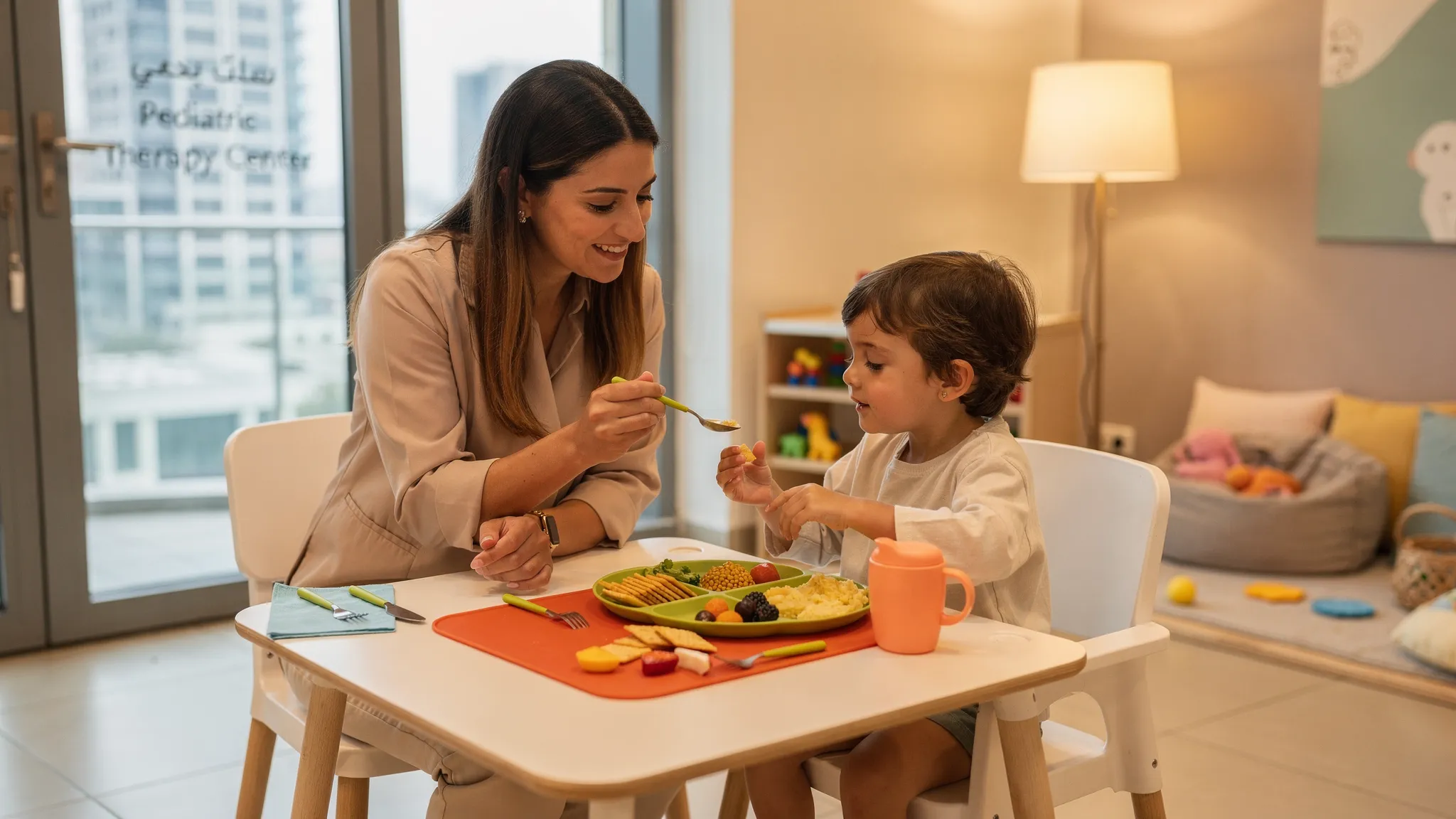
Feeding Therapy helps children and adults build safe, confident and enjoyable eating. If mealtimes feel stressful, your child avoids textures or you worry about chewing and swallowing, support is available. At Bridges Speech Center, a multidisciplinary team uses evidence‑based Feeding Therapy to improve oral skills, expand variety and reduce anxiety around food.
Families searching for feeding therapy Dubai often ask when to start. Early help prevents patterns from becoming harder to change. Our dedicated Feeding Therapy program blends speech‑language expertise with occupational approaches to support sensory processing and motor skills. This is children’s feeding therapy that is playful, structured and personalized.
A skilled plan looks at the whole child, not just the plate. That means assessing sensory needs, posture and seating, oral motor control and behavior patterns. We also coach parents so changes at the table last. For many families, this combined approach of Feeding Therapy with occupational therapy feeding strategies is the turning point.
What is Feeding Therapy and when is it recommended?
Feeding Therapy is a structured intervention that teaches the skills needed for safe swallowing, efficient chewing and positive mealtime behavior. It is recommended when a child or adult:
- Eats fewer than 10 to 15 foods and resists any change in brand or presentation
- Gags or vomits with certain textures or mixed foods
- Avoids chewing or pockets food in the cheeks
- Has coughing during meals, frequent chest infections or wet vocal quality
- Refuses new foods after repeated exposures
- Has growth concerns or nutritional red flags noted by a clinician
Picky eating is common in toddlers, but persistent restriction or distress needs assessment. The American Academy of Pediatrics notes that repeated, pressure‑free exposure helps, yet some children require targeted therapy. The ASHA guidance also outlines red flags for pediatric feeding and swallowing. If your child struggles with sensory food aversion, read our practical guide on sensory food aversion then consider a comprehensive assessment.
Is my child just a picky eater or do we need help? If your child eats only a short list of “safe foods,” has strong sensory reactions or mealtimes last longer than 45 minutes, children’s feeding therapy can make a meaningful difference.
Why picky eating happens: sensory, motor and behavior working together
Food refusal rarely has a single cause. Sensory sensitivities, weak oral motor skills, posture and endurance, medical issues and learned mealtime patterns all interact. This is why Feeding Therapy draws on both speech‑language and occupational therapy feeding principles. We build comfort with textures, strengthen chewing and swallowing patterns, fine‑tune posture and help families set gentle expectations that reduce pressure.
Common challenges and how therapy targets them
| Challenge | What you may see at home | Therapy focus | Try at home |
|---|---|---|---|
| Texture sensitivity | Meltdowns with mixed textures, refusal of wet or crunchy foods | Gradual sensory desensitization, food chaining within a texture family as part of Feeding Therapy | Offer a familiar food next to a similar texture, explore with hands first |
| Oral motor weakness | Drooling, spillage from lips, “mushy” chewing | Lip closure, tongue lateralization, graded biting within a Feeding Therapy plan | Practice straw drinking with thick liquids to build suction |
| Very limited variety | 5 to 10 “safe” foods only | Systematic exposure, play‑based tasting, modeling within children’s feeding therapy | Use a tiny taste step then praise bravery, not quantity |
| Mealtime anxiety | Battles at the table, long meals, refusal before tasting | Predictable routines, visual schedules, pressure‑free language | Set a meal time limit, clear plates without comment when time is up |
| Swallowing concerns | Coughing, choking, frequent chest infections | Safety assessment by SLP, medical referral if needed | Pause and seek professional guidance before introducing harder textures |
What Feeding Therapy looks like at Bridges Speech Center
Our clinicians begin with a detailed intake, observation of a typical meal and standardized oral motor and sensory screening. From there we design a plan that fits your child’s goals and family routines.
- Individualized sessions with a speech‑language pathologist, often alongside an occupational therapist for posture, sensory regulation and utensil use
- Parent coaching built into every visit so you can carry over wins at home
- Simple tracking sheets so progress feels visible and motivating
We frequently integrate Occupational therapy for seating, hand skill and sensory regulation, since posture and regulation affect chewing. If you are comparing options for speech and feeding services, explore our team approach to speech therapy Dubai. This blend is especially helpful for children’s feeding therapy when both sensory and motor factors are present. For some families, occupational therapy feeding strategies like sensory warm‑ups and stable seating are the key that unlocks success.
Feeding therapy tools and playful techniques
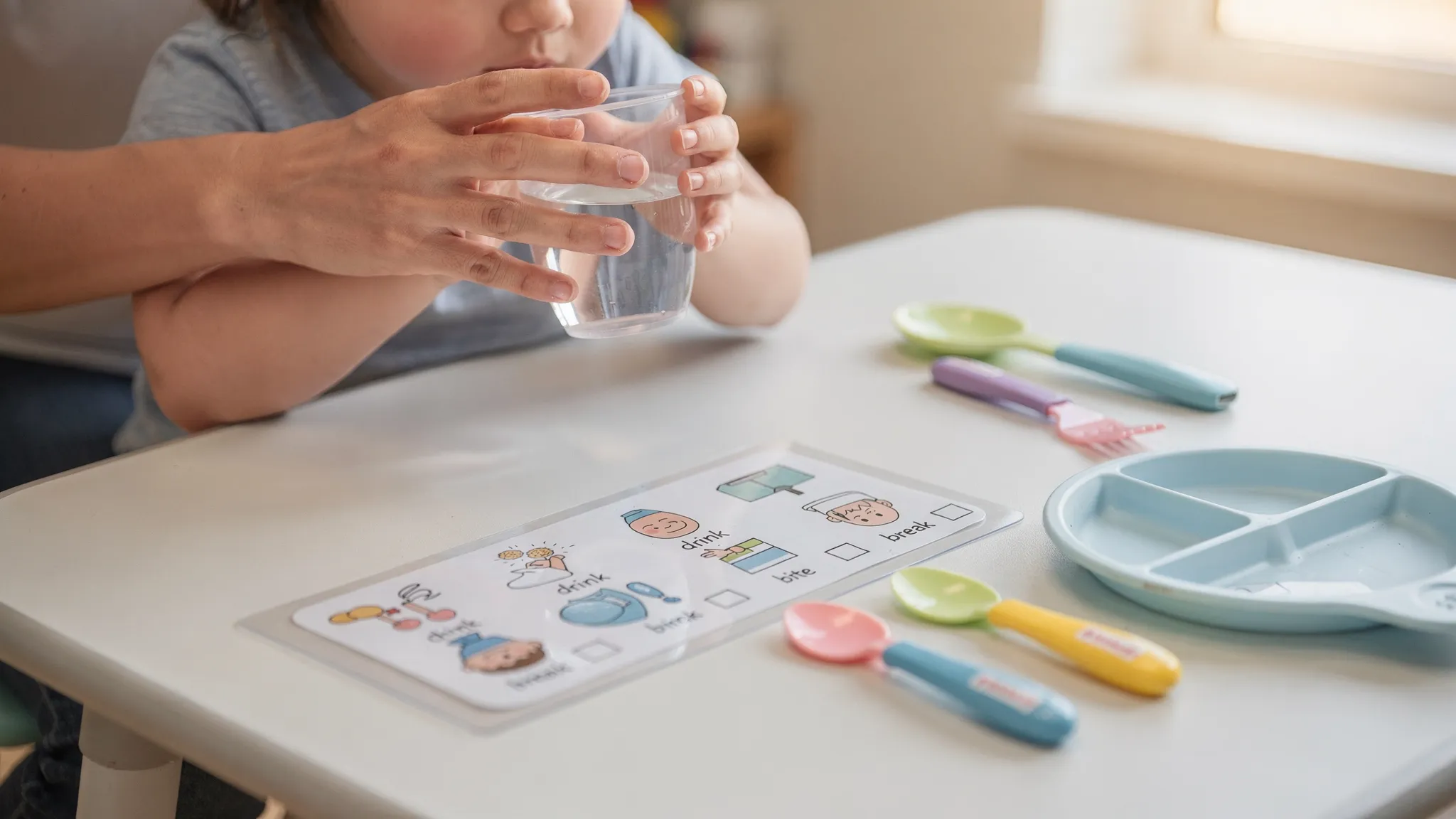
Clinicians select feeding therapy tools that match your child’s goals. We keep it fun and functional so skills generalize to real meals.
- Textured spoons and graded utensils to reduce gag response and improve lip closure
- Open cups and straw training cups for safe sipping progression
- Chewy aids and oral sensory brushes for pre‑meal regulation when appropriate
- Vibratory or textured input only when indicated by assessment, never as a one‑size‑fits‑all tool
- Visual schedules and mealtime routines to lower anxiety
- Food exploration bins and food art to build curiosity without pressure
Feeding therapy tools support the process, but the plan matters most. Your clinician will explain why a tool is chosen and how to use it safely during Feeding Therapy sessions and home practice.
Home strategies that pair well with Feeding Therapy
- Set regular meals and snacks, with water only between
- Use neutral language, praise brave trying not clean plates
- Serve one safe food with every meal so your child feels secure
- Offer tiny tastes, model calm chewing and keep mealtimes pleasant
- Involve your child in shopping, washing and plating to boost ownership
- End meals on time and transition to play so the table stays positive
Families using these steps alongside Feeding Therapy tend to see faster gains. If you are seeking feeding therapy Dubai with home visit options, ask about our home care services and telehealth for coaching between clinic sessions.
Choosing Feeding Therapy in Dubai: what to ask a provider
- Who delivers sessions and what are their credentials
- Do you offer a combined SLP and OT model for children’s feeding therapy
- How do you involve parents in each appointment
- Can you coordinate with my pediatrician or school
- Do you provide home programs and clear goals
At Bridges Speech Center, you can explore our Feeding Therapy program, read our OT overview in this occupational therapy guide and try fine‑motor ideas that support utensil use with these pincer grasp activities. This holistic approach helps many families searching for feeding therapy Dubai move from frustration to steady progress.
When to involve a medical team
Always raise feeding concerns with your pediatrician. Children with coughing during meals, weight loss, iron deficiency, reflux symptoms or recurrent chest infections need coordinated care. Your Feeding Therapy clinician will suggest referrals to ENT, GI or allergy specialists when indicated so treatment remains safe.
Conclusion: small steps build brave eaters
Progress with Feeding Therapy is measured in tiny wins. A tolerated smell, a lick, a bite, a chew and a swallow. With the right plan, the right feeding therapy tools and consistent parent coaching, those steps add up.
If you are ready to start, schedule a consultation for Feeding Therapy at Bridges Speech Center. Our team blends speech‑language care with occupational therapy feeding strategies to help your family rediscover calmer, happier meals.