
If you are searching what is the difference between occupational therapy and physical therapy, you are not alone. Parents often hear both terms during a child development assessment. Adults may be referred after an injury, surgery or neurological event and wonder which therapy they actually need.
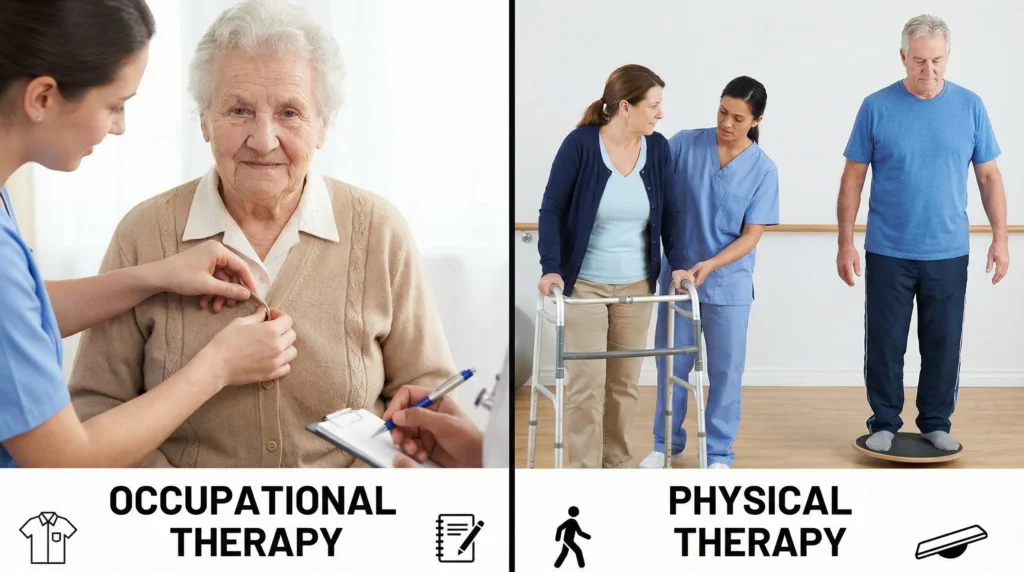
In simple terms, physical therapy (physiotherapy) focuses on how your body moves, such as strength, balance, walking and pain reduction. Occupational therapy focuses on how you use those abilities in daily life tasks, such as dressing, handwriting, eating, school skills or returning to work.
At Bridges Speech Center in Dubai, families often benefit from coordinated care across disciplines including Occupational Therapy Dubai and Physiotherapy Dubai when goals overlap.
Table of Contents
ToggleWhy people confuse OT and PT
A common reason this question comes up is that both therapies can look similar on the surface. Both may involve exercises, games, stretches and hands-on guidance. Both are goal-driven and based on functional improvement.
The key difference is the “why” behind the activity. When you ask what is the difference between occupational therapy and physical therapy, you are really asking whether the main goal is improving movement capacity or improving participation in meaningful daily activities.
Definitions that make the difference clearer
What occupational therapy focuses on
Occupational therapy (OT) supports a person’s ability to do everyday activities that are meaningful to them. These “occupations” include self-care, learning, play, social participation and work.
What physical therapy focuses on
Physical therapy (often called physiotherapy) focuses on movement, function and physical rehabilitation. It commonly targets pain, strength, mobility, balance, endurance and safe movement.
The American Physical Therapy Association describes physical therapists as movement experts who help improve quality of life through hands-on care, patient education and prescribed movement.
Quick comparison table: occupational therapy vs physical therapy
Topic | Occupational therapy (OT) | Physical therapy (PT or physiotherapy) |
Primary aim | Improve independence in daily activities | Improve movement ability, strength, balance and physical function |
Typical goals | Dressing, feeding skills, handwriting, sensory regulation, school participation, work tasks | Walking, transfers, posture, endurance, pain reduction, joint mobility |
Common focus areas | Fine motor skills, visual motor skills, sensory processing, motor planning, daily living routines | Gross motor skills, gait training, strengthening, flexibility, balance training |
Outcome you notice first | Daily tasks become easier and more independent | Movement becomes safer, stronger and less painful |
Often works closely with | Speech therapy, psychology, schools and families | Orthopedics, neurology, rehabilitation teams and families |
This table helps answer what is the difference between occupational therapy and physical therapy in a practical way. It is less about which therapy is “better” and more about which goals are most urgent.
What occupational therapists treat in daily life terms
Occupational therapists commonly support:
- Fine motor skills such as pencil grip, cutting with scissors and using buttons or zippers
- Sensory processing and sensory integration challenges that affect attention, behavior and comfort
- Motor planning challenges that make tasks feel “hard to start” or difficult to sequence
- Feeding related skills when oral motor coordination, utensil use or sensory aversion affects mealtimes
- Daily living activities such as toileting routines, grooming and organization
In Dubai, parents often look for occupational therapy when a child struggles with classroom readiness, handwriting, attention, regulation or independence at home. This is why the phrase occupational therapy Dubai often appears in searches alongside school concerns.
For some families, home practice is the missing link. If the main challenge happens in real routines like getting dressed before school, occupational therapy at home can help make strategies easier to carry over.
What physiotherapists treat in movement terms
Physiotherapy often supports:
- Pain management and joint or muscle rehabilitation
- Recovery after fractures, surgery or sports injuries
- Neurological rehabilitation after stroke or other conditions affecting movement control
- Balance training and fall prevention for older adults
- Posture, gait and endurance for daily mobility
People searching physiotherapy Dubai are often looking for help with pain, stiffness, weakness or mobility limits. For children, physiotherapy may focus on gross motor development such as sitting, crawling, walking, stairs, jumping and coordination.
If travel to the clinic is difficult due to pain, fatigue or mobility limitations, home care physical therapy can be a practical option to start rehabilitation safely in a familiar environment.
What a first OT session vs a first PT session usually looks like
OT evaluation basics
In occupational therapy, assessment typically looks at how a person performs tasks, not just whether they can move. An OT may evaluate grasp patterns, hand strength, coordination, posture at the desk, sensory responses and the steps needed to complete a routine.
For a child, that might include play-based observation to see how they plan actions, use both hands together, tolerate textures or follow multi-step instructions.
PT evaluation basics
In physiotherapy, the evaluation often starts with movement quality and physical performance. A physiotherapist may assess range of motion, strength, balance, gait, pain triggers and endurance.
The plan usually includes safe exercises plus education for posture, pacing, walking aids if needed and home activities to build consistency.
How OT and PT work together (and why many people need both)
When people ask what is the difference between occupational therapy and physical therapy, a helpful follow-up question is: “Do we need one therapy or a combination?”
Here are common examples where both are valuable:
For children with developmental delays
- PT may address gross motor foundations like core strength, balance and walking endurance.
- OT may address fine motor control, daily routines, sensory regulation and school participation.
For autism and sensory processing needs
- OT often leads sensory integration and self-regulation work.
- PT may support coordination, posture, strength and motor confidence.
For stroke or neurological rehabilitation
- PT often targets walking, transfers, balance and strength.
- OT targets daily living skills like dressing, bathing, using the phone, writing, cooking steps and cognitive strategies.
Communication can also change after a stroke or neurological event. In that case, speech and language support may be essential. Bridges Speech Center offers multidisciplinary care that can include Speech Therapy Dubai as part of a coordinated plan.
How to choose the right therapy for your situation
If you are still deciding what is the difference between occupational therapy and physical therapy for your needs, use the goal-based approach below.
Choose occupational therapy when the main issue is daily functioning
Occupational therapy is often the better fit when challenges show up in tasks such as:
- Self-care routines at home
- School skills like handwriting, cutting and attention
- Sensory regulation, transitions and coping in busy environments
- Work participation, fatigue management and daily organization
Choose physical therapy when the main issue is movement ability or pain
Physiotherapy is often the better fit when challenges involve:
- Pain limiting activity
- Reduced joint mobility or muscle strength
- Walking, stairs and balance problems
- Recovery after surgery, injury or fracture
When in doubt, start with an interdisciplinary assessment
Many clinics can guide you after a screening, especially when the referral reason includes both movement and daily life issues.
At Bridges Speech Center, families also ask whether communication is contributing to participation. If a child struggles to understand directions or express needs, a qualified speech therapist can work alongside OT or PT so goals remain consistent across home, school and therapy sessions.
You can also explore the center’s broader approach to speech therapy when communication needs are part of the bigger picture.
Clinic sessions vs home sessions in Dubai
Both OT and PT can be effective in clinic settings or at home. The best choice depends on safety, goals and how much your daily environment affects performance.
Clinic sessions can be ideal when you need specialized equipment, a controlled environment or frequent progress checks. Home sessions can be helpful when daily routines are the main therapy target or when mobility, behavior or scheduling makes clinic travel difficult.
For many families searching occupational therapy Dubai or physiotherapy Dubai, a blended plan works well. Start in a clinic for assessment and training then continue with structured home practice with periodic review.
Conclusion:
So what is the difference between occupational therapy and physical therapy?
Physical therapy (physiotherapy) improves your ability to move safely with less pain and more strength. Occupational therapy improves your ability to use that movement in real life tasks such as self-care, school and work. Many children and adults benefit most when both therapies are coordinated around shared functional goals.
If you are in Dubai and looking for occupational therapy or physical therapy for your child or for yourself, Bridges Speech Center can guide you through an evaluation and a clear therapy plan.
To book an assessment for occupational therapy, physiotherapy or speech and language support in Dubai, contact Bridges Speech Center and ask for a goal-based screening to match therapy to your needs.
Frequently Asked Questions
What is the difference between occupational therapy and physical therapy for a child?
OT usually targets daily skills such as dressing, handwriting, attention and sensory regulation. PT usually targets gross motor skills such as balance, walking, coordination and strength.
Can a child need OT and PT at the same time?
Yes. Many children benefit from both when they have both gross motor delays and daily living or fine motor challenges. Coordinated goals help progress carry over.
Is occupational therapy only for hands and fine motor skills?
No. OT also addresses sensory processing, motor planning, play skills, self-care routines and school participation.
Is physiotherapy only for injuries?
No. Physiotherapy also supports neurological rehabilitation, posture, balance, gross motor development and long-term mobility for many conditions.
How do I know whether to choose occupational therapy Dubai or physiotherapy Dubai?
Choose based on the main goal. Daily task independence often points to OT. Pain, walking difficulty or movement limitation often points to physiotherapy. An assessment can clarify quickly.