

Most people sit for hours every day at work, in school, in the car and at home. Over time your body adapts to whatever position you repeat most often. That is why learning what is the correct sitting posture is not just a comfort tip. It is a daily health skill.
When sitting posture is off your neck and back muscles work harder your breathing can become shallow and your shoulders may round forward. For children poor sitting habits can affect handwriting, stamina, attention and even confidence in class.
At Bridges Speech Center our multidisciplinary team supports children and adults with movement communication and daily life skills. Posture is often part of the bigger picture in physiotherapy occupational therapy and even speech therapy when breath support and voice are affected.
Table of Contents
ToggleWhat is the correct sitting posture?
If you are searching for what is the correct sitting posture, think in terms of alignment support and easy breathing.
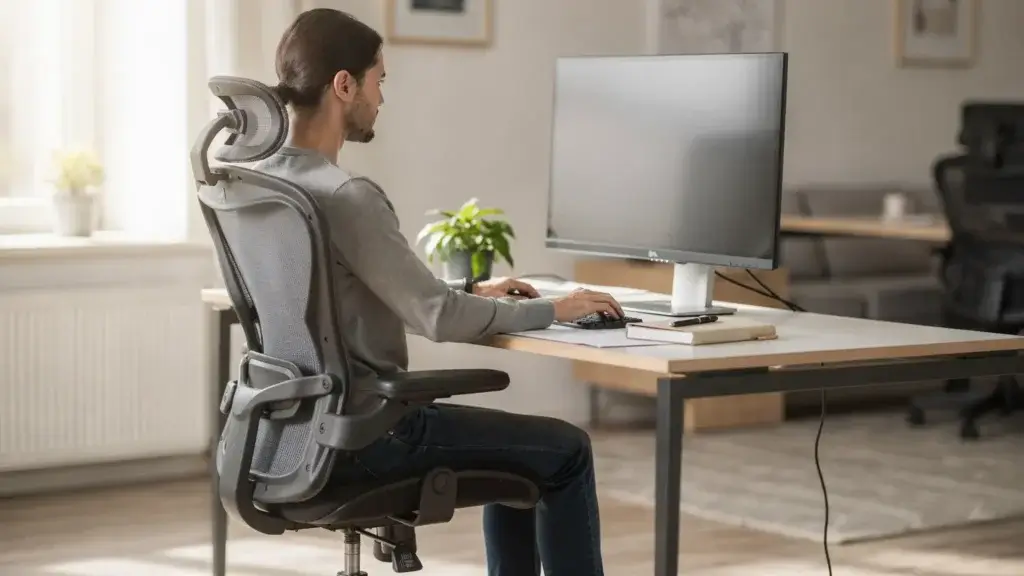
A simple definition is this: correct sitting posture keeps your spine in a neutral position so your head stays balanced over your shoulders and your pelvis stays level. Your joints are supported rather than held up by constant muscle tension.
Here are the core features of what is the correct sitting posture in most chairs:
- Head level with chin gently tucked
- Ears stacked over shoulders
- Shoulders relaxed and down
- Upper back not rounded forward
- Lower back supported with a small natural curve
- Hips slightly higher than knees or close to level
- Knees bent around 90 degrees
- Feet flat on the floor or on a footrest
You can use the same idea for a sofa a dining chair a wheelchair or a car seat. The exact angles change but the goal stays the same: balanced alignment with support.
Why does correct sitting posture matter?
Understanding what is the correct sitting posture matters because posture affects more than your back.
It reduces neck back and shoulder strain
When your head drifts forward even slightly the load on neck structures increases. Over time that can contribute to headaches tight shoulders and upper back pain.
It supports breathing and voice
Slumped sitting can limit rib movement and diaphragmatic breathing. That may lead to shallow breaths vocal fatigue and reduced voice projection. This is one reason posture can show up during assessment in Speech Therapy Dubai especially for voice clarity breath control and swallowing safety.
It can improve focus and stamina
When your body is supported you waste less energy holding yourself up. Many students and office workers report better concentration when they fix their sitting setup.
It supports healthy movement habits
Correct sitting posture makes it easier to stand up walk and exercise with better mechanics. Poor sitting habits can feed into poor standing posture too.
Quick self check: do you have the correct sitting posture right now?
If you want to confirm what is the correct sitting posture in under 20 seconds try this:
Sit back so your pelvis is fully on the chair. Place both feet flat. Relax your shoulders. Then gently lengthen the back of your neck as if a string is lifting the crown of your head.
Now ask yourself:
- Can I breathe easily into my lower ribs?
- Do my shoulders feel relaxed rather than lifted?
- Are my feet supported?
If the answer is no adjust one thing at a time.
Correct sitting posture checklist (with quick fixes)
Use this table to make what is the correct sitting posture practical at home or at work.
Body area | What to aim for | Common posture problem | Quick fix you can do now |
Head and neck | Head balanced over shoulders | Chin pokes forward | Bring screen closer and lift it to eye level |
Shoulders | Relaxed and down | Shoulders rounded forward | Rest forearms on desk armrests and open chest gently |
Lower back | Small natural curve supported | Slumping into a C shape | Add a small lumbar roll or rolled towel |
Hips and knees | About 90 degrees with hips supported | Knees too high or too low | Adjust chair height or use a footrest |
Feet | Flat and stable | Feet dangling or tucked under chair | Place feet on floor or a stable box |
Screen position | Top third near eye level | Looking down for long periods | Raise monitor or use a laptop stand with keyboard |
If you need a structured plan a physiotherapist can guide you through posture correction exercises that match your body and daily routine.
How should I set up my chair and desk for correct sitting posture?
A good workstation makes correct sitting posture easier to maintain.
Chair height and seat depth
Adjust chair height so your feet are supported and your knees bend comfortably. If the seat is too deep you may slide forward and lose back support.
Back support
Support the lower back so you can keep a neutral spine. Many people benefit from a small lumbar cushion.
Screen height
Looking down for hours encourages forward head posture. Raise your screen so your gaze is close to straight ahead.
Keyboard and mouse placement
Keep elbows close to your body. Wrists should feel neutral rather than bent up.
Movement breaks
Even if you master what is the correct sitting posture the body still needs movement. Try standing up regularly for a short walk or gentle stretch.
What causes bad sitting posture?
Many people know what is the correct sitting posture but still struggle to maintain it. That is usually because habits and environments win over intention.
Common causes include prolonged screen time weak postural endurance stress fatigue poor chair design and sitting on soft sofas that encourage slumping.
For a deeper look at how everyday routines shape alignment read Correcting bad posture which explains how small daily choices add up.
What is the correct sitting posture for kids during homework?
Children often sit on adult sized chairs with feet dangling and shoulders hunched. That makes it hard to maintain what is the correct sitting posture.
Try these child friendly adjustments:
- Use a chair where the child can place feet flat on the floor or on a stable footrest
- Keep the desk height so the child can rest forearms comfortably
- Encourage a short movement break between tasks
- Use good lighting so the child does not lean forward to see
If your child struggles with fine motor stamina pencil grip or desk tolerance an occupational therapy plan can help. Bridges Speech Center also coordinates across disciplines so a child working on posture can receive integrated support from a speech therapist when communication feeding or oral motor goals are part of the same care plan.
Can sitting posture affect speech and swallowing?
Yes posture can influence speech and swallowing in practical ways.
When you slump your rib cage may not expand well which can reduce breath support for speech. Your head position can also affect jaw and tongue movement patterns. For some people that means reduced clarity reduced volume or faster fatigue.
This is not to say posture is the only cause. Still in clinic we often look at sitting alignment during assessment because it changes how the body produces sound and manages saliva and swallowing.
If you need therapy that fits your daily environment Bridges Speech Center also offers guidance that can carry over at home through resources like speech therapy at home which explains how skills are practiced in real life settings.
When should you seek professional help for posture problems?
Use posture tips first. Then consider an assessment if you notice:
- Pain that keeps returning in the neck shoulders mid back or low back
- Numbness tingling or radiating pain into the arm or leg
- Frequent headaches linked to desk work
- A visible change in spine shape or uneven shoulders
- Functional issues such as reduced walking tolerance or quick fatigue
A physiotherapy evaluation can identify mobility limits strength deficits and ergonomic issues. If you are unsure where to start you can also review what physiotherapy is good for to understand how treatment planning typically works.
Conclusion
Knowing what is the correct sitting posture helps you protect your spine support easy breathing and reduce daily strain. The essentials are simple: feet supported neutral spine shoulders relaxed and screen at a comfortable height. Then add movement breaks because even correct sitting posture needs variety.
If you or your child is dealing with persistent pain fatigue or posture related challenges consider professional guidance. Bridges Speech Center provides multidisciplinary care that can include physiotherapy occupational therapy and Speech Therapy Dubai when posture breath and communication goals overlap.
Frequently Asked Questions
Want help building a posture plan that fits school work or your job setup?
Contact Bridges Speech Center through our website to book an assessment and get individualized recommendations.
How long should I sit before taking a break?
Many people benefit from short movement breaks taken regularly. Even standing for a minute and resetting posture can help.
What is the correct sitting posture for laptop use?
The same alignment rules apply but laptops push you to look down. Use a laptop stand or raise the screen then use an external keyboard if possible.
Can correct sitting posture reduce headaches?
It can help when headaches are linked to neck tension and forward head posture. If headaches persist, seek medical advice.