
When words feel hard to find, pictures can give communication a clear starting point. Many speech and language therapists use structured visual conversations to help children and adults understand ideas, build vocabulary and participate with more confidence.
Picture Talk in Speech and Language Therapy
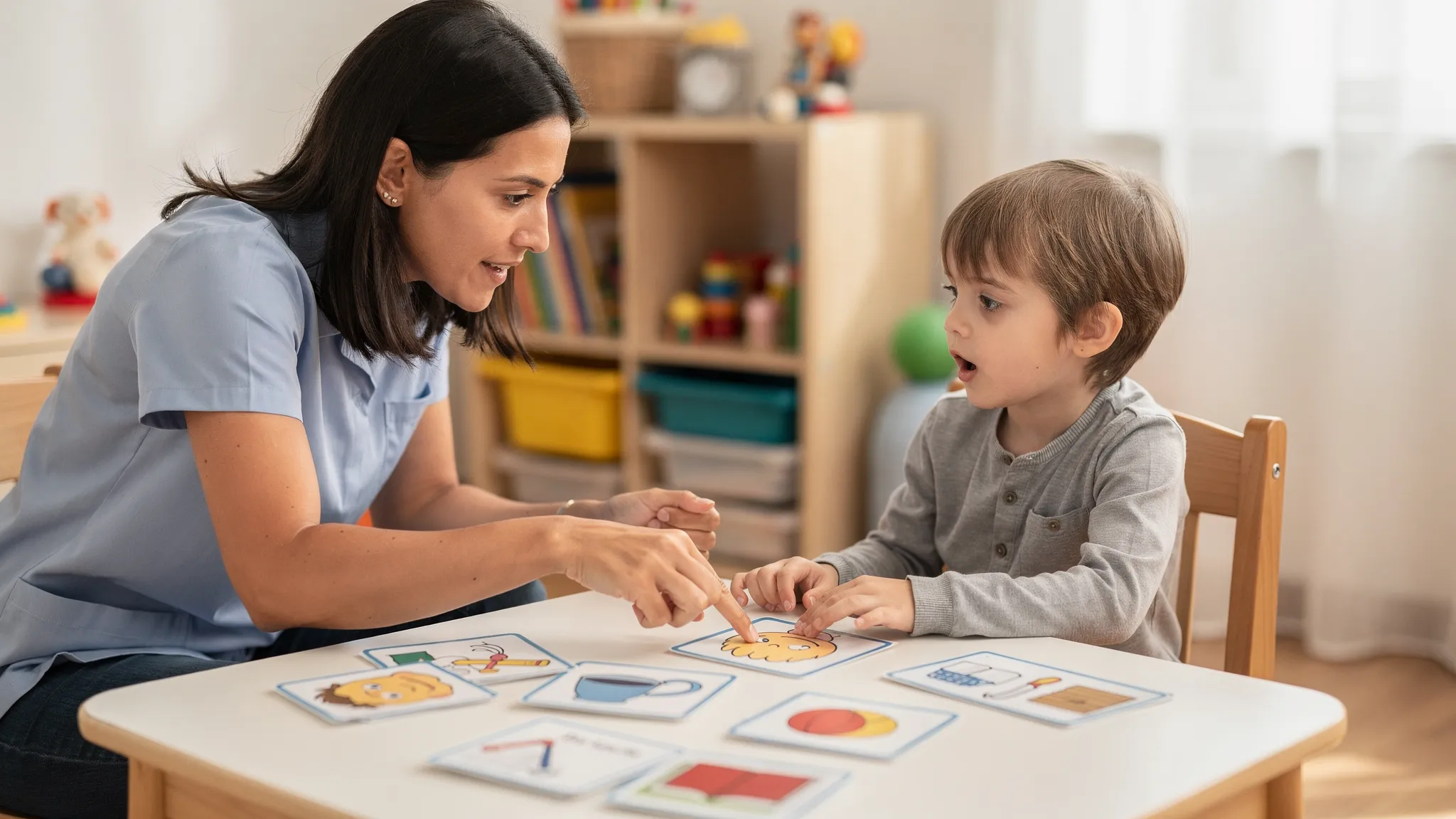
What is picture talk? In speech and language therapy, picture talk is a structured way of using images (photos, drawings, symbols or picture cards) to support understanding and spoken language. The therapist uses the pictures to prompt attention, model words and sentences and guide a back and forth conversation that matches the client’s level.
At its core, picture talk turns communication into something you can see. That is helpful when someone has limited vocabulary, difficulty processing spoken language or reduced ability to express themselves.
You might also hear this approach called pic talk in clinics or schools. The goal stays the same: using visuals to help a person communicate more easily and more often.
If you are exploring local support, Bridges Speech Center shares more about its Picture talk approach and how it can be used within therapy programs.
Why picture talk works for learning language
Many people process visual information more easily than long spoken instructions. Visual supports can:
- Reduce memory load by keeping the topic “in view”
- Improve comprehension by pairing words with meaning
- Encourage turn taking because the picture creates a shared focus
- Support vocabulary growth by repeating the same target words across different pictures
For children with developmental communication needs, visuals are commonly used in AAC and language intervention. The American Speech-Language-Hearing Association (ASHA) provides a helpful overview of Augmentative and Alternative Communication (AAC) and why visual systems can support communication.
In practice, picture talk is often a bridge between understanding and speaking. It can also support nonverbal communication, especially when a child points to a picture before they can say the word.
Who benefits from picture talk?
A good way to answer “what is picture talk used for?” is to look at who benefits most from visual communication support.
Picture talk for children
Speech therapists may use picture talk with children who:
- Are late talkers or have limited vocabulary
- Have speech delay or language delay
- Need support with attention, auditory processing or following instructions
- Stutter or feel pressure when speaking and do better with visual planning
- Are autistic or benefit from predictable visual structure
- Are bilingual or learning English and need clearer word meaning links
Because the activity can be play based, picture talk is often effective for preschool and early school age children. It can also support narrative skills such as describing events, sequencing and answering questions.
Picture talk for teens and adults
Picture talk is not only for young children. Adults can benefit when language processing or word retrieval is affected. Speech and language therapy may use picture based conversation for:
- Aphasia after stroke
- Traumatic brain injury (TBI) communication goals
- Cognitive communication changes related to dementia
- Dysarthria or apraxia of speech when structured practice improves clarity
In adult sessions, the pictures are often more functional: menus, workplace scenarios, maps, signs, medical images or personal photos.
If you want professional guidance, a licensed Speech therapist can help select the right visual level and goals.
How do therapists use picture talk during a session?
A therapy session using picture talk typically follows a simple clinical logic: assess, model, practice and generalize.
Step 1: Choose pictures that match the goal
The therapist selects images based on the target skill:
- Single words (nouns, verbs, adjectives)
- Two word combinations (“more juice” “big car”)
- Grammar (plurals, past tense, pronouns)
- WH questions (who, what, where)
- Storytelling and sequencing
- Social communication (greetings, emotions, problem solving)
Step 2: Model language without pressure
In early stages, the therapist may talk about the picture while the client watches and listens. This keeps the interaction positive and reduces anxiety.
Step 3: Prompt participation in small steps
A key strength of pic talk is that the response can be scaled:
- Looking at the picture
- Pointing to an item
- Choosing between two pictures
- Saying a sound, word or phrase
- Building a longer sentence
Step 4: Expand and recast
When the client gives a response, the therapist often expands it.
Example:
Child: “Dog.”
Therapist: “Yes, the dog is running.”
This technique builds longer language while keeping the child successful.
Picture talk activities you can try at home
Parents often ask if picture talk can be used outside the clinic. Yes, it works best when it shows up in daily life.
Here are simple options that feel natural at home:
Daily routine picture chat
Use 3 to 5 photos of your real routine: breakfast, shoes, car, school, park. Point to each photo and talk about what happens.
Picture walk while reading
Before reading a page, look at the picture together. Ask one easy question:
- “What do you see?”
- “Who is that?”
- “What is happening?”
This is picture talk embedded into story time.
Emotion pictures for feelings words
Use pictures of faces showing happy, sad, tired, surprised. Connect them to real moments: “You look tired. Like this picture.”
Photo journal for older kids
Take photos during the weekend. On Sunday, use them to practice describing events in order. This builds narrative skills and sentence length.
If you want professional support while practicing at home, Bridges Speech Center also offers speech therapy options that can include caregiver coaching.
Picture talk vs AAC vs articulation drills: what’s the difference?
Families sometimes worry that visuals will replace speech. In therapy, visuals are usually a support, not a substitute. The best approach depends on the person’s needs.
| Approach | Primary goal | Best for | Common examples |
|---|---|---|---|
| Picture talk | Build understanding, vocabulary and conversation using images | Language delays, autistic learners, aphasia, early sentence building | Picture description, sequencing cards, photo conversations |
| AAC (visual communication systems) | Provide a reliable way to communicate messages | Limited spoken speech, motor planning needs, complex communication needs | Communication boards, symbol books, speech generating devices |
| Speech sound work (articulation) | Improve speech clarity and sound production | Substitutions, distortions, phonological patterns | Sound practice, minimal pairs, motor based cues |
Many clients use a combination. For example, picture talk can build language content while articulation practice improves how clearly that language is spoken.
For families in the UAE looking for structured support, Speech therapy Dubai services often combine language goals, speech clarity goals and functional communication.
Common mistakes that make picture talk less effective0
Picture talk is simple, but a few common mistakes can slow progress.
Using pictures that are too complex
If the image has too many items, the learner may not know where to look. Start simple and increase complexity gradually.
Asking too many questions
Questions are useful, but constant quizzing can create pressure. Balance questions with commenting and modeling.
Moving too fast
Give wait time. The learner may need a few seconds to process the picture and plan a response.
Not repeating targets
Progress comes from meaningful repetition. Use the same target words across different pictures and real life moments.
How Bridges Speech Center can help
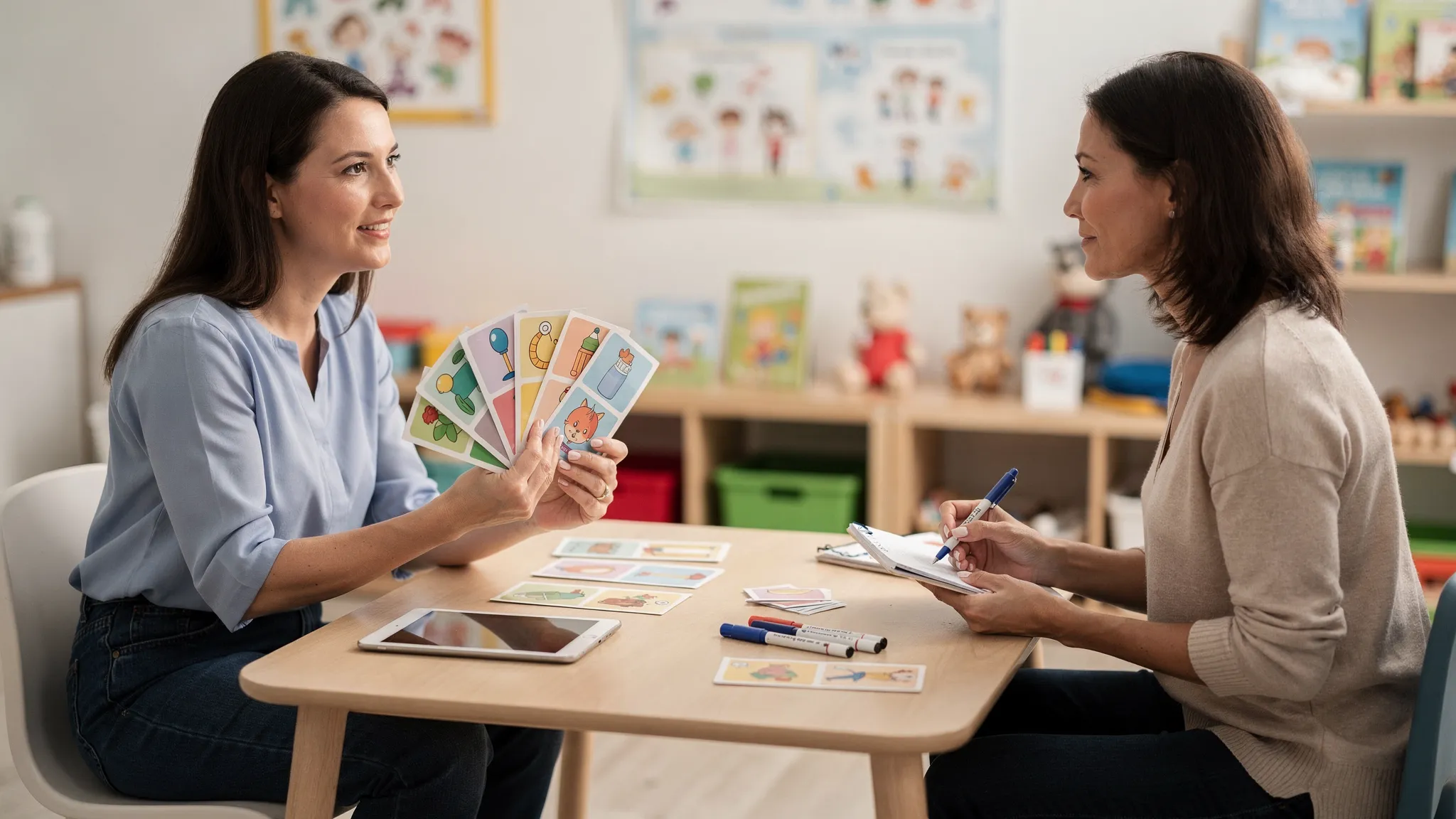
At Bridges Speech Center in Dubai, speech and language therapists may integrate picture talk strategies to support communication for children, teens and adults. Therapy is typically individualized, with family involvement where appropriate.
If you are curious about the program details, visit the Pic talk page to learn how visual communication tools can fit into an overall therapy plan.
Conclusion
Picture talk is a practical, evidence informed strategy that uses images to make communication easier to understand and easier to express. It can support vocabulary, sentence building, storytelling and confidence across ages. For children it often feels like play. For adults it can rebuild functional communication after illness or injury.
If you are still asking what is picture talk for your child or for a family member, the best next step is a professional language assessment. Bridges Speech Center can guide you toward the right approach and show you how to use picture talk at home so progress carries into daily life.
Ready to get started? Contact Bridges Speech Center to book an evaluation and meet a qualified Speech therapist who can recommend clear goals, suitable visuals and a home practice plan.