

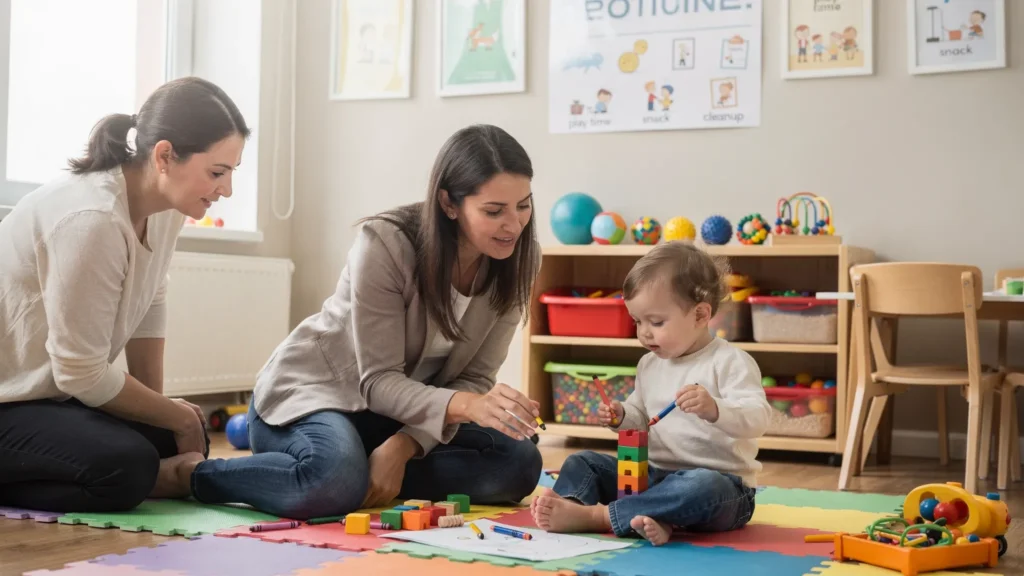
Toddlers learn through movement play and everyday routines. When a child struggles with things that seem “simple” like holding a spoon, tolerating hair washing or joining play with other children it can affect confidence, behavior and family life.
So what is occupational therapy for toddlers? In practical terms it is therapy that helps young children build the skills they need to take part in daily activities. It also helps families understand the “why” behind challenges like sensory meltdowns, picky eating, poor coordination or difficulty with dressing.
At Bridges Speech Center in Dubai families can access occupational therapy plus integrated support such as speech therapy Dubai services when communication or feeding concerns occur together.
Table of Contents
ToggleWhat is occupational therapy for toddlers?
If you are searching What Is Occupational Therapy for Toddlers? you are usually looking for a clear definition plus real examples.
Occupational therapy for toddlers focuses on participation. That means your child’s ability to do toddler “jobs” such as playing, exploring, feeding themselves following simple routines transitioning between activities and interacting with caregivers.
According to the American Occupational Therapy Association occupational therapy supports health and well-being through participation in daily activities. For toddlers those activities are self-care, early learning and social connection.
When parents ask what occupational therapy is for toddlers it helps to know that sessions often look like play. A therapist may use toys, movement obstacles, sensory play and daily-life tools to build development in a child-friendly way.
Why toddler years matter for development
Ages 1 to 3 are a period of rapid brain growth. Skills build on each other. For example trunk stability supports hand control. Hand control supports feeding and early drawing. Sensory regulation supports attention. Attention supports learning.
Early support can help because the brain is highly adaptable during these years. The CDC developmental milestones give a helpful baseline for what many children can do at different ages.
This is one reason parents who wonder What Is Occupational Therapy for Toddlers? often benefit from an early screen rather than a wait and see approach.
Signs a toddler may benefit from occupational therapy
Many toddlers have quirks. The key is frequency intensity and impact on daily life.
Here are common reasons families seek toddler occupational therapy:
- Delays in fine motor skills such as stacking blocks turning pages or using crayons
- Feeding challenges such as gagging refusing textures or difficulty chewing
- Sensory sensitivities such as distress with grooming noise or clothing
- Sensory seeking such as constant crashing spinning or climbing with poor safety awareness
- Motor planning challenges such as difficulty learning new movements or copying actions
- Trouble with daily routines such as dressing brushing teeth or transitions
- Limited play skills such as repetitive play difficulty with turn taking or low exploration
If speech and interaction are also concerns it may help to coordinate OT with Speech Therapy Dubai so communication goals and self-regulation goals develop together.
What areas does occupational therapy for toddlers work in?
Parents often ask again What Is Occupational Therapy for Toddlers? because they assume OT is only for hand skills. In reality toddler OT is broader.
Fine motor and early pre-writing
OT may target grasp release bilateral coordination finger isolation and hand strength. These support skills like self-feeding turning knobs using stickers and later handwriting.
For home ideas you can explore Bridges’ guide on fine motor skills activities at home and use it as a gentle start while waiting for an appointment.
Sensory processing and regulation
Some toddlers over-respond to sensory input. Others under-respond and seek intense movement.
OT uses sensory strategies to help a child stay calm, alert and organized for play learning and daily routines. A helpful parent-friendly resource is Bridges’ article on sensory integration therapy at home which explains safe ways to support regulation in everyday life.
Gross motor foundations that support hand skills
Even when a child’s main concern looks like clumsy hands the root issue can be posture balance, core strength or coordination. OT often collaborates with physiotherapy when gross motor needs are significant.
Feeding and oral motor related daily skills
Feeding is a functional occupation for toddlers. OT may support seating posture utensil use sensory tolerance for textures and messy play.
If a child has chewing swallowing or speech-related oral motor issues OT may coordinate with speech therapy for an integrated plan.
Play social participation and early independence
Toddlers build life skills through play. Occupational therapy for toddlers can strengthen shared attention imitation in turn taking flexibility and independence with simple self-care routines.
Common toddler goals in occupational therapy
If you keep asking What Is Occupational Therapy for Toddlers? It can help to see concrete examples of goals that are measurable.
Development area | Example toddler challenge | Example OT goal | What progress can look like |
Fine motor | Drops crayons avoids puzzles | Increase grasp control for simple tasks | Colors for 2 to 3 minutes uses a chunky puzzle |
Sensory regulation | Meltdowns during grooming | Build tolerance for grooming routines | Brushes hair with support stays calm longer |
Feeding | Refuses mixed textures | Expand accepted textures safely | Tastes new foods touches messy textures |
Daily routines | Fights dressing and transitions | Improve participation in routines | Puts arms through sleeves follows a 2-step routine |
Motor planning | Avoids new playground equipment | Build confidence with graded movement | Climbs steps slides with safer body control |
What happens in a toddler occupational therapy assessment?
A strong occupational therapy assessment is more than a checklist. It connects skills to function.
A toddler OT assessment may include:
- Parent interview about routines sleep feeding play daycare and concerns
- Observation of posture movement play skills attention and regulation
- Screening of fine motor visual motor coordination and bilateral skills
- Sensory profile style questions about reactions to sound touch movement and textures
- Functional review of dressing bathing toothbrushing and mealtimes
If you want a deeper preview you can read Bridges’ guide on occupational therapy assessments in Dubai.
How do occupational therapy sessions work for toddlers?
A common myth is that therapy is only something done to the child. High quality care is family-centered.
In many programs sessions include:
Play-based skill building
The therapist uses purposeful play to develop strength coordination sensory processing and attention. This is one reason parents sometimes think “my child is just playing” even though each activity has a goal.
Graded challenges
Tasks are adjusted so the child can succeed with the right level of difficulty. This supports confidence and learning.
Parent coaching
Parents learn how to practice skills in short realistic routines. This matters because toddlers learn best in daily life not only in the clinic.
Collaboration with other services
Some toddlers need more than one service. At Bridges Speech Center families may coordinate OT with a speech therapist especially when speech delay feeding concerns or social interaction challenges are part of the picture.
Practical tips you can start at home today
Parents who search What Is Occupational Therapy for Toddlers? often want something they can do right away. These tips are safe general strategies. A therapist can personalize them after evaluation.
Build skills through micro routines
Toddlers do best with short practice.
Try:
- 3 minutes of puzzle play after snack
- 2 minutes of sticker peeling before bath
- 1 minute of “help me” requests before you open a container
Use the right tools
Simple tools can reduce frustration:
- Short crayons for easier grasp
- Thick handled spoons
- Non-slip mat under the plate
Support regulation before demanding tasks
If your child is dysregulated, learning drops.
Try heavy work style play:
- Pushing a laundry basket with toys
- Carrying a small bag of books
- Animal walks like bear crawl for short distances
Make transitions more predictable
Use the same two-step pattern each time:
First tidy up then wash hands.
Latest trends in toddler occupational therapy in 2026
Occupational therapy keeps evolving. In Dubai many families ask for care that fits modern life.
Here are trends that support toddlers well:
Parent-first coaching models
Instead of only therapist-led play many clinics are emphasizing caregiver training. This helps progress transfer into real routines.
Telehealth check-ins for consistency
Short virtual follow-ups can help families stay on track between in-person sessions. This works well for busy parents or travel periods.
Sensory informed environments
More therapists are designing calmer sessions with predictable routines, reduced visual clutter and structured sensory input so children can focus.
Home-based therapy when the environment matters
Some goals are best practiced where they happen such as mealtime skills, dressing routines or regulation during daily transitions. If you are considering that option you can explore occupational therapy in Dubai and ask about home care availability.
When to seek help now versus monitor
If a challenge is affecting family life daily routines or your child’s ability to participate it is reasonable to seek an evaluation.
If you are unsure, start with Bridges’ checklist style guide: Does my child need occupational therapy?
Why families in Dubai choose Bridges Speech Center
Families often prefer a center that can coordinate care in one place. Bridges Speech Center supports children through occupational therapy plus services like speech therapy Dubai programs feeding therapy physiotherapy and psychology.
That multidisciplinary support can be helpful when toddler needs overlap such as sensory regulation plus language delay or feeding difficulties plus oral motor concerns.
Conclusion
So What Is Occupational Therapy for Toddlers? It is a practical play-based approach that helps toddlers participate in daily life. Occupational therapy for toddlers can support fine motor skills sensory regulation feeding routines motor planning play skills and early independence.
If you notice ongoing challenges or you want a clear plan with measurable goals an assessment can bring relief and direction.
To learn more about toddler occupational therapy and coordinated services like speech therapy Dubai support at Bridges Speech Center you can contact us to book an evaluation.
Frequently Asked Questions
What is occupational therapy for toddlers and how is it different from tutoring?
Occupational therapy for toddlers supports daily living and play skills like feeding, dressing, sensory regulation and motor coordination. Tutoring focuses on academic skills while OT focuses on function and development.
What age should a toddler start occupational therapy?
A toddler can start occupational therapy as soon as concerns are noticed. Early support often improves participation in routines and reduces frustration for the child and family.
How long does occupational therapy take to work for toddlers?
Timelines vary based on the child’s needs, consistency of home practice and whether other supports are needed. Many families notice small functional gains first then bigger changes over time.
Can occupational therapy help with speech delay in toddlers?
OT does not replace speech therapy but it can support skills linked to communication such as attention sensory regulation, play imitation and feeding related oral motor routines. Many toddlers benefit from coordinated OT plus speech support.