
Getting hurt during sport can feel like life hits pause. The good news is that most people do not need to “just rest and wait.” A structured plan can reduce pain, restore movement and help you return to training with confidence. That plan is what sports injury therapy is designed to deliver.
Table of Contents
ToggleUnderstanding sports injury therapy and why it matters
Sports injury therapy is a targeted rehabilitation approach that combines assessment hands on techniques and progressive exercise to help your body heal while keeping you as active as safely possible. Unlike generic advice it focuses on the exact tissues involved (muscle tendon ligament bone joint or nerve) and the demands of your sport.
In Dubai many active adults teens and children train year round. That means overuse problems like tendinopathy runner’s knee shin pain and shoulder irritation can be as common as acute injuries like ankle sprains and muscle strains. Sports injury therapy helps in both cases by matching the right load at the right time.
Do I really need sports injury therapy or will it heal on its own?
Some minor strains improve with rest and activity modification. Many injuries do better with guidance because the biggest risk is not the first injury. It is returning too soon then compensating and getting injured again.
Consider booking sports injury therapy if you notice:
- Pain that lasts more than 7 to 10 days
- Swelling that does not settle or keeps returning
- A joint that feels unstable “giving way” or locking
- Pain that changes your walking running throwing or lifting technique
- A repeat injury in the same spot
Seek urgent medical care if you have severe swelling obvious deformity inability to bear weight numbness or suspected fracture.
What to expect in your first sports injury therapy appointment
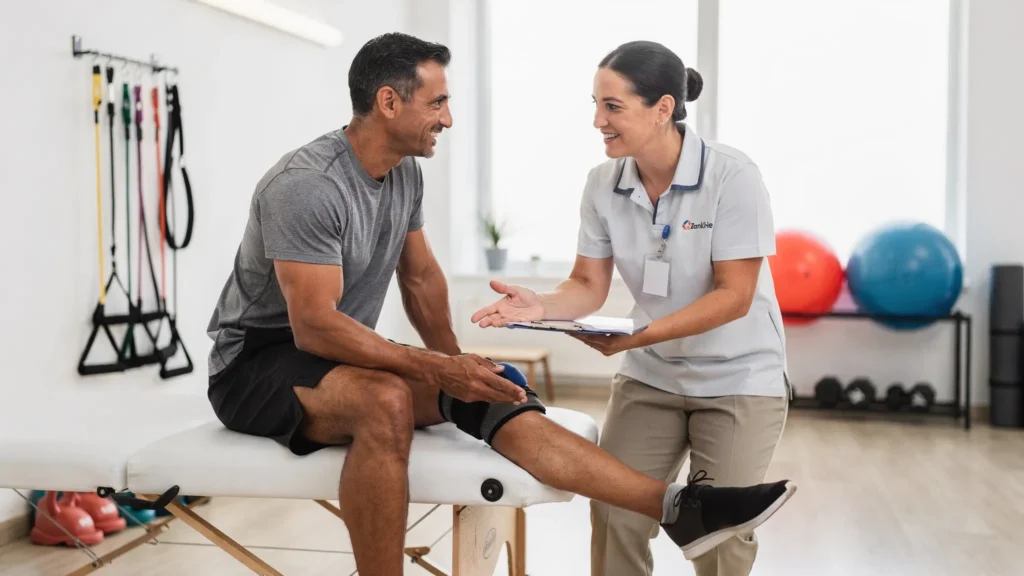
A good sports injury therapy assessment is more than “Where does it hurt?” It usually includes:
1) Injury story and training review
Your therapist will ask how the injury happened what movements aggravate it and what your current training looks like (volume intensity recovery). This matters because many overuse injuries are load problems not “weakness” alone.
2) Physical exam and movement testing
Expect range of motion testing strength testing balance checks and sport specific movement screens. For example a runner may be assessed during a squat step down hop or treadmill run.
3) Clear diagnosis or working hypothesis
You should leave with a simple explanation of what is likely irritated and why. In sports injury treatment clarity reduces fear and helps you commit to the plan.
4) Your first phase plan
You will usually receive immediate actions such as relative rest activity modification pain calming strategies and a starter home program.
If you are looking for sports injury rehabilitation in Dubai Bridges Speech Center provides physiotherapy support and can coordinate care across services when needed.
The sports injury rehabilitation roadmap (what the phases look like)
Most recovery follows phases. The timing depends on the tissue involved the severity of the injury your sleep stress nutrition and how consistently you follow the program.
Phase of rehab | Main goal | What sports injury therapy often includes | What you may feel |
Early protection (days 1 to 7 for many acute injuries) | Calm pain and swelling protect tissue | Education gentle range of motion light activation safe walking patterns | Symptoms settle with movement kept within limits |
Restore movement (week 1 to 3+) | Regain mobility control and confidence | Mobility drills basic strength balance retraining | Mild soreness is common sharp pain is not |
Rebuild capacity (weeks 3 to 8+) | Increase strength power endurance | Progressive loading heavier strengthening tempo work plyometric prep | “Training soreness” that resolves within 24 to 48 hours |
Return to sport (variable) | Rehearse sport demands safely | Running progressions change of direction drills sport specific skills | You feel challenged but stable |
Performance and prevention (ongoing) | Reduce re injury risk | Maintenance program technique tuning load management | You feel stronger and more efficient |
Many clinicians now recommend approaches aligned with “PEACE and LOVE” for soft tissue injuries which emphasizes early education graded loading and avoiding unnecessary passive treatments. You can read the original BJSM concept paper via the British Journal of Sports Medicine.
Which techniques are used in sports injury therapy?
Your program should be individualized. Still most evidence informed sports injury therapy plans use a similar toolbox.
Therapeutic exercise and progressive loading
Exercise is usually the core of sports injury therapy because tissues adapt to load. The therapist selects the right type of strength work (isometrics eccentrics heavy slow resistance or power drills) based on your diagnosis.
In sports injury treatment the key is dosage. Too little load slows adaptation. Too much load flares symptoms and delays progress.
Manual therapy when it supports movement
Hands on techniques can help reduce pain or improve short term mobility so you can exercise better. Manual therapy is typically an assistant not the whole plan.
Neuromuscular training and movement retraining
After injury the brain often “guards” the area. This can change coordination timing and joint control. Sports injury therapy may include balance work hopping progressions agility drills or technique coaching to restore efficient patterns.
Taping bracing and supportive aids
These tools can reduce symptoms and improve confidence during early activity. They are usually temporary and should not replace strength.
Education and return to training planning
A strong sports injury rehabilitation plan includes clear rules for pain monitoring training modification and recovery days. This is often what separates a fast recovery from weeks of setbacks.
Clinic based care vs sports injury therapy at home
Some people prefer in clinic visits for equipment access hands on care and supervised progression. Others benefit from treatment in their home environment.
Sports injury therapy at home can be useful when:
- Pain makes travel difficult
- You need help adapting your stairs sofa desk setup or home gym
- Your schedule makes frequent clinic visits hard
Bridges Speech Center also shares options for home based support through its Experience Expert Physio at Home in Dubai service and educational resources such as Home Care Physical Therapy: A Complete Guide.
How sports injury therapy speeds up healing (what is happening inside your body)
People sometimes worry that moving too early will “damage” tissue. In reality the right movement at the right intensity often improves recovery.
Sports injury therapy can speed healing by:
Improving circulation and reducing stiffness
Gentle movement supports fluid exchange and helps the injured area tolerate normal daily loads again.
Guiding safe stress to the tissue
Tendons ligaments and muscles remodel based on stress. A well designed plan gives enough stimulus to rebuild without repeated flare ups. This is why structured sports injury treatment often beats random stretching or resting until the pain disappears.
Preventing compensation injuries
When one area hurts you may overload another. Sports injury therapy watches your whole chain (foot knee hip trunk shoulder) to reduce secondary pain.
Restoring confidence and reducing fear of movement
Many athletes delay return because they do not trust the joint. Gradual exposure in sports injury rehabilitation rebuilds confidence through measurable wins.
Where does orthopedic physiotherapy fit in?
Many sports injuries are orthopedic in nature meaning they involve joints ligaments tendons and the musculoskeletal system. If your injury includes persistent joint pain reduced mobility after a fall or pain after surgery an orthopedic approach is often appropriate.
You can learn more about the pathway for Orthopedic physiotherapy treatment and dedicated Sports Injury Rehabilitation services at Bridges Speech Center.
What should I do between sessions to make sports injury therapy work faster?
Your sessions guide the plan but your weekly habits drive the outcome.
Follow the home program with the right intensity
Consistency matters more than perfection. If your therapist gives you three exercises done four days per week do that first before adding more.
Respect pain rules
Mild discomfort can be normal in sports injury treatment especially during tendon rehab. Your therapist should give a clear rule such as keeping pain at a tolerable level during exercise and returning to baseline within 24 hours.
Sleep nutrition hydration
Healing is biology. Poor sleep increases pain sensitivity and slows recovery. Protein intake and overall calories also matter especially if you are training.
Ask for a return to sport plan
A proper sports injury therapy discharge includes a progression you can follow. If you are unsure how to restart running lifting or team practice ask for step by step guidance.
If you want a realistic timeline read How Long Does it Take For Physical Therapy to Work.
When sports injuries affect more than the body
Some injuries affect breathing, voice swallowing focus or confidence especially after concussion neurological events or chronic pain cycles. In those cases integrated care can help.
Bridges Speech Center is a multidisciplinary clinic. If needed your plan can involve services like speech therapy including Speech therapy Dubai support and coordination with a qualified Speech therapist.
Conclusion
Sports injury therapy is not just about pain relief. It is a structured process that starts with a clear assessment then builds mobility strength control and sport specific capacity. The right plan can shorten downtime reduce re injury risk and help you return to training with better mechanics than before.
If you are looking for trusted sports injury therapy in Dubai contact Bridges Speech Center to book an evaluation and start a personalized sports injury rehabilitation plan that fits your sport your schedule and your goals.
Frequently Asked Questions
How many sessions of sports injury therapy do I usually need?
Most people need a short block of sessions early on then spaced visits as they progress. The exact number depends on injury severity tissue type and how well you follow the home plan.
Does sports injury treatment hurt?
It should challenge you but not feel like sharp worsening pain. Mild exercise discomfort can be normal especially in tendon rehab but symptoms should settle within a day.
Can I keep training during sports injury rehabilitation?
Often yes with modifications. Many programs keep you active by adjusting volume intensity and exercise selection so you maintain fitness while the injured tissue recovers.
What is the difference between orthopedic physiotherapy and sports injury therapy?
They overlap. Orthopedic physiotherapy focuses on musculoskeletal joint and post surgical problems. Sports injury therapy applies those principles with sport specific testing and return to sport progressions.
Is sports injury therapy at home effective?
It can be very effective when the program is well designed and you have the right setup. Home based sessions are especially helpful when travel is difficult or when training habits need to be rebuilt in your real environment.