

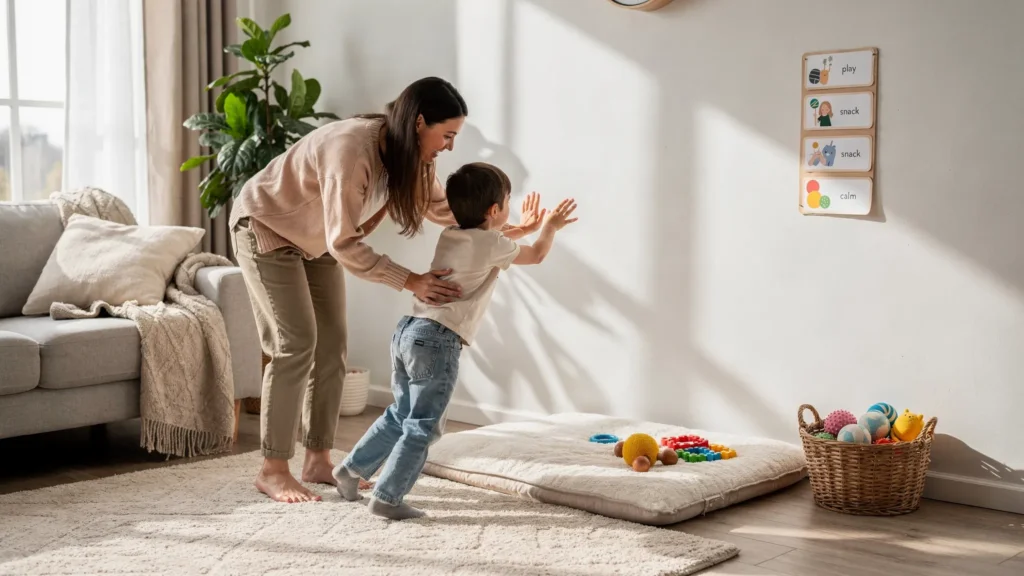
When a child gets overwhelmed by everyday sounds, refuses certain clothes because they “feel wrong,” or just seems like they’re running at high speed all day, it doesn’t just stay in that moment. It spills into playtime, schoolwork, bedtime, basically the whole family routine.
The reassuring part? A lot of kids actually do really well with small, simple supports at home. Nothing dramatic. Just steady, everyday things that help their nervous system feel a little safer and more settled.
This guide walks through Sensory Integration Therapy at home in a practical way, not complicated, not clinical. Just what it means, what you can try, how to keep it safe, and when it might be time to loop in a professional to create a plan that truly fits your child, because every child’s needs are a bit different.
Table of Contents
ToggleSo what is sensory integration, really?
In simple terms, it’s the brain’s ability to take in information from the senses, touch, movement, body position, sound, sight, smell, taste, and organize all of that so a child can respond in a way that makes sense for the situation. It sounds straightforward, but it’s actually a lot of behind the scenes work.
For some children, sensory input just feels louder, brighter, itchier, stronger. A crowded mall can feel unbearable. A clothing tag can feel like sandpaper. Even brushing teeth can turn into a battle because the sensation is just too intense.
Other kids go the opposite way. They seem to crave more input. They spin, jump, crash into the couch, chew on sleeves, hang upside down, not to “misbehave,” but because their body is trying to feel organized.
One thing that helps to remember, especially on the hard days, sensory behaviors are often communication. They might be saying, “I’m overwhelmed,” or “I’m tired,” or “This transition is hard,” or even just “My body needs something different right now.”
It’s rarely random. And it’s almost never intentional in the way we sometimes assume.
The sensory integration approach (and why home practice matters)
A sensory integration approach focuses on supporting regulation and participation in real life. That could mean improving a child’s ability to:
- Stay calm enough to join circle time
- Tolerate daily routines like hair brushing or dressing
- Play safely with peers
- Sit long enough to eat or complete homework
In clinic-based work, occupational therapists may use specialized equipment and assessment. At home, you can still apply the same sensory integration approach by building short routines that give the child the “right type” of input at the “right time.”
If you are in Dubai and want professional guidance, you can read more about sensory integration therapy and how it supports development.
Signs your child may be struggling with sensory processing
Parents often ask if their child’s reactions are “sensory” or “behavior.” Both can be true. Sensory needs can drive behavior especially when a child is dysregulated.
Common sensory challenge patterns
- Over-responsive: covers ears, avoids messy play, refuses certain fabrics, distressed by bright lights
- Under-responsive: seems not to notice name being called, seeks intense movement, high pain tolerance
- Sensory seeking: chewing, crashing, spinning, touching everything, constant movement
If you are unsure, a structured evaluation can clarify what is happening and which supports are likely to help.
How to start Sensory Integration Therapy at Home safely
Before you begin Sensory Integration Therapy at Home, set up for safety. Some activities that look “sensory” online can be risky if done without guidance.
Safety essentials
Choose activities that are predictable and short. Stop if you see dizziness, nausea, unusual fear or a big behavior spike that lasts beyond the activity.
Be cautious with:
- Fast spinning (can trigger dizziness and poor regulation)
- Heavy weights (should never cause strain)
- Oral sensory tools that are not designed for chewing
If your child has seizures, a cardiac condition, recent concussion or complex medical needs, check with your medical team and therapist first.
A simple home plan: regulate first then build skills
A common mistake is expecting a child to “try harder” while dysregulated. Regulation is the base. Once the body is calmer, learning and communication improve.
This is where Sensory Integration Therapy at Home becomes powerful. You can pair regulation activities with daily tasks such as mealtime, dressing and homework.
Table: Home sensory input ideas you can rotate
Use this table as a menu. Pick 1 to 2 activities before a challenging moment (school prep, homework, dinner) then reassess.
Sensory system | What it can support | Simple home activities | Best time to try |
Proprioceptive (body awareness) | Calming and focus | wall pushes, carrying groceries, animal walks, pillow squishes | before school, before homework |
Vestibular (movement and balance) | Alertness or calming (varies by child) | slow rocking, gentle swinging, obstacle course with pauses | transitions, after long sitting |
Tactile (touch) | Tolerance of textures | sensory bin with rice, playdough, lotion “hand painting” | playtime, before bath |
Auditory | Noise tolerance | quiet music, noise-reducing headphones, “sound breaks” | malls, events, school pick up |
Oral motor | Self-regulation and feeding readiness | crunchy snacks (if safe), blowing bubbles, sipping thick liquids (therapist-guided) | before meals, after school |
Sensory Integration Therapy at Home activities that work well in real routines
The most effective home strategies are not complicated. They are consistent, brief and connected to daily life.
What is sensory integration when you are rushing in the morning?
In real life, what is sensory integration looks like helping a child’s body get ready to cooperate. A 3 to 5 minute routine can reduce battles over socks, toothbrushing or leaving the house.
Try a “morning body wake-up”:
- 10 wall pushes
- 10 chair push-ups (hands on seat, lift body slightly)
- 30 seconds of animal walks (bear or crab)
Then go straight into dressing.
Proprioceptive “heavy work” for calmer behavior
Proprioceptive input is often organizing. It can help children who are anxious, easily distracted or sensory seeking.
Examples include:
- Pushing a laundry basket filled with towels
- Carrying a small backpack with a light load (therapist can advise safe weight)
- Tug-of-war with a scarf
This is one of the easiest ways to apply Sensory Integration Therapy at Home without special equipment.
Tactile play for children who avoid textures
Start where the child can succeed. If wet textures are hard, begin with dry sensory play then gradually change one variable.
Progression idea:
- Dry rice or pasta bin with cups and spoons
- Kinetic sand
- Playdough
- Finger paint with a paintbrush first then fingertips
Praise effort not tolerance. Short exposures work better than forcing.
Auditory and visual supports for overwhelm
Some children melt down from sensory load rather than “defiance.” Reduce the load.
- Offer a quiet corner after school
- Use a simple visual schedule with 2 to 4 steps
- Practice “sound breaks” in advance of noisy places
If sensory overload affects communication, a coordinated plan with a professional speech therapist can help children express needs before escalation.
Sensory challenges often overlap with speech, feeding and emotion regulation
Sensory processing does not sit in isolation. Many families notice links between sensory challenges and speech clarity, language understanding, picky eating or anxiety.
At Bridges Speech Center therapy teams can coordinate across disciplines. For some children, sensory supports improve attention and readiness which can strengthen outcomes in speech therapy in Dubai as well.
Sensory and feeding: when to get specialist help
Oral sensory sensitivities can affect chewing, gagging, tolerance of textures and willingness to try new foods. If meals are stressful, support may be needed beyond home tips.
You can learn more about multidisciplinary support through feeding therapy especially when sensory challenges and oral motor skills overlap.
Sensory and big emotions
A child who is dysregulated may look “angry” or “defiant” but they may be overwhelmed. Co-regulation strategies matter.
A helpful next read is what emotional regulation is and how sensory tools can support calmer behavior and better transitions.
How to track progress at home (without pressure)
For Sensory Integration Therapy at Home to be effective, you need feedback. Keep it simple.
Choose 1 to 2 target moments such as:
- Getting dressed
- Sitting at the table
- Transitioning to bedtime
Track the change in:
- Time it takes to complete the routine
- Frequency of meltdowns
- Recovery time after distress
If you see improvement, keep the routine. If not, adjust the input (type, intensity, timing) rather than adding more activities.
When home strategies are not enough
Home practice is valuable but some signs suggest you should seek a full occupational therapy assessment.
Consider professional support if:
- Sensory reactions cause injury risk (running off, crashing hard)
- Sleep and appetite are consistently impacted
- The child cannot participate in school or family routines
- Progress stalls despite consistent home practice
A therapist can also guide whether clinic sessions, telehealth or in-home visits are best for your family. If you are already using home-based services, this can pair well with speech therapy at home when communication is part of the challenge.
Conclusion
Sensory Integration Therapy at Home works best when it is safe, consistent and connected to real routines. Start with regulation tools such as heavy work and predictable movement. Keep activities short, observe your child’s response then adjust timing and intensity.
If sensory challenges are impacting communication, feeding or learning, a coordinated plan can speed progress. Bridges Speech Center in Dubai provides multidisciplinary support including sensory integration, occupational therapy and speech services as a home care service.
If you would like guidance that matches your child’s needs, you can reach out to Bridges Speech Center to book an assessment and build a home plan you feel confident using.
Frequently Asked Questions
What is sensory integration and why does it matter for daily routines?
sensory integration is the brain’s process of organizing sensory information so a child can respond appropriately. When it is difficult, routines like dressing, mealtime and school participation can become stressful.
How often should we do Sensory Integration Therapy at Home?
For most children, short daily practice works better than long sessions. Try 5 to 15 minutes once or twice a day and focus on the moments your child struggles most.
Is the sensory integration approach the same as a “sensory diet”?
A sensory diet is often part of a sensory integration approach. It means planned sensory activities spread across the day to support regulation and participation.
Can sensory challenges affect speech and language?
Yes. Overwhelm can reduce attention, imitation and social communication. In some cases, combining sensory supports with speech therapy improves carryover and confidence.
When should we seek professional sensory integration therapy in Dubai?
Seek support when safety is a concern, daily life is significantly disrupted or home strategies are not helping. A therapist can assess patterns and create a structured plan for your child and family.