

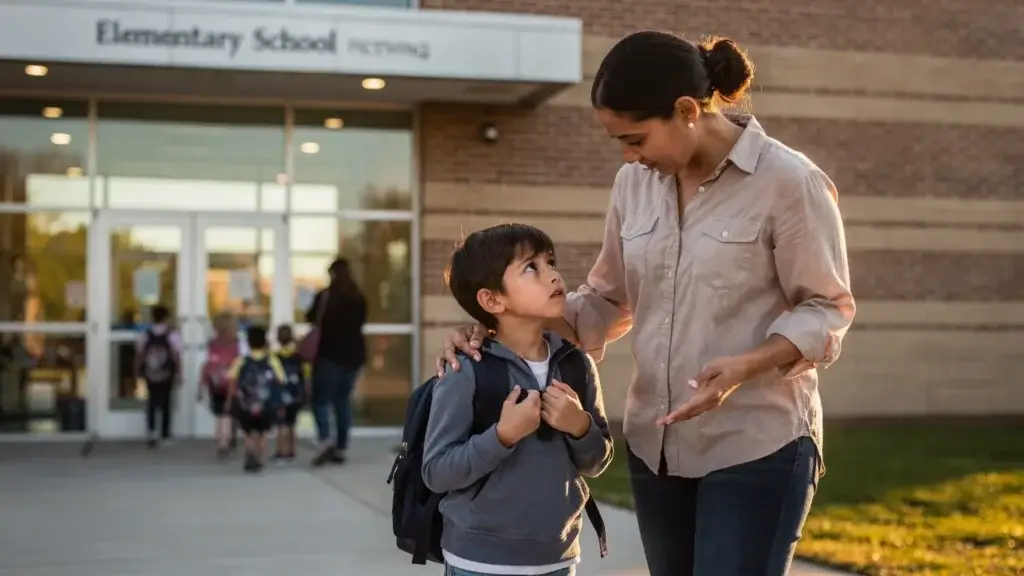
School mornings can become a daily battle when a child cries, complains of stomach pain or shuts down the moment the uniform comes out. For many families this is not simple reluctance. School refusal is a pattern where a child finds it extremely difficult to attend school or stay in class because of emotional distress.
The good news is that school refusal is treatable. With the right support, most children return to learning with better coping skills, stronger confidence and healthier routines. At Bridges Speech Center in Dubai, families can access coordinated support that may include psychology, Cognitive behavioral therapy occupational therapy and speech therapy Dubai services when communication or anxiety around speaking plays a role.
Table of Contents
ToggleWhat school refusal looks like (and what it is not)
School refusal is not the same as truancy. Truancy usually involves skipping school without caregiver knowledge and may be linked to rule breaking. School refusal often happens with a caregiver present and the child may want to do well academically but feels unable to cope with school.
Children experiencing school refusal might:
- Beg to stay home or refuse to enter the school building
- Cry, freeze or become irritable when school is mentioned
- Report headaches, nausea or stomach aches on school days
- Text or call repeatedly from school to be picked up
- Appear calm on weekends then distressed on Sunday night
If these patterns persist for two weeks or recur after holidays, it is a strong sign the issue needs structured support.
Why school refusal happens
There is rarely one single cause. School refusal is usually driven by a mix of anxiety, skills gaps, learning stressors and environmental triggers.
Anxiety and fear based drivers
Anxiety is one of the most common roots of school refusal. A child may fear:
- Separation from a parent
- Social judgement or bullying
- Making mistakes in front of others
- Using the toilet at school
- Loud sounds, crowds or unpredictable routines
These fears can build into avoidance. Avoidance brings short term relief which teaches the brain that staying home is safer. Over time that cycle can strengthen school refusal.
For many children, anxiety overlaps with specific conditions such as social anxiety or selective mutism. If your child avoids speaking in class or with peers, it can contribute directly to school refusal. You can learn more through Bridges Speech Center resources on social anxiety and selective mutism.
Learning and communication challenges
Some children experience school refusal because school demands exceed their current skills. When a child struggles to understand instructions, express themselves or keep up with reading and writing, school can feel like constant failure.
A speech and language assessment can be an important step, especially if your child has:
- Difficulty following multi step directions
- Limited vocabulary for age
- Trouble telling stories clearly
- Frequent misunderstandings with teachers or peers
Support from a licensed Speech therapist can reduce classroom stress by strengthening language, self advocacy and confidence. This is one reason speech therapy Dubai services may be relevant even when the main concern appears emotional.
Sensory and regulation differences
Some children experience sensory overload in noisy classrooms, busy corridors or bright cafeterias. Others struggle with transitions, attention or emotional regulation. In these cases school refusal may be the child’s attempt to escape an environment that feels overwhelming.
Occupational therapy can help by building coping strategies, sensory regulation routines and practical skills for school participation.
Family stress and life events
Transitions can trigger school refusal. Examples include moving house, changing schools, parental travel, illness in the family or a recent loss. A child may not have the language or coping skills to explain what feels unsafe.
When to take school refusal seriously
A single difficult morning can happen to any child. School refusal becomes clinically important when it starts affecting learning, sleep, appetite, friendships or family functioning.
Seek support urgently if you notice:
- Panic attacks or intense distress on school days
- Threats of self harm
- Rapid weight loss or refusal to eat
- Persistent physical symptoms with no medical cause
If there are safety concerns, consult a medical professional right away.
How therapy helps: what an evidence based plan looks like
Effective treatment for school refusal focuses on reducing avoidance while teaching coping skills and rebuilding school tolerance step by step.
Cognitive Behavioral Therapy and cbt for school refusal
CBT is one of the best supported approaches for anxiety driven school refusal. In practice, cbt for school refusal helps a child identify worry thoughts, test predictions and learn new responses.
A typical CBT plan may include:
- Psychoeducation about anxiety and the body
- Thought checking and realistic self talk
- Relaxation skills such as paced breathing
- Gradual exposure to feared school situations
- Parent coaching to reduce reinforcement of avoidance
When delivered consistently, cbt for school refusal targets the avoidance cycle that keeps the fear alive.
Gradual return to school (graded exposure)
A core part of therapy for school refusal is a structured return plan. The goal is not to force a child through overwhelming distress. The goal is to build tolerance with small wins.
A graded plan may start with arriving at school for five minutes, meeting one trusted adult then leaving. Over days, the child stays longer and adds harder steps such as joining class, attending recess or speaking to peers.
This graded exposure is also a key component of cbt for school refusal.
Speech and language therapy when communication fuels avoidance
Some children avoid school because they fear speaking, reading aloud or being misunderstood. In those cases school refusal can improve when therapy targets communication directly.
Bridges Speech Center provides speech therapy for children who need support with articulation, language development, fluency and functional classroom communication. Therapy can include role play for answering questions, scripts for asking for help and confidence building practice.
If your child functions better in familiar environments, speech therapy at home can support carryover into daily routines while the school plan is being rebuilt.
Occupational therapy for routines and regulation
Occupational therapy supports children whose school refusal is linked to sensory overload, difficulty with transitions, reduced independence or poor self regulation. OT may address morning routine setup, sensory strategies, handwriting fatigue and coping tools that a child can use discreetly in class.
Practical tips you can start today
These steps do not replace professional care but they can reduce stress and support therapy goals.
Keep morning communication short and calm
Long debates increase anxiety. Use short predictable phrases such as “School is hard right now. We have a plan. I will see you after school.”
Track patterns to find the real trigger
For one week write down:
- Bedtime and wake time
- Morning symptoms
- What happens right before distress escalates
- What makes the child calmer
Patterns often reveal the true driver of school refusal such as a specific subject, a social situation or a noisy transition.
Avoid accidental rewards for staying home
If a child stays home due to school refusal, keep the day neutral. Avoid special treats, screens all day or fun outings. This reduces the chance that avoidance gets reinforced.
Build a micro routine the night before
Lay out clothes, pack bag, prep lunch and choose a calming activity for the morning. Predictability reduces uncertainty which is a major fuel for school refusal.
Collaboration with the school matters
Therapy works best when families and schools act as one team. Helpful accommodations during treatment may include a quiet entry point, a check in with a counselor, a reduced workload for a short period or permission to use coping tools.
If your child receives therapy at Bridges Speech Center, caregivers can bring school feedback so goals stay practical and aligned with classroom demands.
Latest trends in school refusal support (2026)
Approaches to school refusal continue to evolve. Current trends many families find helpful include:
- Parent first coaching models that teach caregivers how to respond in ways that reduce avoidance
- Hybrid care combining in clinic therapy with telehealth check ins for consistency
- Data informed plans using simple tracking of attendance, distress ratings and sleep to adjust exposure steps
- More attention to communication needs and neurodiversity informed supports when autism ADHD or language differences are part of the picture
These trends fit well with multidisciplinary centres that can address both emotions and skills.
School refusal support map: symptoms, likely drivers and first step
What you see | Possible driver behind school refusal | Helpful first step |
Stomach aches on school days | Anxiety or avoidance cycle | Validate feelings then keep routine predictable and seek CBT support |
Refusal to speak in class | Social anxiety or selective mutism | Request school accommodations plus speech and psychology input |
Meltdowns during noisy transitions | Sensory overload or regulation challenges | OT strategies for sensory regulation and structured transitions |
Panic at separation | Separation anxiety | Graded separation practice with caregiver coaching |
School refusal after bullying | Safety concerns and trauma stress | Immediate school safeguarding plus therapeutic support |
Key takeaways
School refusal is real distress not stubbornness. It often involves anxiety, skill gaps, sensory overload or social fears. The most effective help is a coordinated plan that reduces avoidance while building coping and participation skills. Cbt for school refusal is commonly used because it targets the anxiety cycle and supports graded exposure.
If you are looking for compassionate multidisciplinary care in Dubai, Bridges Speech Center offers psychology services, speech therapy Dubai support and family coaching that can be tailored to your child’s needs. Ready to take the next step? Please contact us to book an appointment.
Frequently Asked Questions
What is the difference between school refusal and truancy?
School refusal is driven by distress and anxiety with the child often wanting to attend. Truancy is usually deliberate skipping without caregiver knowledge.
Can school refusal be caused by speech or language difficulties?
Yes. Struggling to understand instructions or express ideas can make school feel unsafe which can contribute to avoidance.
How long does therapy take to improve school refusal?
It depends on severity, underlying causes and consistency of the return plan. Many families see progress within weeks when exposure steps and parent coaching are followed.
Is CBT effective for school refusal?
CBT is a well supported approach for anxiety driven school refusal. It works best when combined with gradual return to school and family involvement.