

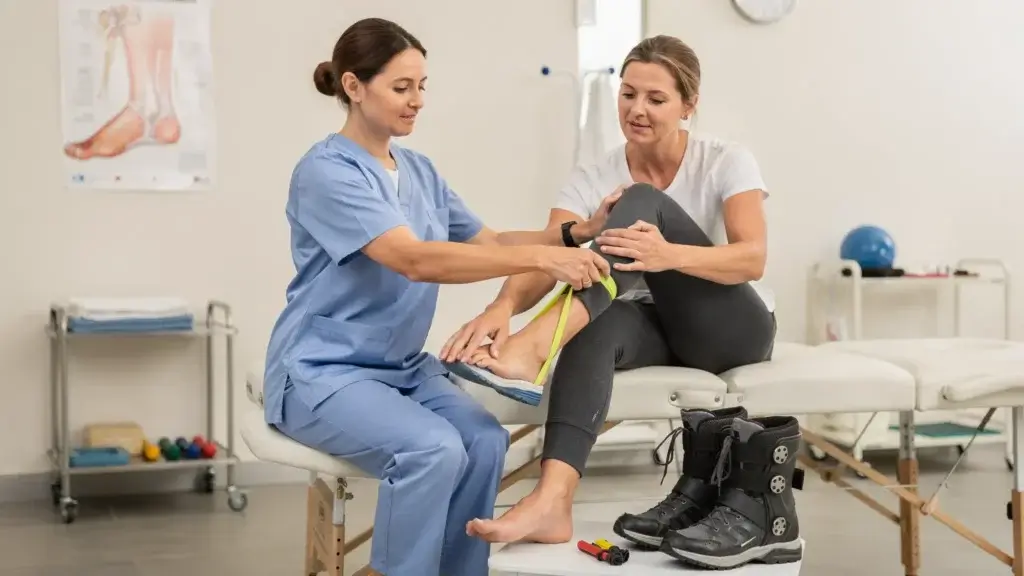
Foot fractures can feel deceptively small yet they often disrupt everything from walking to work to school runs. The good news is that a well-timed rehab plan can restore strength mobility and confidence without rushing healing.
Table of Contents
ToggleWhat Recovery Looks Like and How to Get Back on Your Feet
Physiotherapy for foot fracture supports healing while helping you regain movement balance and safe walking. Whether your fracture was treated with a boot cast or surgery your rehab plan should match your bone healing stage, your pain level and your daily goals.
In Dubai many people try to “push through” because life moves fast. That can backfire. The right physiotherapy for foot fracture helps you progress step by step so you can return to normal activities with less stiffness, fewer compensations and lower re-injury risk.
Understanding foot fractures and why rehab matters
A foot fracture can involve toes metatarsals, midfoot bones or the heel bone. Some fractures are stable and heal well in a boot. Others need surgery to restore alignment.
Even when the bone is healing the rest of the system often lags behind:
- Joints get stiff from immobilization
- Calf and foot muscles lose strength quickly
- Balance and gait patterns change
- Swelling can linger and limit motion
That is why physiotherapy for foot fracture is not only about exercises. It is about rebuilding the full chain from foot to ankle to knee to hip so walking feels natural again.
For general information on fracture care and recovery principles you can review guidance from the American Academy of Orthopaedic Surgeons and the UK NHS then follow your orthopaedic provider’s instructions for your specific injury.
When should physiotherapy start after a foot fracture?
Physiotherapy timing depends on your fracture type and medical plan.
In many cases physiotherapy starts while you are still in a boot or cast with safe goals such as swelling control, maintaining strength above the injury and protecting range of motion in nearby joints.
After your doctor clears you for movement or weight bearing the focus expands to mobility strengthening balance and walking retraining.
Important: Do not start weight bearing drills or stretching into pain unless your orthopaedic doctor or physiotherapist confirms it is safe.
Phases of physiotherapy for foot fracture
Most rehab plans follow phases rather than a strict calendar. Bone healing timelines vary based on fracture severity, age health status and whether surgery was needed.
Phase 1: Protection and swelling control
Common goals:
Reduce pain and swelling. Protect the fracture. Maintain fitness safely.
Physiotherapy may include:
Gentle toe movements if allowed. Elevation advice. Compression guidance if appropriate. Crutch training so you do not overload the injured side. Strength work for hips and core to reduce compensations.
Phase 2: Restore mobility
Common goals:
Regain ankle and foot range of motion. Reduce stiffness. Improve tissue tolerance.
Physiotherapy may include:
Joint mobility drills as appropriate. Soft tissue techniques for calf and plantar fascia sensitivity. Controlled active range exercises. Guidance on safe footwear and pacing.
Phase 3: Strength and balance
Common goals:
Rebuild calf strength foot intrinsic strength and balance. Improve control in standing.
Physiotherapy may include:
Progressive resistance exercises. Single leg balance progressions. Step control drills. Gait training so you stop limping.
Phase 4: Return to function and sport
Common goals:
Return to long walks work demands running or sport specific movement.
Physiotherapy may include:
Plyometric preparation if relevant. Agility drills for athletes. Load management to prevent flare ups. Education on long-term prevention.
Rehab focus by phase (quick reference)
Rehab phase | Main goal | What physiotherapy often targets | What you can usually do at home (if cleared) |
Protection | Calm pain and swelling | Elevation pacing walking aid training | Elevation ankle pumps toe wiggles |
Mobility | Reduce stiffness | Gentle range of motion manual therapy | Short mobility routine 1 to 3 times daily |
Strength | Restore capacity | Calf strengthening foot control | Resistance band work controlled heel raises |
Function | Normalize movement | Gait retraining balance progression | Gradual walking plan step goals |
This table is a guide only. Your physiotherapist should individualize progressions based on pain swelling alignment and imaging guidance.
Common physiotherapy techniques used for foot fracture recovery
A high quality physiotherapy for foot fracture plan may include several tools depending on your stage.
Gait training and walking re-education
Many people learn a “protective limp” even after they are cleared to walk. Over time that can trigger knee hip or back pain.
Gait retraining may focus on step length heel contact push off timing and confidence. Your physiotherapist may also adjust crutch use so you do not wean too early.
Therapeutic exercise and progressive loading
Bone and tendon tissues respond to progressive loading. The keyword is progressive.
Early on that may mean gentle isometrics and controlled motion. Later it can include heel raise progressions balance drills and step downs.
Swelling management
Persistent swelling can block motion and delay strength gains. Your plan may include elevation compression strategies and activity pacing.
Balance and proprioception training
After immobilization the foot ankle system can lose position sense. Balance training helps reduce the risk of ankle sprains and re-injury.
Footwear and orthotics guidance
A supportive shoe can reduce symptoms during the transition from boot to normal walking. Some people benefit from temporary inserts depending on arch mechanics and pain pattern.
Safe home exercise tips (what matters most)
Home practice is usually the difference between slow progress and steady progress.
Keep these principles in mind:
- Stay within a tolerable pain range and avoid sharp pain
- Expect mild muscle fatigue but not next-day severe joint flare
- Watch swelling. If swelling spikes your load was too high
- Prioritize quality. Ten good reps beat fifty rushed reps
If your fracture was complex or surgical your physiotherapist may coordinate closely with your orthopaedic surgeon on what is allowed.
Red flags that require medical review
Physiotherapy for foot fracture should feel challenging at times but it should not create warning signs.
Seek urgent medical advice if you notice:
- Increasing pain that does not settle with rest
- New numbness tingling or color change in toes
- Significant warmth redness or fever
- Calf pain with swelling or shortness of breath
- A sudden loss of ability to bear weight after improvement
If you are unsure it is safer to check early.
Physiotherapy for foot fracture in children and older adults
Foot fractures affect different age groups in different ways.
Children
Kids often heal quickly but they may struggle with fear of loading the foot. A child friendly plan uses play-based balance drills and gradual return to school sport.
Families who already work with a child development center Dubai for other needs may benefit from coordinated goal setting across services.
Older adults
Older adults may face slower recovery due to strength loss balance decline or other medical conditions. Fall prevention becomes part of the plan including safe footwear and home setup.
Clinic based rehab vs home visits in Dubai
Some people recover best in a clinic where equipment and manual therapy are available. Others do better with home sessions when stairs transport or pain makes travel hard.
If you also require other supports such as speech therapy at home Dubai for a family member after a neurological event a center that can coordinate disciplines can reduce stress for caregivers.
At Bridges Speech Center our team provides physiotherapy services alongside allied support such as occupational therapy Dubai and communication care when needed.
How Bridges Speech Center can support your recovery
Even though this guide focuses on physiotherapy for foot fracture many patients benefit from coordinated care especially when injury affects independence daily routines or confidence.
You can learn more about our multidisciplinary services at Bridges Speech Center. If your family also needs communication support we offer speech therapy and local care for Speech therapy Dubai through an experienced team.
For patients who need help communicating medical needs following instructions or managing swallowing concerns after unrelated conditions our Speech therapist team can collaborate with rehabilitation goals. You can also explore our speech and feeding therapists and the wider professional team to find the right support path.
Conclusion
Physiotherapy for foot fracture works best when it follows your healing stage and focuses on the full recovery picture: swelling control mobility strength balance and walking mechanics. Progress is rarely perfectly linear but a structured plan helps you move forward safely.
If you want guidance tailored to your fracture type pain level and lifestyle contact Bridges Speech Center to book an assessment and build a clear rehab plan for a confident return to walking and activity.
Frequently Asked Questions
How long does physiotherapy for foot fracture take?
It depends on the fracture type treatment method and your starting strength. Many people need several weeks of guided rehab after immobilization then a home program to finish restoring endurance and confidence.
When can I start weight bearing after a foot fracture?
Only when your orthopaedic doctor clears you. Your physiotherapist then helps you progress weight bearing gradually so pain and swelling stay controlled.
Is swelling normal weeks after a foot fracture?
Mild swelling can persist especially after activity. If swelling is increasing or paired with redness, warmth, severe pain or fever get medical advice.
Can physiotherapy help if my foot feels stiff after the boot comes off?
Yes. Physiotherapy for foot fracture commonly focuses on restoring ankle and foot mobility then building strength so stiffness reduces with safe movement.
Do I need physiotherapy if my fracture was minor?
Many minor fractures still lead to weakness limping and reduced balance after a boot. A short course of physiotherapy or a structured home plan can reduce the risk of long-term stiffness or recurring pain.