

Parents usually do not search for pediatric occupational therapy on a random Tuesday for fun. It often starts with a small concern.
“My child avoids certain clothes.”
“He cannot sit still in class.”
“She struggles to hold a pencil.”
“He melts down in noisy places.”
And then comes the big question: Is this normal? Or do we need help?
Let’s talk honestly about what pediatric occupational therapy really is, when to start, and what actually happens inside those sessions.
Table of Contents
ToggleWhat Is Pediatric Occupational Therapy?
If you have ever typed what is pediatric occupational therapy into Google at 11 pm, you are not alone.
In simple words, pediatric occupational therapy helps children develop the skills they need for everyday activities. These “occupations” for kids include:
- Playing
- Eating
- Writing
- Dressing
- Paying attention
- Participating in school
It is not about jobs. It is about daily life.
A pediatric occupational therapist looks at motor skills, sensory processing, emotional regulation, attention, coordination and independence. Then they create a plan tailored to the child. Not a generic worksheet plan. A real, child-specific approach.
When Should a Child Start Pediatric Occupational Therapy?
There is no perfect age. But there are signs.
You might consider pediatric occupational therapy if your child:
- Struggles with fine motor skills like buttoning or writing
- Avoids certain textures or sounds
- Has frequent meltdowns during transitions
- Finds it hard to sit and focus
- Seems clumsy compared to peers
- Has difficulty with self-care skills
Early intervention makes a huge difference. Starting therapy at age three is not “too early.” Waiting until ten sometimes makes things harder.
Parents often ask if preschool years are too soon. Honestly, many occupational therapy interventions work best during early development when the brain is flexible and still wiring itself.
What Happens in Pediatric Occupational Therapy Sessions?
Many parents imagine a clinic room with a desk and worksheets.
That is rarely the case.
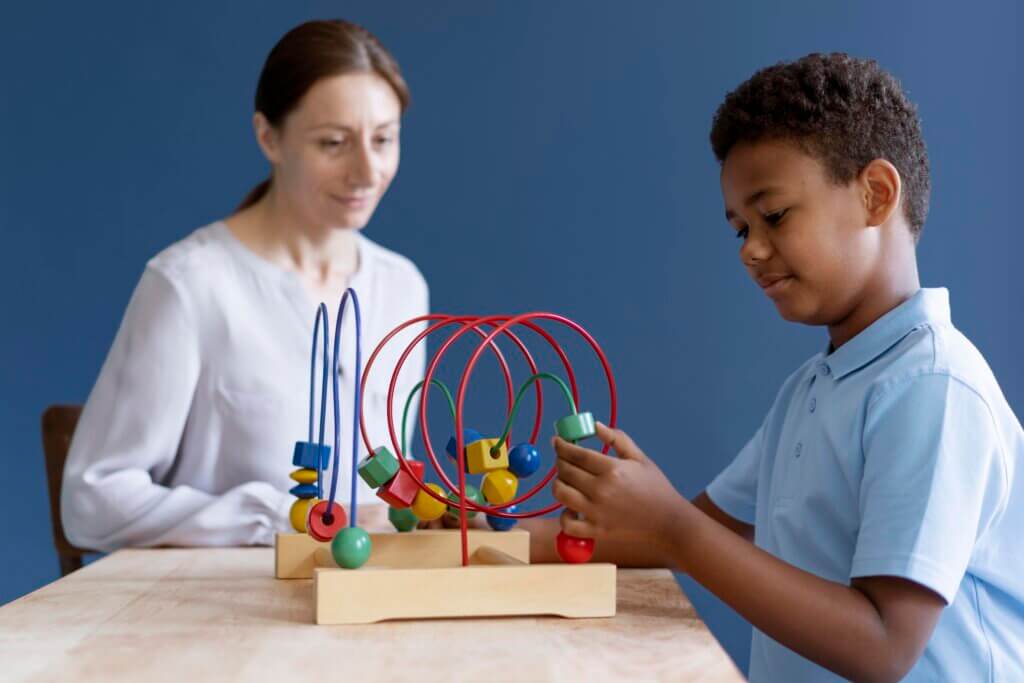
A session might include:
- Climbing and jumping activities
- Swinging for sensory regulation
- Play-based fine motor tasks
- Balance exercises
- Obstacle courses
- Hand strengthening games
It looks like play. But it is structured play.
Here is a quick overview:
|
Area of Focus |
Example Activities |
Goal |
|
Fine Motor Skills |
Beading, cutting, drawing |
Improve hand control |
|
Sensory Processing |
Swinging, textured play |
Regulate sensory input |
|
Gross Motor Skills |
Climbing, balancing |
Improve coordination |
|
Self Care Skills |
Button practice, feeding tasks |
Increase independence |
|
Emotional Regulation |
Breathing games, movement breaks |
Build coping skills |
Each pediatric occupational therapy plan is individualized. No two children receive identical programs.
Pediatric Occupational Therapy in Dubai
If you are searching for pediatric occupational therapy Dubai, you are likely looking for structured professional support close to home.
In Dubai, many families face academic pressure early. School readiness expectations are high. Handwriting, attention span, social participation all matter.
Centers like Bridges Speech Center understand this overlap. While known for speech therapy Dubai services, they also provide integrated support including pediatric occupational therapy. Communication challenges often connect with sensory or motor issues. Addressing both gives better results.
In many cases, occupational therapy and speech therapy work together. A child who struggles with fine motor control may also struggle with articulation or expressive skills. Holistic care matters.
Common Conditions That Benefit from Pediatric Occupational Therapy
Pediatric occupational therapy supports children with:
- Autism spectrum disorder
- ADHD
- Developmental delays
- Sensory processing difficulties
- Learning challenges
- Down syndrome
- Coordination disorders
Even children without a diagnosis can benefit. Sometimes it is simply about skill-building.
Helpful Tips for Parents Starting Occupational Therapy
Starting therapy can feel overwhelming. Here are practical things that actually help:
1. Observe Without Comparing
Avoid comparing your child constantly to others. Progress looks different for every child.
2. Follow Through at Home
Therapy is not one hour a week. Small home activities matter. Practice should feel natural, not forced.
3. Communicate With the Therapist
Ask questions. Share concerns. Pediatric occupational therapy works best when parents are involved.
4. Track Small Wins
Celebrate small improvements. Holding a pencil correctly for five minutes is progress.
Latest Trends in Pediatric Occupational Therapy
Therapy is evolving. It is not stuck in old models.
Some current trends include:
- Sensory integration-based interventions
- Parent coaching models
- School collaboration plans
- Teletherapy support when appropriate
- Use of movement-based brain regulation strategies
In pediatric occupational therapy Dubai clinics, there is also a growing emphasis on multidisciplinary care. Occupational therapists collaborate with speech therapists and behavioral specialists to create cohesive plans.
The focus now is less about labeling and more about functional improvement.
How Long Does Pediatric Occupational Therapy Take?
This depends on the child.
Some children attend sessions for a few months. Others require longer support. Consistency is key.
Improvement is usually gradual. It is rarely a dramatic overnight change. But over time, parents notice:
- Better independence
- Reduced meltdowns
- Improved handwriting
- Increased confidence
That is the real goal.
What to Expect Emotionally as a Parent
This part is rarely discussed.
Starting pediatric occupational therapy can bring mixed emotions. Relief. Guilt. Worry. Hope.
All of that is normal.
Remember, therapy is not a sign of failure. It is a tool. Just like tutoring or sports coaching.
Final Thoughts
Pediatric occupational therapy is not about fixing a child. It is about supporting development in a practical, realistic way.
If your child struggles with everyday tasks, sensory overload or coordination challenges, early support makes a real difference.
In places like Dubai where academic and social expectations start early, pediatric occupational therapy Dubai services provide structured guidance for families who want clarity and direction.
Bridges Speech Center offers integrated care alongside speech therapy Dubai programs, ensuring children receive support across communication, motor skills and emotional regulation.
If you are unsure whether therapy is needed, book an assessment with Bridges Speech center.
Early support builds confidence. And confident children grow differently.
Frequently Asked Questions
What is pediatric occupational therapy and how is it different from physiotherapy?
Pediatric occupational therapy focuses on daily functional skills such as dressing, writing and sensory regulation. Physiotherapy focuses more on muscle strength and movement patterns.
How do I know if my child needs pediatric occupational therapy Dubai services?
If your child struggles with attention, coordination, sensory sensitivity or daily independence, an evaluation can help clarify whether therapy is needed.
Can pediatric occupational therapy help with autism?
Yes. It is commonly used to address sensory processing, emotional regulation and fine motor challenges in children with autism.
How often should sessions be scheduled?
Typically one to two sessions per week depending on the child’s needs. The therapist will guide the frequency based on assessment findings.