

Fine motor skills look tiny on the surface. A kid pinching a Cheerio. Turning a page one at a time. Struggling (and finally winning) with a zipper. Small stuff. But those small movements quietly run a lot in everyday life – independence, confidence, and being able to keep up in school without getting exhausted or frustrated.
If you’ve been googling fine motor skills activities at home and don’t want anything fancy or Pinterest-perfect, this is a good place to start. These are simple, realistic ideas you can actually use today, with what you already have.
What fine motor skills actually are (and why home practice works)
Fine motor skills are all about how the small muscles in the hands and fingers work together, with help from vision and posture. They’re behind everyday things like feeding, dressing, writing, cutting, stacking blocks, opening containers, and using tools.
The reason home practice works so well is simple: the tasks matter. Snacks, clothes, toys, kids are already motivated. And repetition sneaks in naturally without it feeling like “therapy.” A few minutes here and there adds up faster than one long, forced session.
Short, frequent practice also matches how motor learning really works. Skills stick better when they’re practiced often, at the right difficulty, with small wins along the way.
If you’re curious about what’s typical at different ages, the CDC developmental milestones are a useful reference, just remember, they’re guides, not labels or diagnoses.
A simple way to begin: the 10-minute “mini routine”
You don’t need 20 activities. Honestly, that usually backfires. Pick two or three, repeat them for a week or two, then switch things up.
A basic home routine usually has:
- A quick warm-up (wake up the hands)
- One precision task (thumb and fingertip control)
- One tool task (things like scissors, crayons, tongs)
Here’s an easy structure you can copy:
- Warm-up (2 minutes): squeeze and roll playdough
Builds hand strength and endurance - Precision (4 minutes): peel and place stickers
Builds pincer grasp and finger control - Tool skill (4 minutes): move pom-poms using tongs
Builds coordination and grip patterns
One small tip that helps more than you’d think: keep a little “fine motor box” in one spot. A zip bag or container works. Less setup is equal to more consistency.
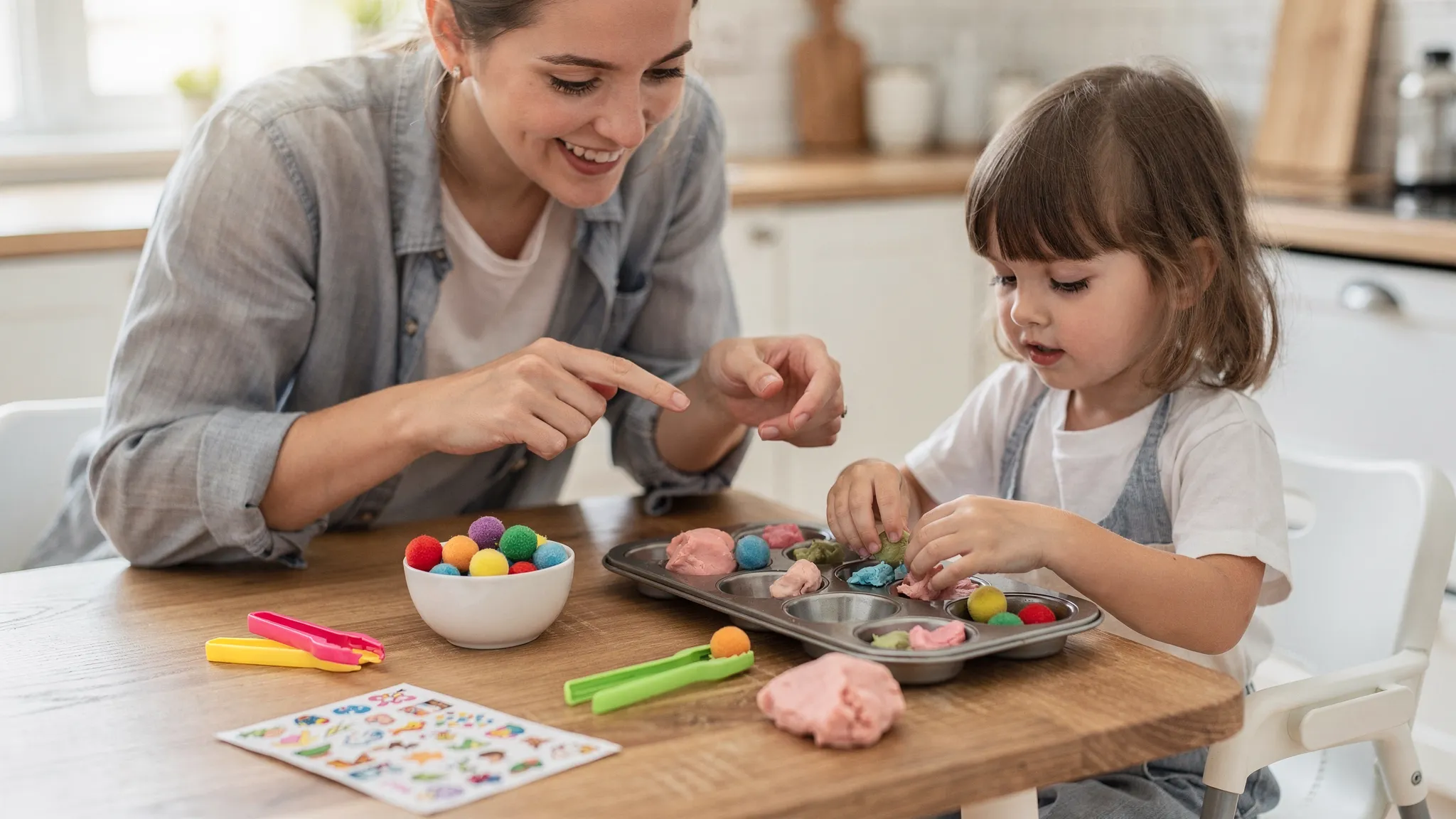
Fine motor skills activities at home: starter list (household-friendly)
These are therapist-style activities using regular household stuff. Each one includes ways to make it easier or harder so your child doesn’t feel bored or overwhelmed.
1) Playdough workout
Squeeze it, pinch it, roll snakes, make tiny balls.
- Easier: soft dough, bigger shapes
- Harder: hide small beads or coins inside (supervise closely)
2) Sticker peel and target game
Peeling stickers is sneaky finger strength work. Draw dots or shapes and stick them on.
- Easier: big stickers
- Harder: mini stickers, smaller targets
3) Clothespin pick-up
Clip pins onto a box edge or use them to grab small items.
- Easier: lighter clothespins
- Harder: one hand holds the box, the other works
4) Tongs transfer (snack version works too)
Move cotton balls, pasta, or snacks into cups or a muffin tray.
- Easier: big items, wide containers
- Harder: narrow cups, sorting by color, timed rounds
5) Coin bank posting
Cut a slit in a lid and post coins one at a time.
- Easier: large tokens
- Harder: rotate the coin before posting or hold the container in the other hand
6) Pom-pom race with a straw
Blow pom-poms across the table into a goal. Setup counts as skill work too.
- Easier: short distance
- Harder: obstacle courses using books
7) Bead threading or pasta necklaces
Thread beads onto shoelaces or pipe cleaners.
- Easier: big beads, stiff string
- Harder: tiny beads or copy patterns
8) Lacing cards
Punch holes in cardboard shapes and lace through.
- Easier: fewer holes, thick lace
- Harder: over-under patterns
9) Tear and crumple paper crafts
Great for hand strength and two-hand coordination.
- Easier: thin paper
- Harder: tear along drawn lines, glue into collages
10) Scissors “snip station”
Start with playdough snakes, then thick paper.
- Easier: short snips only
- Harder: lines, curves, simple shapes
If scissors are a big struggle, posture and grip matter more than people realize. Sometimes the issue isn’t the hands — it’s how the body is supporting them.
11) Tweezer rescue
Pick up tiny objects and drop them into cups.
- Easier: kitchen tongs
- Harder: smaller tweezers or color matching
12) Nuts and bolts play
Twist on, twist off, repeat.
- Easier: large pieces
- Harder: follow sequences or size patterns
13) Spray bottle play
Wash toys, spray plants, clean windows (with supervision).
- Easier: fewer sprays
- Harder: aim at specific targets
14) Everyday self-care practice (the most important one)
Buttoning, zipping, opening containers, spreading with a knife, peeling fruit, stirring batter. Real life counts.
- Easier: practice off the body first
- Harder: practice during real routines when there’s no rush
How to choose the “right” activity (without guessing)
The best fine motor activity is the one that hits the right challenge level.
A simple rule: aim for “a little hard, but doable.” If it’s too easy, kids get bored. If it’s too hard, they avoid it or melt down.
Here’s a quick way to grade the same activity up or down:
| If it’s too hard, try… | If it’s too easy, try… |
|---|---|
| Bigger objects | Smaller objects |
| Less resistance (softer dough) | More resistance (firmer dough, thicker paper) |
| Fewer steps | More steps (patterns, sequences) |
| More stability (elbows supported on table) | Less stability (standing at counter, vertical surface) |
| Shorter time | Slightly longer time or a “repeat x3” goal |
Age-based guidance (rough, not rigid)
Toddlers (1–3 years):
Pick-and-place games, big crayons, stickers, playdough. Keep it short and supervised.
Preschoolers (3–5 years):
Add scissors, tongs, beads, lacing, and early pre-writing. Endurance starts to matter here.
School-age kids:
Focus on handwriting comfort, cutting accuracy, organizing school tasks. Posture and shoulder strength play a big role.
Teens and adults:
Fine motor work supports rehab and independence – buttons, coins, handwriting, phone use, kitchen tasks. Pain or sudden changes should always be checked professionally.
Common problems parents hit (and quick fixes)
If your child avoids fine motor tasks, it’s usually not “laziness.” It’s often one of these:
- The task is too hard (grade it down using bigger pieces or fewer steps).
- The hands tire quickly (do 2 minutes, take a movement break, then return).
- Sensory discomfort (some kids dislike sticky textures, try dry options like coins, cards, blocks).
- Posture is unstable (feet supported, table at the right height, elbows can rest briefly).
- They don’t see the point (connect it to a goal they care about, like building a LEGO scene or decorating a snack plate).
When it’s time to get an occupational therapy check
Home activities are a great start, but consider an occupational therapy evaluation if you notice persistent issues such as:
- Frequent frustration or avoidance of drawing, coloring, cutting, or building tasks
- Difficulty with self-care skills compared to peers (utensils, dressing fasteners, toothbrushing routines)
- Ongoing “floppy” grip, very quick fatigue, or dropping items often
- Pain, weakness, numbness, or one hand doing almost all tasks while the other hand is rarely used
- Regression (skills that were present and then disappear)
A structured assessment helps identify the “why” behind the struggle (strength, coordination, visual-motor skills, motor planning, sensory processing, or attention) and builds a plan that actually transfers into daily life.
If you’re in Dubai, Bridges Speech Center provides occupational therapy support for children and adults, including guidance for home programs. You can learn more in Occupational Therapy – A Brief Guide and see how home-based care can help in How Occupational Therapy at Home Supports Everyday Challenges.
Getting support in Dubai (clinic, home care, and coordinated therapy)
Fine motor skills do not develop in isolation. Sometimes progress is faster when OT works alongside speech therapy (especially if feeding, oral-motor skills, or communication are also concerns), physiotherapy (posture, core stability), and behavioral or psychological support (attention, anxiety, motivation).
Bridges Speech Center in Dubai offers multidisciplinary care for children and adults, including occupational therapy, speech therapy, physiotherapy, psychology, and home care therapy services. If you want help choosing the right starting activities for your child’s exact needs, you can contact Bridges Speech Center, book an assessment and get a personalized home plan.