Every child’s movement story is unique. Some cruise through rolling, sitting and walking, while others need a helping hand to build strength, balance and coordination. Understanding common Pediatric Physiotherapy Conditions helps parents spot early signs, seek timely care and support confident movement at home.
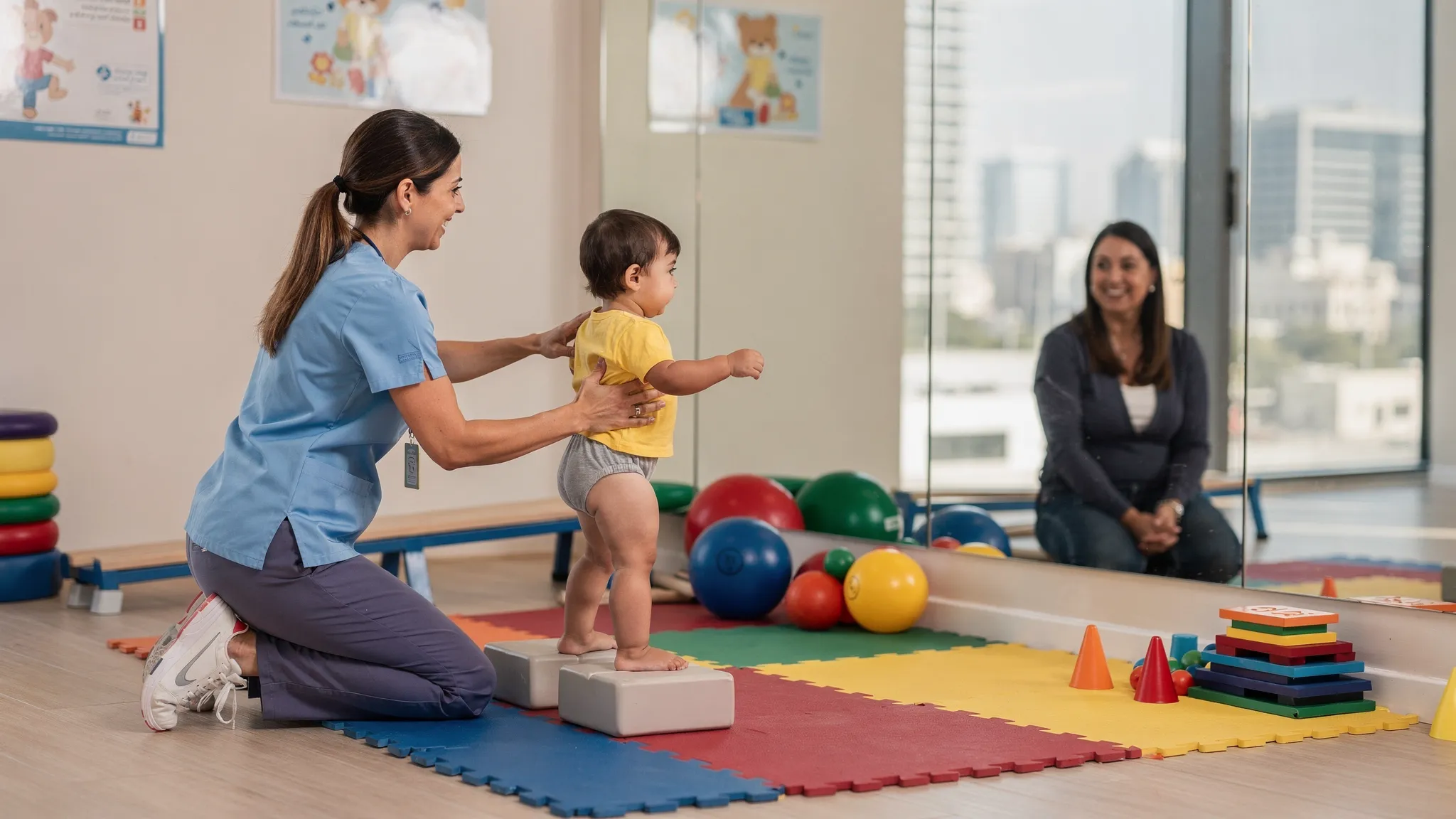
What do we mean by pediatric physiotherapy conditions?
Pediatric Physiotherapy Conditions are movement or posture challenges that benefit from targeted assessment and therapy by a pediatric physiotherapist. They may be musculoskeletal, neurological or developmental in nature. Early identification improves outcomes and often reduces the intensity of therapy needed later.
Families searching for pediatric physiotherapy Dubai typically notice one or more of the following early signs:
- Delays in rolling, crawling or walking compared with peers
- Stiff or floppy muscles, frequent toe walking, poor balance
- Head tilting to one side or a flat spot developing on the head
- Frequent tripping or difficulty keeping up during play
If you are unsure, the team at Bridges Speech Center can guide you with a child-friendly assessment and a practical plan that includes simple pediatric physiotherapy exercises you can do at home.
Key Pediatric Physiotherapy Conditions parents should recognize
Below are the Pediatric Physiotherapy Conditions most often seen in clinics. Each summary includes common signs and how therapy helps.
1) Gross motor delay and hypotonia
Among Pediatric Physiotherapy Conditions, gross motor delay and low muscle tone are very common. Children may sit without support later than expected, fatigue easily or avoid stairs and jumping. Therapy focuses on core stability, transitional movements, balance and endurance through play. A home plan may use obstacle courses, animal walks and short burst activities.
2) Congenital muscular torticollis and positional plagiocephaly
Infants with torticollis tilt or rotate the head to one side which can lead to a flat spot. Early therapy teaches gentle stretches, positioning strategies and tummy time progressions. The American Academy of Pediatrics highlights the value of supervised tummy time and repositioning for flat head prevention and management. See guidance on HealthyChildren.org by the AAP for parents on positional plagiocephaly HealthyChildren AAP.
3) Cerebral palsy
Cerebral palsy is among the most familiar Pediatric Physiotherapy Conditions. Children may show spasticity, movement coordination challenges or balance difficulties. Therapy combines task practice, stretching, strengthening and gait training. Orthotics or assistive devices may support safe mobility. For advanced support in Dubai explore our dedicated page for cerebral palsy management for children treatment in Dubai. The CDC notes that cerebral palsy is the most common motor disability in childhood CDC.
4) Developmental Coordination Disorder
DCD involves difficulties with motor planning and coordination. Children might appear clumsy or avoid ball games and handwriting. Therapy breaks skills into achievable steps and practices them in real-life contexts like playground skills and classroom transitions. This is one of the Pediatric Physiotherapy Conditions where collaboration with occupational therapy for handwriting and school tasks is very helpful. Read about our broader rehab scope in pediatric and geriatric physiotherapy treatment in Dubai.
5) Toe walking and gait abnormalities
Persistent toe walking after age two can shorten calf muscles and affect balance. Therapy addresses muscle length, ankle mobility and proper heel strike using stretches, strengthening and balance drills. Some children benefit from serial casting or orthotics under specialist guidance. These Pediatric Physiotherapy Conditions respond well to early intervention and a home plan that reinforces heel-toe patterns.
6) Clubfoot and other orthopedic conditions
Babies with clubfoot require early medical care then physiotherapy for range of motion, strength and alignment once corrective casting or bracing begins. Similar principles apply after fractures or surgery. These Pediatric Physiotherapy Conditions emphasize joint protection, gradual loading and function-oriented practice.
7) Pediatric sports injuries
Active kids can experience sprains, overuse tendon pain or growth-plate irritation. Rehabilitation restores mobility then builds sport-specific strength, balance and landing mechanics. Families seeking focused return-to-sport guidance can explore Sports Injuries in Children Treatment in Dubai.
8) Neuromuscular and genetic conditions
In conditions like muscular dystrophy, therapy supports joint mobility, energy conservation and participation. These Pediatric Physiotherapy Conditions require a family-centered plan that blends gentle strengthening, respiratory care and equipment advice to maintain function.
Quick reference for parents
The table below summarizes frequent Pediatric Physiotherapy Conditions, early signs parents notice and examples of pediatric physiotherapy exercises commonly recommended in plans.
| Condition | Early signs parents notice | Example pediatric physiotherapy exercises | When to seek care |
|---|---|---|---|
| Gross motor delay or hypotonia | Late sitting, fatigue, avoids stairs | Core play in tall kneeling, obstacle courses, scooter board pulls | If milestones lag by 2 to 3 months or safety concerns arise |
| Torticollis or flat head | Head tilt to one side, preference turning one way | Gentle neck stretches, side-lying play, progressive tummy time | As soon as you notice head preference in infancy |
| Cerebral palsy | Stiff or floppy movement patterns, balance issues | Task-specific practice like sit-to-stand, supported gait, stretching | As early as possible after diagnosis |
| Developmental Coordination Disorder | Clumsiness, avoids ball play, slow to learn new motor tasks | Stepwise motor learning, playground circuits, balance and ball skills | If coordination limits school or play |
| Toe walking | Walks on toes most of the time, tight calves | Calf stretching, ankle mobility, balance beam with heel contact | If persistent beyond age two |
| Clubfoot or post-orthopedic care | Posturing of feet, brace use, post-cast stiffness | Range-of-motion drills, foot intrinsic strengthening, gait practice | Immediately after casting or surgery per provider advice |
| Pediatric sports injuries | Pain with play, swelling, limp, fear of return | Progressive loading, landing mechanics, sport-specific drills | If pain persists more than a few days or performance drops |
What happens in a pediatric physiotherapy assessment?
A comprehensive assessment screens posture, joint range, muscle tone, balance, coordination and functional skills like transfers or running. The therapist observes play, uses age-appropriate tests and listens to family goals. Findings translate into a plan with measurable outcomes and pediatric physiotherapy exercises tailored to your child’s age and interests.
At Bridges Speech Center, plans often blend clinic sessions with a short home routine to build momentum between visits. Where helpful we collaborate with our speech pathologist Dubai team for communication goals or with occupational therapy in Dubai for school and self-care skills. You can also learn more about what physiotherapy is good for across ages.
Practical pediatric physiotherapy exercises parents often use
Always follow your therapist’s instructions and progressions. The ideas below illustrate how home routines might look in pediatric physiotherapy Dubai programs.
- Tummy time ladders for infants, starting with 30 to 60 seconds and building stamina
- Tall kneeling play at a low bench to activate core and hips
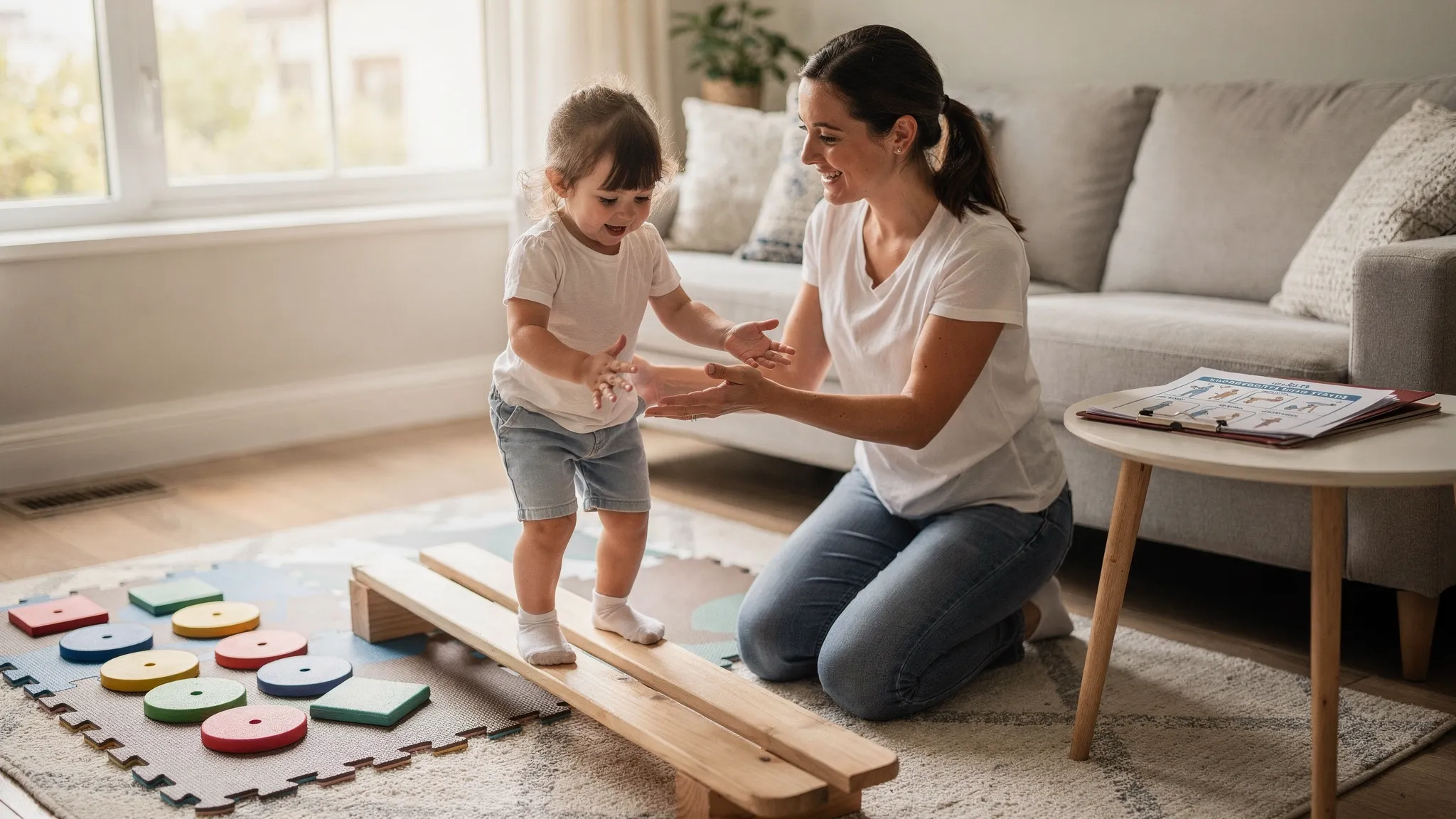
- Heel-to-toe walks on a line to encourage proper gait pattern
- Step-up and over drills to practice weight shift and single-leg control
- Animal walks like bear or crab for whole-body strength
These pediatric physiotherapy exercises keep sessions playful and goal driven. Short daily practice usually beats one long session. Track what your child enjoys then build on successes.
How do I know if my child needs pediatric physiotherapy?
Consider a screening if you notice persistent delays, asymmetry or frequent falls. If you are in Dubai and prefer a family-centered approach with in-clinic, home care or telehealth options, our pediatric team can help. Explore our broader service scope in pediatric and geriatric physiotherapy treatment in Dubai.
Choosing care in Dubai
Selecting a child development center in Dubai with experienced pediatric clinicians matters. Look for individualized plans, parent training and transparent goals. At Bridges Speech Center, our physiotherapists work alongside speech and psychology teams to support the whole child. We offer in-clinic sessions, home care therapy in Dubai and online guidance. If your child has cerebral palsy, sports injuries or other Pediatric Physiotherapy Conditions, we can coordinate care across services including Sports Injuries in Children Treatment in Dubai and cerebral palsy management for children treatment in Dubai.
For families also navigating communication goals, explore speech therapy Dubai and how speech-language pathologists collaborate with physiotherapists to support participation at home and school.
The bottom line
Pediatric Physiotherapy Conditions are common and very treatable when caught early. Knowing the signs helps you act with confidence, whether your child is toe walking, working on balance or recovering after an injury. Thoughtful assessment, a clear plan and consistent pediatric physiotherapy exercises set the stage for progress.
If you are seeking pediatric physiotherapy Dubai services, the team at Bridges Speech Center is ready to help. Book an assessment and will create a plan that fits your child’s goals and your family routine.