

Parents, athletes and busy professionals often ask a simple question with big implications for daily life: are hand strengthening toys really helpful? The short answer is yes. When chosen thoughtfully and used with a plan, they can build grip strength, dexterity and endurance that translate into writing, feeding, keyboarding and sport. The longer answer is that results come from consistent practice, smart progression and pairing toys with targeted hand strengthening exercises.
At Bridges Speech Center in Dubai, our occupational therapists and physiotherapists often incorporate hand strengthening toys into individualized programs alongside task practice, mobility work and therapeutic exercise. Below, you will learn how to strengthen hands safely, how to choose the right tools, and when to seek support.
What counts as hand strengthening toys?
Hand strengthening toys are small tools that make training simple and engaging. Common examples include therapy putty, stress balls, silicone grip rings, spring-loaded hand grippers, finger extension bands, pegboards with tongs or clothespins, and theraputty kits with beads or coins for pinch practice. The best hand strengthening toys allow you to vary resistance and train multiple movement patterns like squeeze, pinch, spread and rotate.
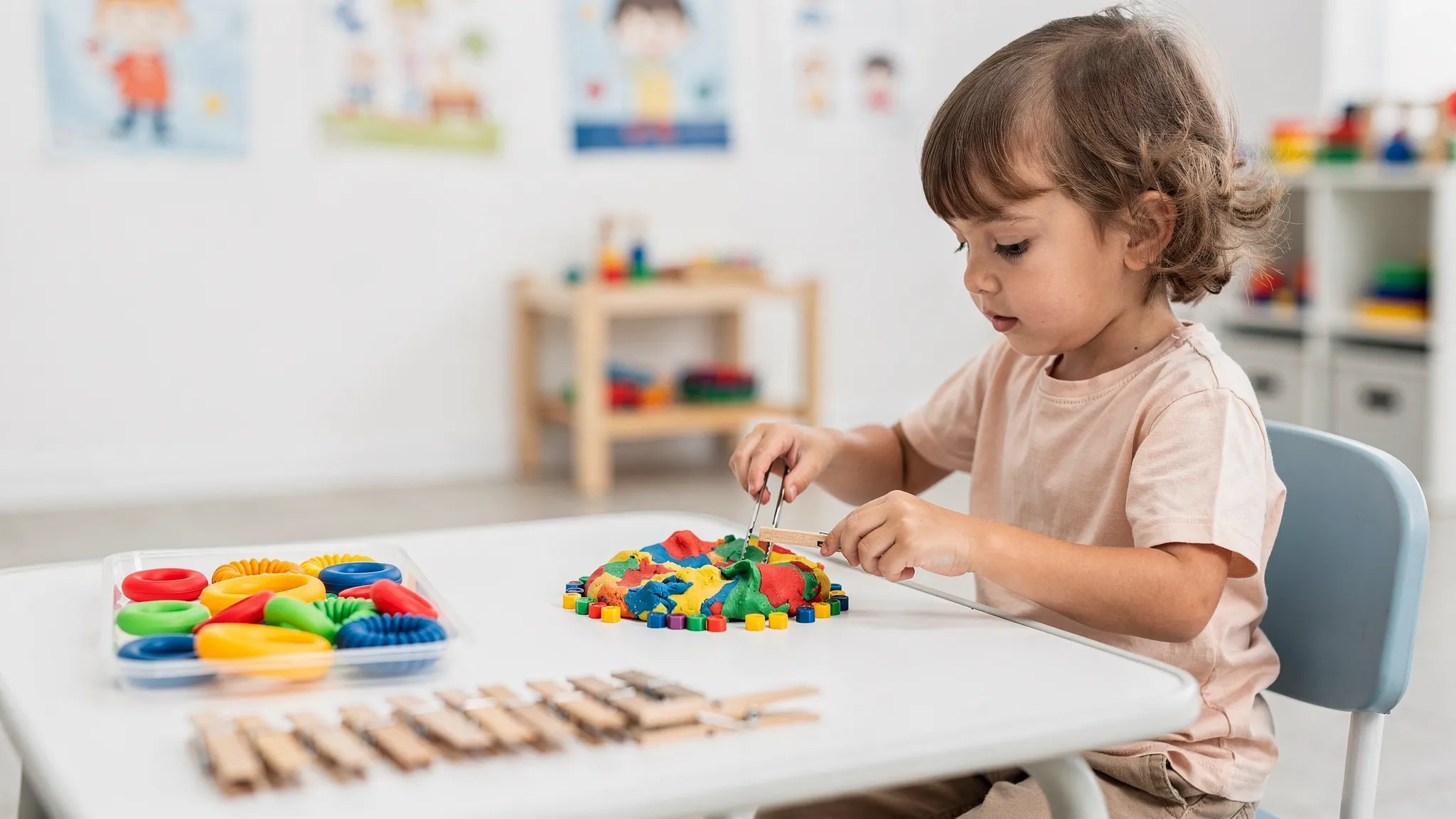
These tools are especially useful for kids who need playful ways to practice fine motor skills, and for adults who want convenient options at home or at the office. Used correctly, they support both isolated strength and functional skill practice.
Do they really work? What the evidence and clinical practice suggest
- Consistent resistance training improves grip strength and functional hand use across ages. Clinical practice guidelines in hand therapy emphasize progressive loading, task specificity and adherence for results.
- For arthritis and overuse syndromes, gentle strengthening combined with mobility and activity modification can reduce pain and improve function. Resources from the Arthritis Foundation outline safe starter activities.
- Specialists in hand therapy promote graded resistance, varied grips and adequate recovery. The American Society of Hand Therapists provides education on best practices that align with these principles.
In clinic, we see the best outcomes when hand strengthening toys are integrated with personalized hand strengthening exercises, not used in isolation. That means planning frequency, reps, rest and progressive challenge.
Who benefits from hand strengthening toys?
- Children building fine motor foundations for handwriting, scissor use and self care.
- Teens and adults needing better endurance for typing, gaming and instrument practice.
- Individuals in rehab after wrist or hand injuries when cleared for loading.
- Older adults who want to maintain independence with jars, buttons and keys.
If fine motor challenges intersect with feeding or communication access, our team coordinates with speech therapy so progress shows up in real life tasks like utensil control or AAC device access.
How to choose the right tool
Pick tools that match goals, current ability and comfort. The matrix below can help you decide.
| Toy or Tool | Primary purpose | Best for | Easy progression | Therapist tip |
|---|---|---|---|---|
| Therapy putty, medium firmness | Whole hand squeeze, pinch, finger isolation | Kids building fine motor control, adults with mild weakness | Increase firmness, add tasks like hide-and-find beads | Keep wrists neutral, focus on slow controlled squeezes |
| Stress ball or gel egg | Endurance squeeze, graded holds | Desk workers, older adults, stress relief with purpose | Longer holds, more sets, firmer ball | Breathe out as you squeeze, relax fully between reps |
| Silicone grip ring | Power grip and forearm endurance | Athletes, musicians, heavy tool users | Heavier resistance, timed intervals | Combine with posture and shoulder stability |
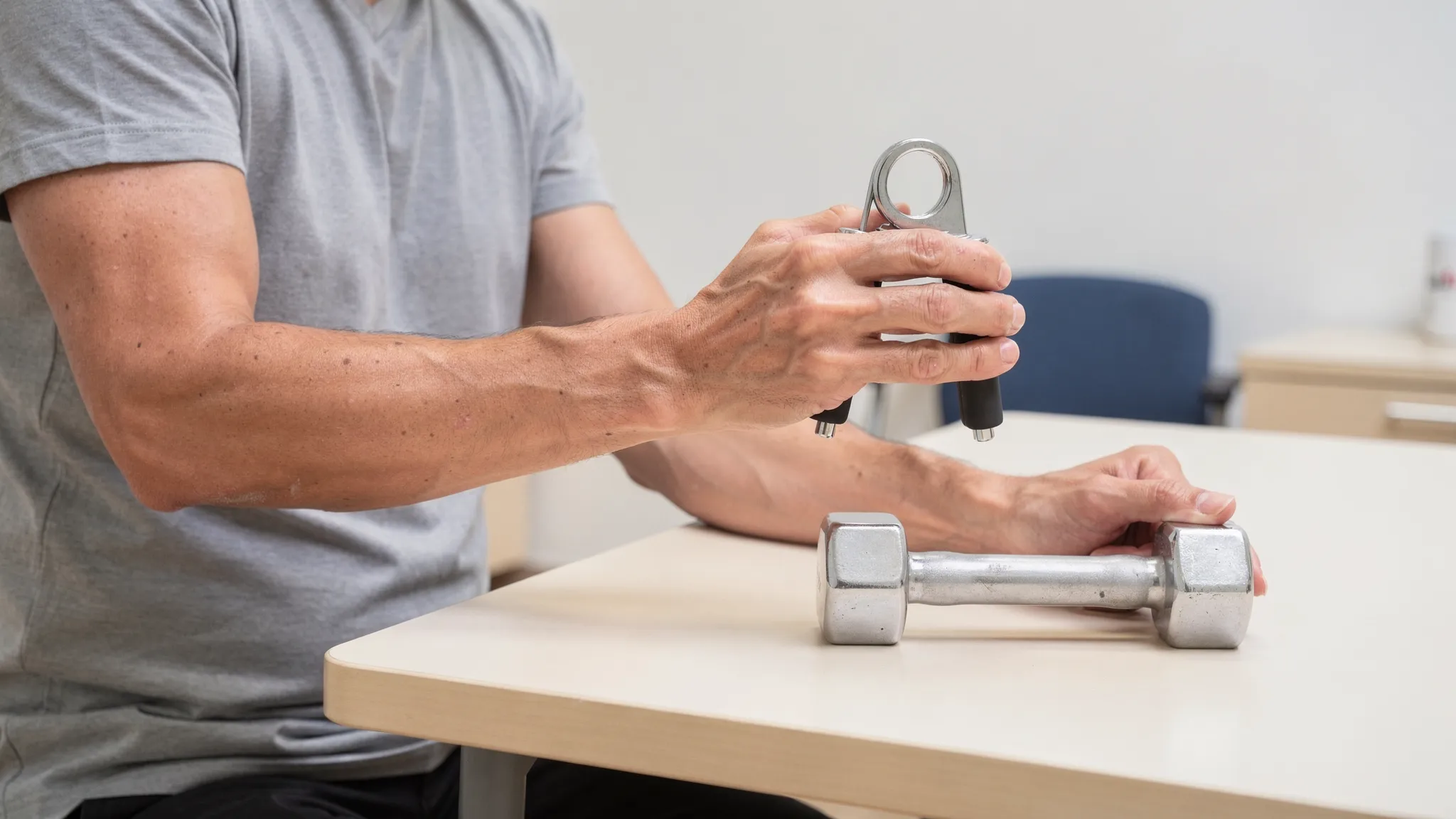
| Spring hand gripper, adjustable | Progressive grip strength | Adults with clearance for resistive training | Raise spring tension in small steps | Avoid pain, keep elbow by side, no jerky motions |
| Finger extension bands | Balance flexion with extension | Those with overuse from gripping tasks | Thicker bands, more reps | Helps counter tendon overload from constant gripping |
| Clothespins or tongs with pegboard | Pinch strength, pincer grasp accuracy | Children learning precision grips | Stiffer clothespins, smaller targets | Turn clean up into reps, quick and fun |
| Therapy putty with coins or beads | Thumb-index precision and in-hand manipulation | Kids and adults targeting dexterity | Smaller objects, time challenges | Roll, translate and place for functional gains |
Hand strengthening toys should feel challenging but not painful. Mild muscular fatigue is expected, sharp pain is a red flag.
How to strengthen hands at home, safely
If you are wondering how to strengthen hands without overdoing it, start small, move slowly and track your tolerance for 48 hours. Here is a 10 minute routine of hand and wrist strengthening exercises you can do with common tools. Stop if you feel pain, tingling or swelling.
- Warm up 60 seconds: open and close hands, then wrist circles both directions.
- Putty squeeze 2 sets of 12: full hand slow squeeze, count to 3 in, 3 out.
- Pinch ladder 1 set of 10 each: thumb to index, middle, ring, little. Add a light clothespin for progression.
- Grip ring holds 3 sets of 20 seconds: moderate resistance, breathe steadily.
- Finger extensions 2 sets of 12: use a light band around fingers, open slowly.
- Wrist curls 2 sets of 12: use a light dumbbell or water bottle, palm up then palm down. Keep movement small and smooth.
- Stretch 60 seconds: prayer stretch, then gentle finger stretches.
This simple flow blends hand strengthening exercises with mobility and balance between flexors and extensors. It answers the common question of how to strengthen hands without aggravating symptoms since you can scale reps, resistance and pace.
Safety first, then progression
- Introduce only one new tool or drill at a time so you can spot irritants.
- Progress volume or resistance, not both at once.
- Keep wrists neutral to protect tendons and the carpal tunnel.
- Recover with light movement on non training days.
If you are recovering from injury, neuropathy or inflammatory arthropathy, get a tailored plan through therapist guided therapeutic exercise. Our team designs graded strengthening programs that combine hand and wrist strengthening exercises with functional tasks like buttoning or jar opening.
How hand strengthening toys support children’s goals
For children, the best gains happen when practice looks like play. Hand strengthening toys make it natural to embed reps into games, art and chores.
- Writing readiness: pinch strength and finger isolation improve pencil control and letter formation.
- Feeding skills: better grip and endurance improve utensil use and cup holding.
- Self care: snaps, zips and buttons become faster with stronger pinch and dexterity.
If speech and language goals are also in play, our clinicians coordinate speech therapy and occupational therapy so fine motor practice supports communication readiness like pointing, gesture clarity and AAC access. If you are searching for a trusted Speech therapist, our team can guide your family.
Adults, athletes and office workers
Adults often ask how to strengthen hands without bulky equipment. Portable hand strengthening toys fit in a briefcase or gym bag so you can add micro workouts between meetings. Pair them with posture, shoulder and forearm work for better carryover to sport and work. When indicated, we combine tools with task specific hand and wrist strengthening exercises for lifting, racquet sports and instrument practice.
For people with chronic hand pain, start with gentler resistance then progress only when your 24 to 48 hour response is clear. Consistency beats intensity.
When to get help in Dubai
Consider a professional screen if you notice any of the following:
- Pain that limits daily tasks or wakes you at night
- Tingling, numbness or weakness after short periods of gripping
- Regression in a child’s fine motor milestones
- No improvement after 4 to 6 weeks of self guided practice
Bridges Speech Center provides coordinated care across occupational therapy, physiotherapy and speech therapy. Our clinicians will assess your goals, then build a plan with therapeutic exercise and the right hand strengthening toys so practice is safe and effective. Learn how to strengthen hands with clear progressions inside our therapist led strengthening programs and targeted therapeutic exercise.
Key takeaways
- Hand strengthening toys work when used deliberately with structured hand strengthening exercises.
- Choose tools that match goals, then progress one variable at a time.
- Pair training with functional tasks you care about so gains stick.
- If symptoms persist, get a tailored program from a qualified clinician.
Ready to build confident hands at home and in the community? Book a consultation at Bridges Speech Center for integrated care and practical guidance. If you need trusted Speech therapy Dubai, our team is here to help with personalized plans that fit your life.